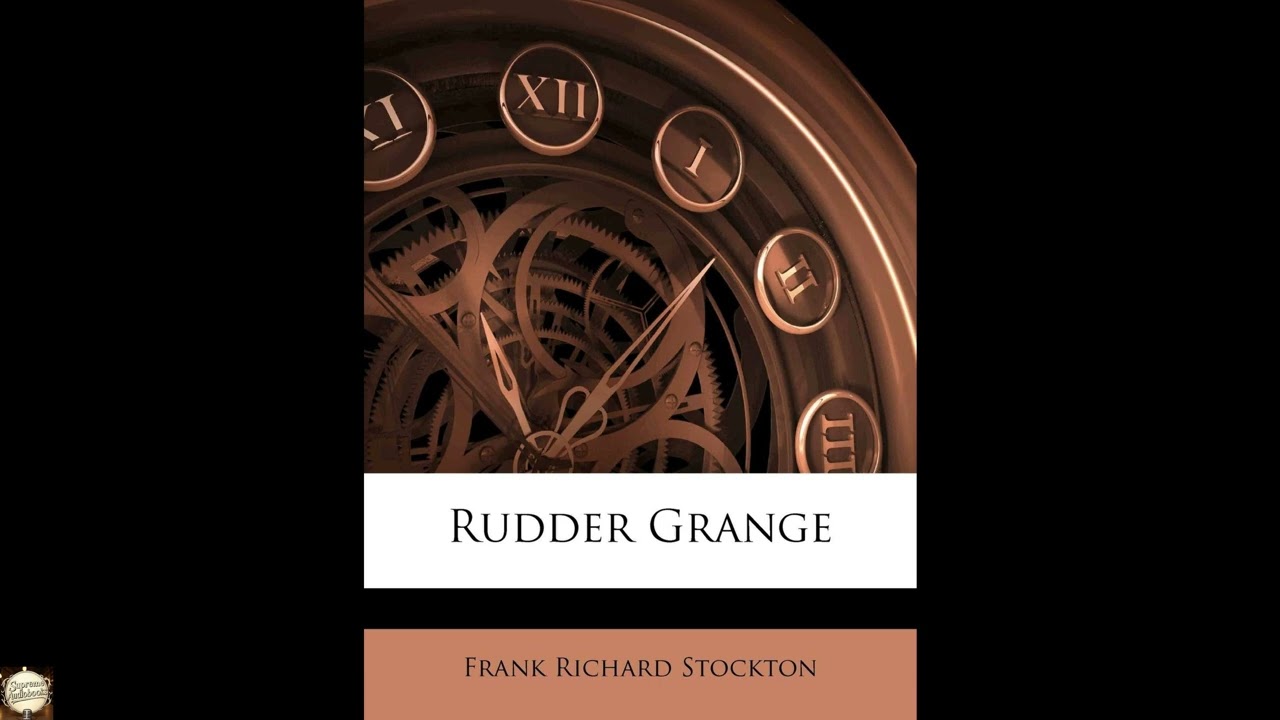
Rudder Grange
Imagine a life unfettered by convention, where home is not a static address but a vessel gently drifting with the currents of a canal. This is the premise of Frank R. Stockton’s delightful novel, Rudder Grange, a book that has charmed readers since its initial publication and continues to offer a refreshing perspective on domesticity and the pursuit of unconventional happiness. Far from being a mere relic of its time, this story resonates today as a witty, heartwarming antidote to the pressures of modern living, reminding us that joy and comfort can be found in the most unexpected places, often requiring only a touch of imagination and a willingness to embrace the eccentricities of life. For anyone seeking a dose of gentle humor, a respite from the everyday, and a reminder of the simple pleasures, Stockton's tale remains a genuine pleasure. The story introduces us to Euphemia and William, a young, recently married couple living in late 19th-century America. Faced with the practical dilemma of affording a house in a bustling world, they conceive of a truly unique and utterly charming solution: they decide to make their home on an old canal boat. This isn't just a temporary arrangement; they lovingly convert the boat into a cozy, albeit somewhat peculiar, dwelling, christening it "Rudder Grange." Their initial enthusiasm for this floating abode is infectious, and the novel gracefully draws the listener into their world of sun-drenched decks, curious passengers, and the rhythmic lapping of water against their unconventional walls. It’s a setting that instantly establishes a sense of whimsical escapism. Life on Rudder Grange proves to be anything but dull. The couple soon hires a "servant-girl" named Pomona, a young woman whose past is as quirky as their current living situation. Pomona, an orphan who found solace and much of her education in the dramatic narratives of dime novels, brings an entirely new dimension of humor and a unique perspective to the domestic scene. Her interpretations of life and literature lead to a series of comical misunderstandings and unexpected predicaments, from her attempts at high-minded conversation to her peculiar notions of propriety. The narrative then unfolds as a series of episodes, each one a self-contained vignette of the couple's daily lives, their interactions with peculiar visitors, the challenges of navigating a movable home, and the ever-present charm of their unusual servant. There are mild adventures, amusing mishaps, and a constant thread of good-natured cheer as Euphemia and William adapt to their novel circumstances, finding joy and laughter in the everyday. Frank Richard Stockton, born in Philadelphia in 1834, carved out a unique and beloved niche in American letters during the latter half of the 19th century. His early career as a wood engraver, a craft he practiced for many years, perhaps honed his eye for detail and his appreciation for the precise construction of an image or a narrative. It was in the world of children's literature, however, that he first made a significant impact, contributing regularly to St. Nicholas Magazine, a prominent periodical for young readers. His transition to writing for adults saw him develop a distinctive style that became widely recognized and admired. Stockton's name is perhaps most famously associated with the short story "The Lady, or the Tiger?", a clever and unresolved narrative puzzle that perfectly encapsulates his particular brand of inventive, often mischievous storytelling. He was known for his "Stocktonian dilemma"—a situation presented with two equally plausible, yet ultimately unknowable, outcomes—which left readers pondering and debating long after they had finished reading. Beyond this famous story, his body of work includes other novels such as The Casting Away of Mrs. Lecks and Mrs. Aleshine, which also feature his characteristic blend of common-sense characters in highly improbable or fantastical situations. Stockton possessed a singular talent for combining everyday realism with a gentle touch of the absurd or the fantastic, always imbued with a characteristic dry humor that made his writing immediately recognizable and enduringly popular. Rudder Grange brings to life several compelling themes, perhaps none more prominent than the redefinition of home. The book actively challenges the conventional understanding of a fixed dwelling by presenting a couple who find comfort, security, and a sense of belonging on a constantly moving boat. This literal fluidity of their domestic space highlights how home is not merely a structure but a state of mind, built on companionship, ingenuity, and a shared outlook. For instance, the painstaking efforts Euphemia and William put into decorating their small cabins, planting flowers on deck, and establishing routines, all against the backdrop of changing scenery, vividly demonstrate that true domesticity can flourish anywhere with enough love and creativity. Another central theme is the humor inherent in everyday life, particularly when viewed through an unconventional lens. Stockton excels at finding comedy in the mundane details of living on a canal boat—the challenges of cooking, the unexpected guests who arrive via the towpath, or the quirks of their unusual servant. A concrete example appears in the many scenes involving Pomona’s dramatic interpretations of the world around her, filtered through her dime-novel sensibilities. Her attempts to apply fictional heroics to simple domestic tasks, or her suspicion of ordinary visitors, often lead to delightful misunderstandings and provide much of the novel’s comic relief, illustrating how a shift in perspective can turn the ordinary into something truly amusing. Furthermore, the novel gently underscores the theme of ingenuity and adaptation, as the couple consistently devises clever solutions to the unique problems presented by their floating existence, demonstrating a resilient and resourceful spirit. The late 19th century in America, when Rudder Grange was published in 1879, was a period of significant cultural and societal transformation. Often called the Gilded Age, it was a time of rapid industrialization, increasing urbanization, and expanding class divisions. There was a burgeoning middle class seeking both stability and forms of amusement, and a general fascination with new technologies and conveniences that were rapidly altering the fabric of daily life. Amidst this era of progress and sometimes stark materialism, Rudder Grange emerged as a charming counter-narrative. It presented a quieter, more whimsical vision of life, a gentle retreat from the growing complexities and pressures of modern society. The idea of living on a canal boat, a relic of an earlier form of transportation, provided a subtle commentary on a desire for simplicity and a return to more pastoral ideals, even as the world around them rushed forward. Stockton's work offered a lighthearted escape, appealing to readers who appreciated its blend of humor and its imaginative sidestepping of conventional norms, providing a refreshing contrast to some of the more serious realist literature that was also gaining prominence at the time. As an audiobook, Rudder Grange truly shines, its episodic structure making it a perfect companion for listening in short, digestible segments or for enjoying in one extended, cozy session. The novel’s gentle, understated humor and the distinct personalities of its characters — from Euphemia’s quiet practicality to Pomona’s melodramatic pronouncements — come alive through skilled narration. A good reading allows the listener to fully appreciate the precise timing of Stockton’s dry wit and the subtle inflections that convey so much about each character’s worldview. You will want to listen for the pacing, which often mirrors the slow, meandering journey of the canal boat itself, allowing the humor to gently unfurl rather than being rushed. The dialogue, with its charmingly formal yet whimsical tone, will be particularly engaging, and a narrator capable of giving each voice its own unique texture will enhance the cozy, slightly dreamy atmosphere of life on Rudder Grange. It is a story to savor, bringing warmth and smiles long after the final chapter concludes.
Enjoyed Rudder Grange? A few ways to support us
Audible & Amazon links are affiliate; we may earn a small commission at no extra cost.
About this production
Human narration by a volunteer reader from LibriVox.org, the public-domain audiobook project. LibriVox volunteers record literary works whose copyright has expired in the United States, releasing the resulting recordings into the public domain.
Rudder Grange by Frank Richard Stockton. The underlying text is in the U.S. public domain. We do not republish any modern copyrighted edition, translation, or commentary.
The 4K cinematic visuals accompanying this audiobook are generated by an AI image model from prompts derived from the source text. No copyrighted photos, paintings, or stock footage are used. AI generation is disclosed on every video on our YouTube channel as required by YouTube's altered/synthetic content policy.
English subtitles are transcribed from the LibriVox recording with OpenAI Whisper. Translations into the 11 other supported languages are produced by Meta's NLLB-200 neural translation model. No human translator's copyrighted translation is used.
Questions about sourcing or rights? See our DMCA & Sourcing policy or contact us.
Enjoyed this audiobook?
If you'd like to own a copy of Rudder Grange or hear a professionally produced edition, the links below help support free audiobook production at no extra cost to you.
As an Amazon Associate we earn from qualifying purchases. Audible / print links are affiliate.