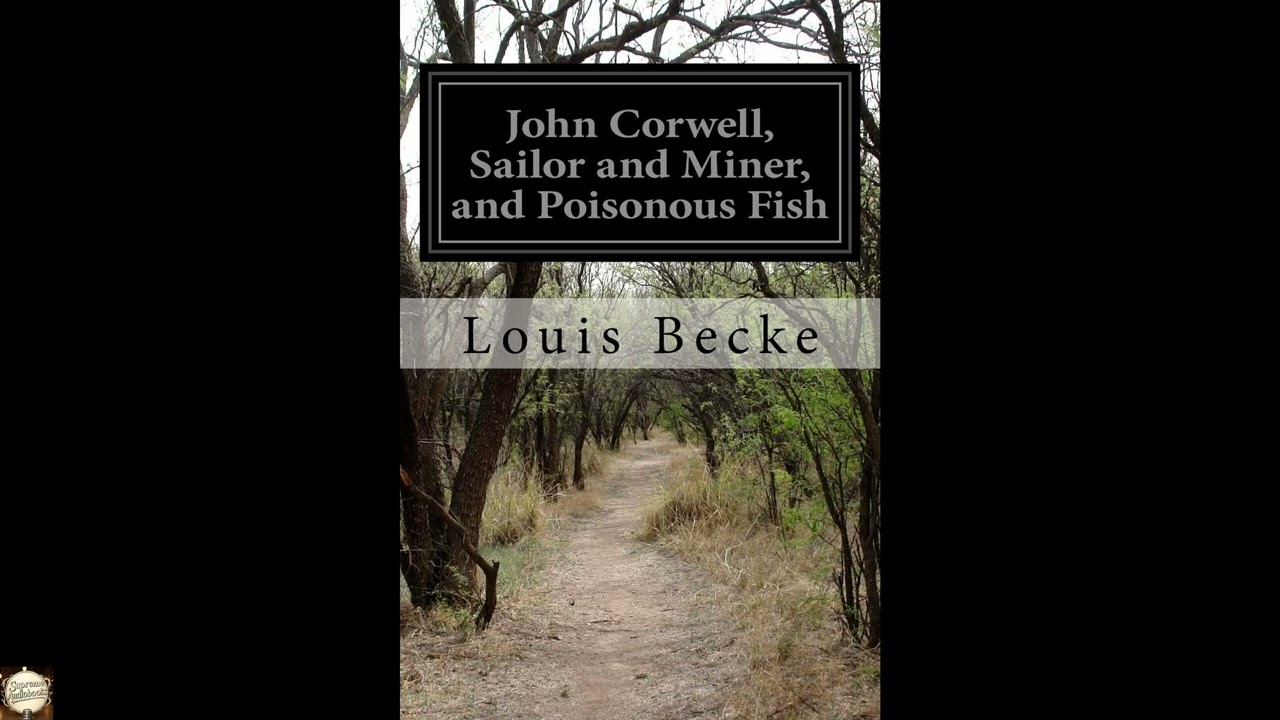
John Corwell, Sailor and Miner, and Poisonous Fish
Step into a world where the relentless vastness of the Pacific Ocean meets the raw, often brutal, spirit of human ambition and survival. Louis Becke's "John Corwell, Sailor and Miner, and Poisonous Fish" offers a bracing plunge into the late nineteenth-century South Seas, a place of breathtaking beauty and unforgiving peril. This isn't a romanticized vision of paradise; instead, it is a lean, potent tale drawn from the author's own life as an adventurer and trader among the remote islands. Listeners today will find themselves compelled by Corwell's stark struggles, which illuminate universal truths about human endurance, the costs of greed, and the profound, indifferent power of the natural world. It speaks to the part of us that wonders how we would fare when stripped down to the very core of our being, facing dangers both seen and unseen. The story unfurls in the remote reaches of the Pacific, amidst a scattering of islands where European traders and fortune-seekers vied with nature and with each other for dominion and profit. Our central figure, John Corwell, is a man defined by the restless spirit of his era – a seasoned sailor accustomed to the caprices of the sea, yet also a miner, drawn to the promise of riches hidden beneath the earth. He is a character emblematic of the men who pushed into the world's untamed corners, hardened by experience, perhaps a little reckless, and undeniably resourceful. His world is one of makeshift settlements, precarious ventures, and sudden, life-altering risks, far removed from the comforts and certainties of civilization. The central conflict of Corwell's account is a multi-layered one, born from both human ambition and the inherent dangers of his chosen environment. Whether he is wrestling with the unpredictable currents of the ocean, the difficult yield of a mining claim, or the treacherous presence suggested by the "poisonous fish" of the title, Corwell's narrative is a focused examination of survival against overwhelming odds. The story builds tension not through grand, sweeping gestures, but through the accumulation of small, specific details that paint a vivid picture of constant vigilance. The precise nature of the "poisonous fish" — whether a literal, lurking aquatic threat, a metaphorical danger in the form of human malice, or perhaps a potent symbol of the unseen, insidious perils of life in the tropics — remains a potent undercurrent throughout, propelling Corwell into circumstances that test his every resolve and challenge his very understanding of life and death. The author, George Lewis Becke, was no armchair adventurer; his stories sprang directly from a life lived on the fringes of the known world. Born in Port Macquarie, New South Wales, Australia, in 1855, Becke ran away to sea at the astonishing age of twelve. For the next two decades, he immersed himself in the tumultuous, often lawless, existence of the South Pacific. He served as a supercargo on trading schooners, hunted pearls, traded copra, and was involved in the controversial labor recruiting practices of the period, activities sometimes referred to as "blackbirding." Becke knew the islands, their people, and their stark realities with an intimacy few Europeans could claim. His experiences were so authentic that even Robert Louis Stevenson, who also lived in the Pacific, recognized Becke's unparalleled insight into the region. It was not until later in his life, encouraged by J.F. Archibald, the editor of Australia's famed The Bulletin magazine, that Becke began to commit his experiences to paper. His first collection, By Reef and Palm, appeared in 1894, instantly establishing his reputation as a chronicler of the South Seas unlike any other. Becke's immense output, including titles like The Ebbing of the Tide and Pacific Tales, offered a gritty, unvarnished counterpoint to more romanticized colonial narratives. He wrote with a directness and realism that captured the brutal beauty, the stark choices, and the profound isolation of life among the scattered islands, documenting an era of rapid change and often tragic consequence for both European adventurers and indigenous populations. "John Corwell, Sailor and Miner, and Poisonous Fish" powerfully enacts several enduring themes. One clear thread is the fragility of human life and the indifference of nature. Corwell's struggle to extract resources or simply to stay alive against the backdrop of an untamed sea and land emphasizes how vulnerable even the most hardened individual is to the whims of the environment. A sudden squall, a failed prospecting venture, or the subtle, unseen menace of the "poisonous fish" all serve as stark reminders that human plans often count for little in the face of nature's overwhelming power. Another potent theme is the lure and corruption of greed. The narrative subtly suggests that the quest for mineral wealth or valuable trade goods often drives individuals like Corwell into unnecessarily dangerous situations, pushing them beyond the bounds of caution and into moral ambiguities. This pursuit of gain frequently brings its own form of insidious poison, demonstrating how ambition can cloud judgment and lead to perilous outcomes. Becke also touches on the stark realities of colonial encounter, even if indirectly. While not overtly focusing on indigenous cultures, the story's setting in the contested, exploited South Seas of the late nineteenth century underscores the broader context of European expansion and its impact. Corwell's presence in these remote lands is a direct consequence of this era of global reach, highlighting the transient, often solitary, existence of those who operated at the edges of empire. Finally, the story speaks to isolation and the struggle for survival. Far from familiar shores and social structures, Corwell faces challenges where there is often no one to rely on but himself. This profound solitude amplifies every decision and every danger, making his fight not just against external threats, but against the psychological toll of being utterly alone. The emergence of Becke's work occurred during a fascinating period in global history and literature. The late nineteenth and early twentieth centuries witnessed the zenith of European colonial expansion, with the Pacific islands becoming strategic points of interest for trade, resources, and naval power. This was an age of daring, often reckless, adventure, but also one of significant exploitation and cultural upheaval. Literarily, Becke's writing fits squarely within the rise of realism and naturalism, movements that sought to depict life as it truly was, without romantic embellishment or moralizing. Authors like Becke, Joseph Conrad, and Rudyard Kipling offered readers a glimpse into the raw experiences of empire, challenging the more genteel narratives that had preceded them. His unvarnished portrayals of the South Seas provided a vital, often brutal, counter-narrative to the prevailing exoticism, contributing to a more complex and authentic understanding of an era defined by global ambition and human struggle. Listening to "John Corwell, Sailor and Miner, and Poisonous Fish" as an audiobook brings an immediacy to its sparse, powerful prose. The several-hour run time allows for a focused, yet unhurried, immersion into Corwell's world, perfect for sustained listening during a quiet afternoon or across a few commutes. A skilled narrator can imbue Becke's direct language with the weight of experience, allowing listeners to truly feel the grit and tension that permeates the narrative. Pay close attention to the pacing, which will likely mirror the ebb and flow of a challenging life at sea and in the mines – moments of tense action punctuated by periods of quiet observation and internal reflection. The voice should carry the weary resolve of men who live by their wits, and the descriptions of the island environment, from the glare of the sun on the water to the hidden dangers of the reef, will paint vivid mental pictures, drawing you deep into this classic tale of struggle and endurance.
Enjoyed John Corwell, Sailor and Miner, and Poisonous Fish? A few ways to support us
Audible & Amazon links are affiliate; we may earn a small commission at no extra cost.
About this production
Human narration by a volunteer reader from LibriVox.org, the public-domain audiobook project. LibriVox volunteers record literary works whose copyright has expired in the United States, releasing the resulting recordings into the public domain.
John Corwell, Sailor and Miner, and Poisonous Fish by Louis Becke. The underlying text is in the U.S. public domain. We do not republish any modern copyrighted edition, translation, or commentary.
The 4K cinematic visuals accompanying this audiobook are generated by an AI image model from prompts derived from the source text. No copyrighted photos, paintings, or stock footage are used. AI generation is disclosed on every video on our YouTube channel as required by YouTube's altered/synthetic content policy.
English subtitles are transcribed from the LibriVox recording with OpenAI Whisper. Translations into the 11 other supported languages are produced by Meta's NLLB-200 neural translation model. No human translator's copyrighted translation is used.
Questions about sourcing or rights? See our DMCA & Sourcing policy or contact us.
Enjoyed this audiobook?
If you'd like to own a copy of John Corwell, Sailor and Miner, and Poisonous Fish or hear a professionally produced edition, the links below help support free audiobook production at no extra cost to you.
As an Amazon Associate we earn from qualifying purchases. Audible / print links are affiliate.