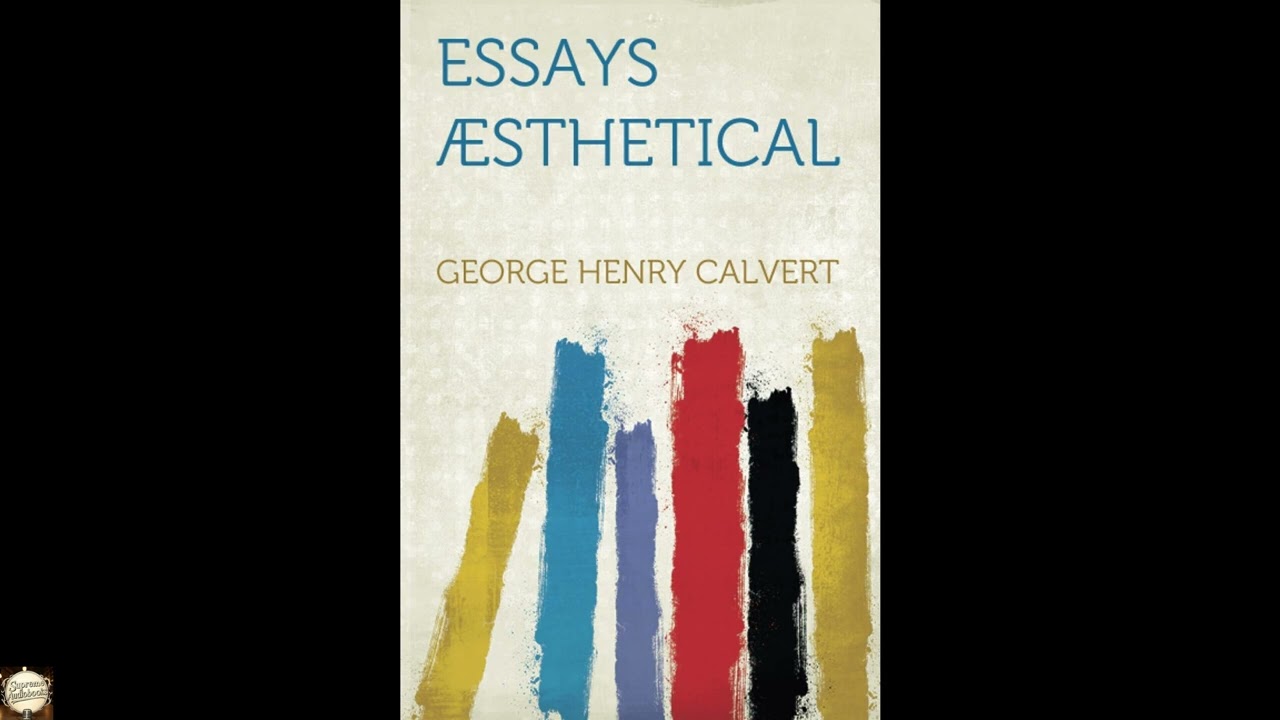
Essays Æsthetical
What does it mean for something to be beautiful, and what purpose does that beauty serve in a world often preoccupied with the practical and the immediate? George Henry Calvert’s Essays Æsthetical, first published in 1875, offers a profound and surprisingly relevant inquiry into these very questions. Far from being a dry academic exercise, this collection of thoughtful pieces serves as a vital conduit to the intellectual currents of the nineteenth century, inviting listeners to consider the enduring power of art, literature, and philosophy. It is an invitation to pause, to reflect on the nature of genius, the nuances of creative expression, and how these elements shape our understanding of ourselves and the civilizations we build. In an age saturated with fleeting images and instant gratification, Calvert's measured and articulate voice reminds us of the profound human need for aesthetic appreciation and the slow, deliberate work required to truly engage with it. Instead of a conventional narrative with characters and a linear story, Essays Æsthetical offers an intellectual odyssey through the European and American cultural landscapes of its time, guided by Calvert's discerning critical eye. The "setting" is the vast realm of human creativity, encompassing the literary giants, artistic movements, and philosophical debates that defined Western thought for centuries leading up to Calvert’s own era. Listeners will find themselves transported to the intellectual salons and academic halls where the very foundations of artistic understanding were forged and contested. Calvert himself emerges as the primary voice, a learned and articulate figure who serves as both a passionate advocate for aesthetic principles and a meticulous dissector of literary works and their creators. The "central conflict" within these essays is not a dramatic clash of wills, but rather the ongoing intellectual tension between different philosophies of art, the challenge of discerning true beauty from mere superficiality, and the effort to articulate the profound impact of genius. Calvert grapples with the legacies of figures like William Shakespeare, Johann Wolfgang von Goethe, and Friedrich Schiller, not just as historical personages, but as living forces whose works continue to shape human consciousness. He places their achievements in conversation, analyzing their methods, their inspirations, and their lasting contributions. The "arc" of this collection moves from specific analyses of literary figures and their contributions to broader philosophical musings on the nature of art itself, culminating in a more holistic understanding of how aesthetics permeate human experience. George Henry Calvert (1803–1889) was a distinguished American author, critic, and translator whose life spanned much of the nineteenth century, allowing him to witness profound transformations in American society and thought. Born in Baltimore, Maryland, Calvert received an education befitting an intellectual of his time, studying at Harvard University before embarking on an influential period of study in Germany. His time abroad, particularly his studies at the University of Göttingen, proved pivotal, immersing him in German Romanticism and exposing him directly to the works and ideas of Goethe—a figure who would become a recurring touchstone in Calvert's critical output. Upon returning to America, Calvert established himself as a prominent man of letters. He was a close friend of Henry Wadsworth Longfellow and circulated within the broader intellectual sphere that included Transcendentalist thinkers, even if he maintained a somewhat independent critical distance. He was known for his elegant translations of German dramatists like Schiller and Lessing, introducing these vital European voices to an American audience. Beyond Essays Æsthetical, his body of work is considerable, including biographies such as Goethe: His Life and Works (1872) and Coleridge, Shelley, Goethe (1880), as well as several volumes of poetry and historical dramas. Calvert's sustained engagement with European intellectual traditions, coupled with his insightful critiques of American literature, secured his place as an important, if sometimes understated, figure in American literary criticism. The essays within Essays Æsthetical brilliantly illuminate several core themes. One prominent theme is the nature of genius and its manifestation in literary creation. Calvert frequently returns to figures like Shakespeare, analyzing not just the plots of his plays but the profound psychological depth and universal human insight woven into characters such as Hamlet or Lear. He demonstrates how these creations transcend their specific historical moment to speak to fundamental truths about existence, making them objects of enduring aesthetic contemplation. Another key theme is the interconnection of beauty, truth, and morality. For Calvert, true art is not merely decorative; it is deeply entwined with a pursuit of truth and possesses an inherent moral dimension. He argues, for instance, that a work like Goethe's Faust compels us to confront ethical dilemmas and the consequences of human ambition, thus elevating it beyond entertainment to a significant commentary on the human condition. A third significant theme is the influence of national character on artistic expression. Calvert subtly, but effectively, illustrates how the cultural soil of a nation shapes its literary output. He might contrast the robust, expansive imagination of English literature with the more philosophical and introspective tendencies found in German works, or the burgeoning realism beginning to emerge in American writing. This illustrates how art is not born in a vacuum but is a reflection of the collective spirit and historical circumstances of its creators. Finally, the collection implicitly addresses the purpose of literary criticism itself. Calvert's approach is not prescriptive; instead, he models a form of criticism that seeks to understand, appreciate, and illuminate the inherent qualities of art, guiding the reader toward a deeper personal engagement rather than dictating judgment. He encourages a reflective, appreciative stance towards literary works, demonstrating how careful attention can reveal layers of meaning and beauty. When Essays Æsthetical was published in 1875, America was in the throes of the Gilded Age, a period marked by rapid industrialization, economic expansion, and significant social change following the Civil War. Culturally, it was a time of transition. While the idealism of Transcendentalism still resonated with some, a more pragmatic and often materialistic ethos was gaining ground. In literature, realism was beginning to assert its dominance, with writers like William Dean Howells and Henry James starting to define a new American literary voice. Yet, there remained a strong intellectual current that looked to European models, particularly German philosophy and literature, as a source of high culture and intellectual rigor. Calvert's work emerged from and spoke to this complex cultural moment. He represented a voice steeped in the classical and romantic traditions, emphasizing beauty, moral purpose, and intellectual depth at a time when American society was often more concerned with material progress. His essays served as a counterpoint to purely utilitarian thinking, reminding readers of the enduring value of humanistic study and the vital role of aesthetic understanding in a well-rounded life. The work also reflects the ongoing dialogue between American intellectual aspirations and their European heritage, with Calvert acting as an interpreter and arbiter of what constituted lasting cultural value. Listening to Essays Æsthetical as an audiobook transforms the experience of engaging with Calvert’s contemplative prose. The spoken word imbues his scholarly discussions with an immediacy and intimacy that complements the inherent rhythm of his writing. A skilled narrator can render the nuanced arguments and delicate observations with clarity, allowing the listener to absorb complex philosophical points and intricate literary analyses without the visual strain of dense text. The run length of several hours is ideal for listeners seeking an intellectually substantial but manageable engagement—perfect for focused sessions of thoughtful listening or as a companion during walks or commutes. Pay attention to the narrator’s pacing, which can emphasize Calvert's measured delivery, and how the voice subtly shifts to highlight different essay subjects or the specific authors being discussed, creating a distinct atmosphere for each intellectual excursion. This format allows Calvert’s elegant arguments to flow naturally, inviting a sustained period of reflection on the enduring questions of art and beauty.
Enjoyed Essays Æsthetical? A few ways to support us
Audible & Amazon links are affiliate; we may earn a small commission at no extra cost.
About this production
Human narration by a volunteer reader from LibriVox.org, the public-domain audiobook project. LibriVox volunteers record literary works whose copyright has expired in the United States, releasing the resulting recordings into the public domain.
Essays Æsthetical by George Henry Calvert. The underlying text is in the U.S. public domain. We do not republish any modern copyrighted edition, translation, or commentary.
The 4K cinematic visuals accompanying this audiobook are generated by an AI image model from prompts derived from the source text. No copyrighted photos, paintings, or stock footage are used. AI generation is disclosed on every video on our YouTube channel as required by YouTube's altered/synthetic content policy.
English subtitles are transcribed from the LibriVox recording with OpenAI Whisper. Translations into the 11 other supported languages are produced by Meta's NLLB-200 neural translation model. No human translator's copyrighted translation is used.
Questions about sourcing or rights? See our DMCA & Sourcing policy or contact us.
Enjoyed this audiobook?
If you'd like to own a copy of Essays Æsthetical or hear a professionally produced edition, the links below help support free audiobook production at no extra cost to you.
As an Amazon Associate we earn from qualifying purchases. Audible / print links are affiliate.