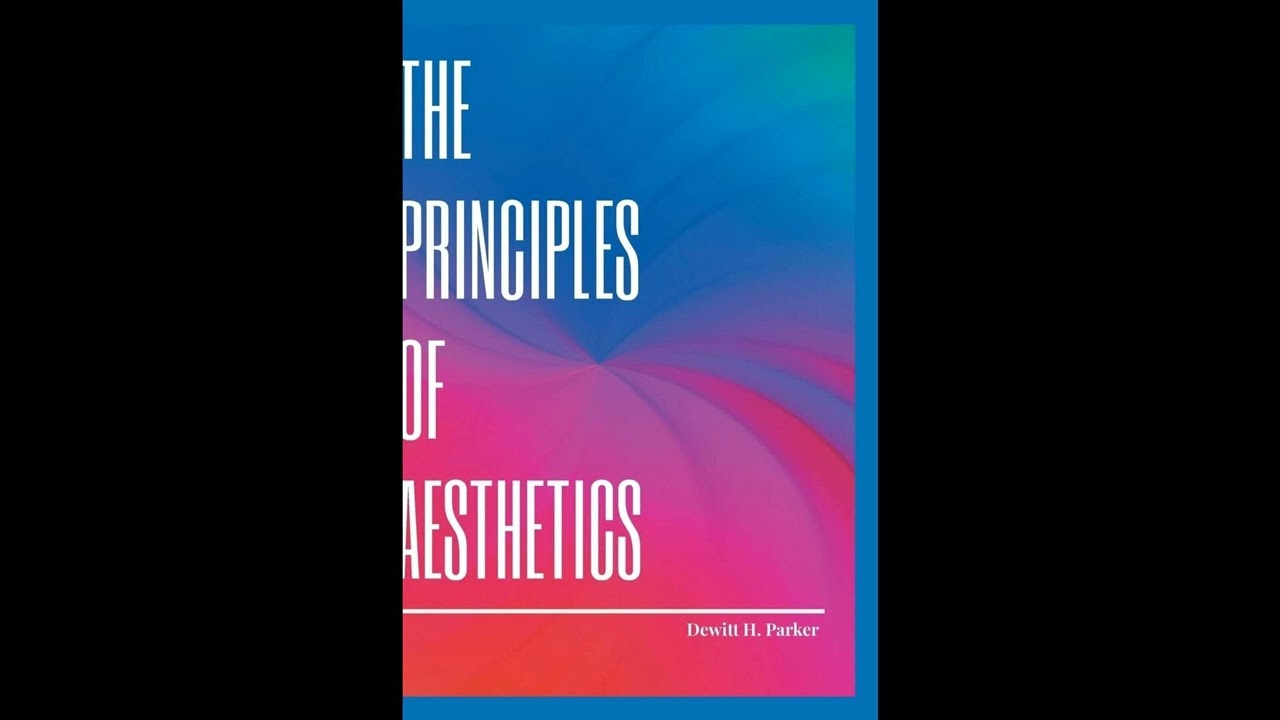
THE PRINCIPLES OF AESTHETICS
Why do we find a sunset beautiful, a symphony moving, or a painting disturbing? What makes something art, and how do we distinguish between a mere object and a profound aesthetic experience? Dewitt H. Parker’s The Principles of Aesthetics steps into this grand and often elusive inquiry, offering a systematic and surprisingly accessible framework for understanding our reactions to beauty and art. Written in the early decades of the twentieth century, this influential text remains remarkably relevant for anyone seeking to clarify their own relationship with the world of art and design, providing a philosophical lens through which to view not just classical works but also the constant flow of visual and auditory stimuli that defines our modern existence. It’s an invitation to deepen appreciation, to articulate preference, and to understand the fundamental human impulses that create and respond to artistry. Rather than presenting a narrative with characters in the conventional sense, Parker’s work invites the listener on an intellectual progression through the very foundations of aesthetic philosophy. The book begins by grappling with the primary question of what constitutes an aesthetic object or experience, laying groundwork before building a comprehensive structure of understanding. Parker considers various philosophical schools of thought concerning beauty, examining both objective and subjective viewpoints and attempting to synthesize them into a coherent theory. He doesn’t merely dismiss prior ideas but thoughtfully unpacks their strengths and weaknesses, establishing his own position not through polemic, but through careful argument and thoughtful observation. As the book develops, Parker systematically applies his principles to different forms of art. He dedicates sections to analyzing the distinct aesthetic qualities and emotional appeals of music, painting, sculpture, architecture, and literature, among others. Listeners will find his discussions illuminating as he delves into the unique challenges and opportunities each medium presents for artistic expression and appreciation. From the abstract patterns and emotional resonance of sound to the spatial relationships and symbolic weight of visual art, Parker endeavors to uncover the universal principles that tie these disparate forms together, while also respecting their individual characteristics. He considers the role of the artist’s intention, the nature of genius, and the psychological mechanisms behind our perception and enjoyment of art, always guiding the listener towards a richer comprehension of both creation and contemplation. Dewitt H. Parker, born in 1885 in New York, spent the significant portion of his academic career as a distinguished Professor of Philosophy at the University of Michigan, where he taught for over three decades until his passing in 1949. A prominent figure in American philosophy during the first half of the twentieth century, Parker was known for his clear prose and his systematic approach to complex subjects. While often associated with the broader pragmatic tradition that characterized American thought in his era, his work in aesthetics carved out a distinctive niche, bridging elements of idealism with a keen awareness of psychological and empirical realities. Beyond The Principles of Aesthetics, Parker penned other notable philosophical works, including The Self and Nature and Human Values, which further showcased his comprehensive interest in the fundamental aspects of human experience and the search for meaning. His contributions helped shape the discourse around value theory and the nature of consciousness, solidifying his reputation as a thoughtful and influential voice in the academic community. Parker’s place in the philosophical canon rests on his ability to synthesize diverse ideas and articulate a coherent, integrative vision of phenomena that often resist simple categorization, making his writings enduringly valuable for students and scholars alike. Among the central ideas Parker articulates, several stand out for their enduring relevance. One key theme is the nature of beauty itself—is it an inherent quality of an object, or is it primarily in the eye of the beholder? Parker argues for a nuanced perspective, suggesting that while aesthetic experience is deeply personal, it often arises from universally recognized principles of form, harmony, and expression. He cites, for instance, how certain proportional relationships in architecture or the rhythmic structures in music tend to evoke a similar sense of pleasure across different individuals, pointing to an underlying order that we perceive as beautiful. Another significant thread running through the book is the expressive power of art. Parker posits that art functions as a unique language for conveying emotions, ideas, and states of mind that might otherwise be incommunicable. He illustrates this by examining how a painter’s use of color and line can evoke profound melancholy or exhilaration, or how a poet’s carefully chosen words can distill the essence of a complex human emotion, making it tangible and comprehensible to the audience. He also thoughtfully examines the aesthetic attitude—the particular way we approach and engage with art that differs from practical or intellectual engagement—highlighting the notion of "disinterested pleasure" which allows us to appreciate a work for its own sake. The Principles of Aesthetics emerged at a fascinating juncture in human history. Published in 1920, it appeared in the wake of the First World War, a period marked by profound social upheaval, technological advancement, and a questioning of traditional values. In the artistic realm, this was the era of burgeoning modernism, with movements like Cubism, Surrealism, and Expressionism challenging conventional notions of representation and beauty. Literature was seeing experimentation with stream-of-consciousness and fragmented narratives, while music was moving towards atonality and dissonance. Parker’s work, in this context, can be seen as an attempt to find systematic understanding and continuity amidst a rapidly fragmenting world. It aimed to provide a philosophical anchor during a time when art itself seemed to be breaking free from its moorings, offering a comprehensive framework that could account for both classical and contemporary forms of expression, and helping to make sense of the new aesthetic landscapes that were rapidly unfolding. Listening to The Principles of Aesthetics as an audiobook offers a singular advantage, transforming what might otherwise be a dense academic text into a guided exploration. The run length, several hours, is ideal for sustained engagement, allowing Parker’s intricate arguments to unfold gradually and build upon one another. A skilled narrator can bring clarity and emphasis to the precise distinctions Parker draws between different philosophical concepts, helping the listener to absorb and process abstract ideas without the visual distraction of print. The thoughtful pacing of a well-performed reading allows the listener to contemplate each point, fostering a deeper understanding of the material. A calm, measured voice can enhance the contemplative atmosphere of the work, inviting the listener to fully immerse themselves in the philosophical considerations of beauty, art, and the human spirit.
Enjoyed THE PRINCIPLES OF AESTHETICS? A few ways to support us
Audible & Amazon links are affiliate; we may earn a small commission at no extra cost.
About this production
Human narration by a volunteer reader from LibriVox.org, the public-domain audiobook project. LibriVox volunteers record literary works whose copyright has expired in the United States, releasing the resulting recordings into the public domain.
THE PRINCIPLES OF AESTHETICS by Dewitt H. Parker. The underlying text is in the U.S. public domain. We do not republish any modern copyrighted edition, translation, or commentary.
The 4K cinematic visuals accompanying this audiobook are generated by an AI image model from prompts derived from the source text. No copyrighted photos, paintings, or stock footage are used. AI generation is disclosed on every video on our YouTube channel as required by YouTube's altered/synthetic content policy.
English subtitles are transcribed from the LibriVox recording with OpenAI Whisper. Translations into the 11 other supported languages are produced by Meta's NLLB-200 neural translation model. No human translator's copyrighted translation is used.
Questions about sourcing or rights? See our DMCA & Sourcing policy or contact us.
Enjoyed this audiobook?
If you'd like to own a copy of THE PRINCIPLES OF AESTHETICS or hear a professionally produced edition, the links below help support free audiobook production at no extra cost to you.
As an Amazon Associate we earn from qualifying purchases. Audible / print links are affiliate.