Saint Patrick
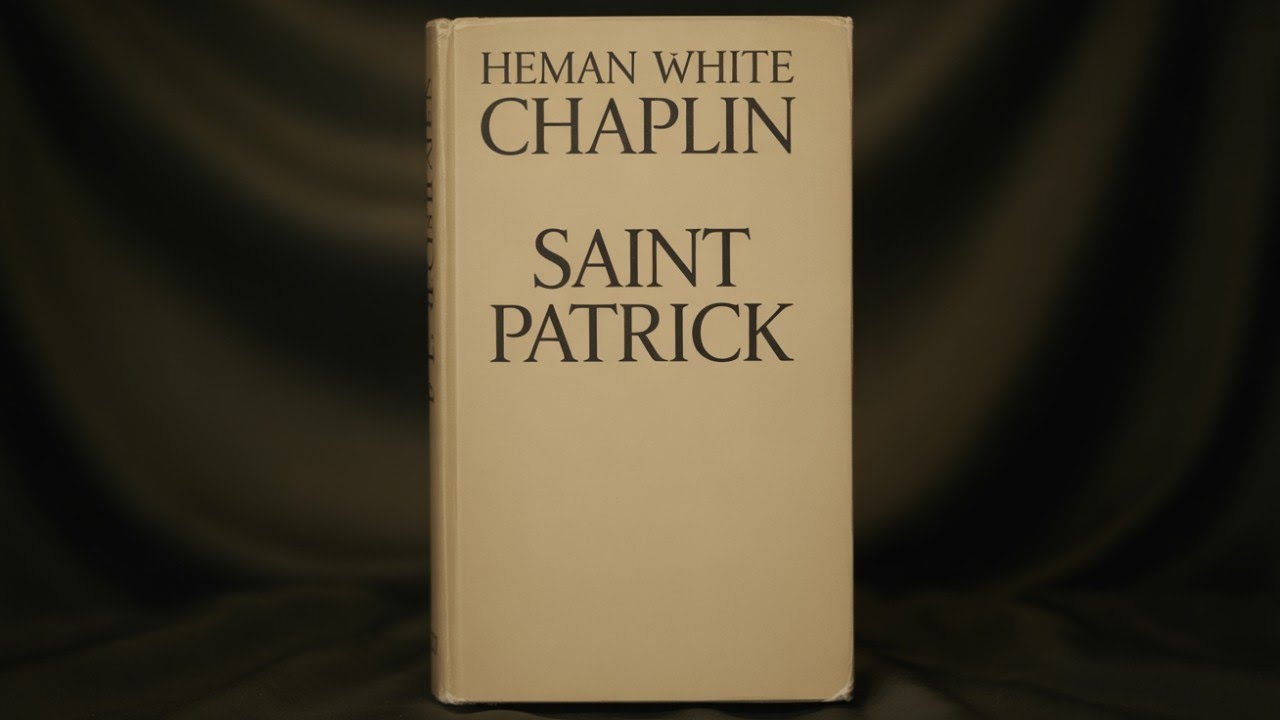
Heman White Chaplin’s "Saint Patrick" reaches across the centuries to present a thoughtful, compelling account of one of history’s most enduring and enigmatic figures. Far more than a simple retelling of a familiar legend, this prose work offers a serious and considered examination of the man behind the myth—Maewyn Succat, the young Romano-British captive who would become the patron saint of Ireland. It speaks directly to the profound human need for purpose, the power of spiritual conviction, and the enduring impact a single individual can have on an entire culture. For modern listeners, Chaplin’s narrative provides not only historical insight into early Christianization but also a profound reflection on identity, redemption, and the courage required to pursue a seemingly impossible mission against overwhelming odds. It is a story that, despite its ancient roots, continues to resonate deeply with our contemporary search for meaning and belonging. The narrative transports listeners to a turbulent fifth-century world, a time when the Roman Empire's influence was waning in Britain and the wild, verdant island of Ireland lay largely outside its grasp, home to powerful tribal kingdoms and ancient pagan traditions. We are introduced to the young Patrick, born into a relatively privileged Romano-British family, a world of Roman law and nascent Christian faith. His idyllic youth is shattered by a sudden, brutal raid by Irish pirates, who carry him off across the sea to serve as a slave. Stripped of his freedom and his former life, Patrick endures years of harsh servitude, tending sheep in the cold, isolated Irish wilderness. This period of intense suffering becomes the crucible of his transformation, as he finds solace and strength in deep prayer, fostering a profound connection to the divine that will reshape his destiny. Eventually escaping his captors and making his way back to Britain, Patrick grapples with the traumatic experiences of his past and the new spiritual calling he feels growing within him. Despite the comforts of home and the pleas of his family, he cannot shake the conviction that he must return to Ireland—not as a slave, but as a missionary. Chaplin carefully charts Patrick's internal struggles and external preparations, his education, and his eventual ordination, culminating in his momentous decision to sail back to the very land where he suffered such indignities. The story then follows his determined, often perilous, efforts to spread Christianity throughout Ireland, facing down druidic resistance, converting chieftains, and establishing a network of churches and monastic communities that would lay the foundation for a distinctively Irish form of Christianity. The arc of the story centers on his unwavering resolve to bring faith and enlightenment to a people he had come to love, despite their initial hostility. Heman White Chaplin, born in 1847 in Centreville, Massachusetts, lived a life that, on the surface, might seem far removed from the ancient Irish landscape he so carefully depicted. A distinguished lawyer by profession, Chaplin was a graduate of Harvard University and Harvard Law School, practicing in Boston for many years. His legal background no doubt influenced his meticulous research and structured approach to historical narrative. While "Saint Patrick" stands as a significant work, Chaplin is perhaps better known in literary circles for his short stories, particularly those collected in "Five Hundred Dollars and Other Stories" (1887), which often drew on New England life and character studies. These earlier fictional works placed him within the broader American literary movements of realism and regionalism that flourished in the late nineteenth century, depicting everyday lives and local customs with sharp observation. However, "Saint Patrick" reveals another dimension of Chaplin’s literary ambition—a deep interest in historical biography and the power of individual faith. He was not a prolific author of historical works, making "Saint Patrick" a particularly unique offering in his relatively modest output, demonstrating his versatility and a serious engagement with foundational religious and cultural narratives beyond his regional focus. He passed away in 1924, leaving behind a body of work that, though small, showcases a thoughtful intellect and a keen storyteller's eye. "Saint Patrick" enacts several powerful themes that resonate throughout its narrative. Central among these is the theme of redemption and forgiveness. Patrick’s experience of slavery—a profound violation—could have bred lasting bitterness. Instead, Chaplin illustrates how Patrick’s suffering becomes the very wellspring of his spiritual growth and his mission to return and serve those who had enslaved him. His decision to evangelize Ireland is a monumental act of forgiveness, turning personal trauma into a universal calling. Another key theme is that of spiritual transformation and divine calling. The text shows Patrick not as an inherently saintly figure, but as a young man whose initial, perhaps superficial, faith deepens dramatically under duress. His visions and constant prayer, particularly during his captivity, portray a profound personal encounter with the divine that shapes every subsequent decision, from his escape to his lifelong commitment to Ireland. Furthermore, Chaplin touches upon the theme of cultural encounter and the diffusion of ideas. The narrative thoughtfully portrays the complex interactions between the established Christian traditions Patrick brings from Roman Britain and the entrenched pagan beliefs and social structures of early medieval Ireland. Rather than depicting a simple conquest of one belief system over another, Chaplin shows the nuanced process of adaptation, persuasion, and the gradual integration of new spiritual concepts into an ancient culture. Finally, the narrative highlights resilience and perseverance in the face of adversity. Patrick's mission is fraught with danger, resistance from powerful druids, skepticism from chieftains, and the sheer logistical challenges of establishing a new religious framework in a foreign land. His steadfastness, born of his conviction, underscores the human capacity to overcome immense obstacles for a greater purpose. When Chaplin wrote "Saint Patrick" during the late nineteenth and early twentieth centuries, Western society was experiencing a period of intense historical and cultural introspection. The Victorian era had fostered a widespread fascination with history, often viewed through a lens of moral instruction and the heroic individual. There was a burgeoning interest in classical studies, medieval history, and the origins of national identities. Simultaneously, this was a time when scholarship was increasingly being applied to religious texts and figures, seeking to understand them in their historical context, even as traditional faith continued to hold significant cultural sway. The book emerged from an intellectual climate that valued serious biography and saw historical figures like Saint Patrick not just as legendary icons, but as subjects worthy of rigorous historical inquiry. It reflects a time when authors often aimed to bridge the gap between popular understanding and academic research, making such historical narratives accessible and compelling to a broad readership. This particular era also saw a renewed interest in Celtic studies and Irish heritage, fueled partly by evolving political dynamics and a growing sense of national identity within Ireland itself, adding another layer of contemporary relevance to Chaplin’s decision to focus on this pivotal figure. For listeners, experiencing Heman White Chaplin’s "Saint Patrick" as an audiobook offers a uniquely immersive opportunity to connect with this formative historical narrative. The narrator's voice becomes the conduit to an ancient world, guiding you through the sweeping landscapes of fifth-century Britain and Ireland, allowing the ebb and flow of the story to unfold with a captivating intimacy. The several hours of content make this an ideal companion for reflective periods, whether during a long commute, a quiet evening at home, or while engaged in other thoughtful activities. Listen for the narrator's pacing, which can subtly shift from the urgent tension of Patrick’s capture and escape to the more measured, determined cadence of his missionary work. The carefully chosen voice can lend gravitas to Patrick’s internal monologues, conveying his deepening faith and unwavering conviction, or animate the spirited exchanges between Patrick and the powerful figures he encounters. The atmospheric quality of the narration allows listeners to truly absorb the sense of isolation during Patrick’s enslavement, the spiritual awakening he experiences, and the sheer scale of his later endeavors, painting a vivid mental picture of a foundational period in Irish history.
Enjoyed Saint Patrick? A few ways to support us
Audible & Amazon links are affiliate; we may earn a small commission at no extra cost.
About this production
Human narration by a volunteer reader from LibriVox.org, the public-domain audiobook project. LibriVox volunteers record literary works whose copyright has expired in the United States, releasing the resulting recordings into the public domain.
Saint Patrick by Heman White Chaplin. The underlying text is in the U.S. public domain. We do not republish any modern copyrighted edition, translation, or commentary.
The 4K cinematic visuals accompanying this audiobook are generated by an AI image model from prompts derived from the source text. No copyrighted photos, paintings, or stock footage are used. AI generation is disclosed on every video on our YouTube channel as required by YouTube's altered/synthetic content policy.
English subtitles are transcribed from the LibriVox recording with OpenAI Whisper. Translations into the 11 other supported languages are produced by Meta's NLLB-200 neural translation model. No human translator's copyrighted translation is used.
Questions about sourcing or rights? See our DMCA & Sourcing policy or contact us.
Enjoyed this audiobook?
If you'd like to own a copy of Saint Patrick or hear a professionally produced edition, the links below help support free audiobook production at no extra cost to you.
As an Amazon Associate we earn from qualifying purchases. Audible / print links are affiliate.