St. Athanasius: The Father of Orthodoxy
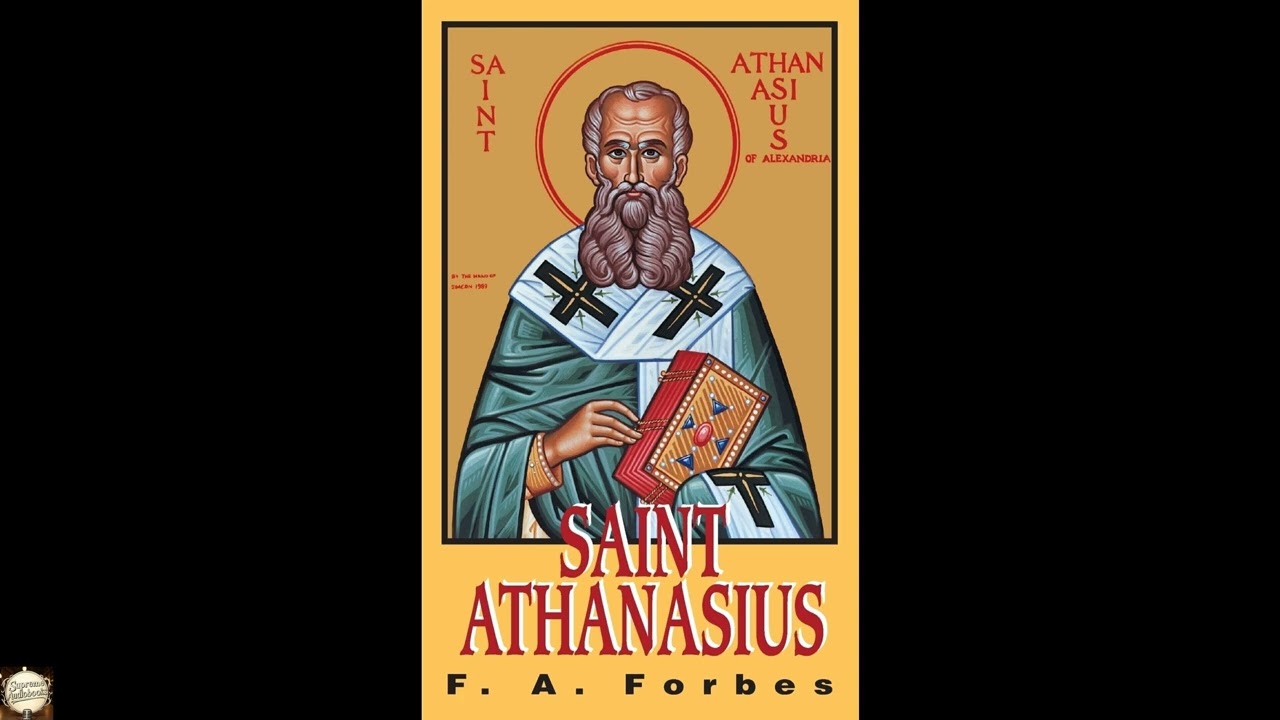
The very foundation of Christian belief, the bedrock of orthodoxy, did not emerge unchallenged or without fierce struggle. To understand the origins of doctrines many now take for granted, one must look to figures like Athanasius of Alexandria, a man whose unwavering conviction shaped centuries of theological thought. Forbes’s biographical account, “St. Athanasius: The Father of Orthodoxy,” presents the dramatic life of this formidable saint, inviting listeners to witness a pivotal era when faith was forged in the fires of controversy. His story resonates powerfully today, offering a testament to courage, intellectual rigor, and the enduring strength required to stand for truth in the face of overwhelming opposition. This narrative offers more than history; it provides a compelling blueprint for steadfastness in any age. The narrative transports listeners to the tumultuous fourth century of the Roman Empire, a period marked by profound theological debates that threatened to splinter the nascent Christian Church. At the heart of this storm stood Athanasius, a young deacon from Alexandria who first came to prominence at the Council of Nicaea in 325 A.D. Here, the Church grappled with Arianism, a doctrine asserting that Jesus Christ, the Son of God, was a created being, subordinate to God the Father, and not co-eternal or co-equal with Him. Athanasius emerged as a fierce advocate for the Nicene Creed, articulating the concept of homoousios – that the Son is of the same substance as the Father – a critical theological distinction that defined the very nature of divinity. Athanasius’s subsequent election as Bishop of Alexandria plunged him into a lifelong struggle against the Arian heresy and its powerful proponents, who often included Roman emperors themselves. His episcopacy became a saga of relentless persecution, forced exiles, and dramatic returns to his see. Five times he was driven from Alexandria by imperial decree or hostile ecclesiastical factions, spending years in deserts, hiding among monks, or seeking refuge in the West. Each time, he returned, his resolve unbroken, his commitment to Nicene orthodoxy unyielding. The story follows his intellectual battles, his steadfast pastoral care even in adversity, and his relentless efforts to unify the fractured Church around the core belief in the divinity of Christ. Forbes skillfully illustrates the intricate political maneuvering, the theological disputations, and the sheer personal endurance that characterized this monumental spiritual conflict. The author, Frances Alice Forbes (1864-1936), was a British hagiographer known for her accessible and inspiring biographies of saints. Born in London and a convert to Catholicism, Forbes dedicated her literary career to making the lives of Christian heroes understandable and compelling for a broad audience, particularly for younger readers and those seeking spiritual instruction. Her writing style, direct and engaging, brought historical figures to life, emphasizing their virtues, struggles, and contributions to faith. Forbes possessed a particular talent for distilling complex historical and theological narratives into clear, concise, and dramatic accounts. Beyond "St. Athanasius," her output included numerous other popular biographies, such as those recounting the lives of St. Ignatius of Loyola, St. Catherine of Siena, and St. Benedict. These works formed part of a significant body of hagiographical literature produced in the late 19th and early 20th centuries, aiming to educate and uplift Catholic readers by presenting exemplary figures from Christian history. She established herself as a respected voice in religious popular biography, contributing significantly to the understanding and appreciation of saintly lives within the English-speaking Catholic world. Forbes’s portrayal of Athanasius foregrounds several crucial themes. Central among them is the defense of theological truth. The book vividly demonstrates Athanasius's unwavering conviction that the nature of Christ was not a minor point of contention but the very heart of Christian identity. Listeners encounter scenes of Athanasius meticulously arguing against the Arian proposition, explaining why a created Christ diminishes salvation and undermines the integrity of God’s self-revelation. His famous theological tract, On the Incarnation, which articulated the necessity of God becoming human for humanity’s redemption, serves as a powerful example of his intellectual and spiritual clarity. Another prominent theme is courage in the face of immense adversity. Athanasius often stood alone against emperors, councils, and even other bishops who either embraced Arianism or sought political compromise. The narrative repeatedly shows him exiled, denounced, and threatened, yet he never recanted his beliefs. One can almost picture him, isolated but resolute, drafting letters and theological arguments from various hiding places, embodying a profound personal integrity that prioritizes divine truth over personal safety or worldly acclaim. This enduring quality of steadfastness, even when the world seems arrayed against one individual, shines through every phase of his dramatic life. The biography also presents the themes of ecclesiastical authority versus state power, as emperors continually tried to dictate church doctrine, and the profound importance of personal spiritual discipline through Athanasius’s association with the Desert Fathers. This biography emerged from a specific cultural and historical moment in the late nineteenth and early twentieth centuries. Following the re-establishment of the Catholic hierarchy in England and the intellectual currents of the Oxford Movement, there was a significant resurgence of interest in Catholic history, theology, and the lives of saints. This period saw a proliferation of popular religious literature designed to educate, inspire, and solidify Catholic identity. Authors like F.A. Forbes contributed to this movement by producing accessible narratives that explained complex historical events and theological concepts through the lives of exemplary figures. Her work provided both historical understanding and moral instruction, helping to ground contemporary faith in the rich traditions of the past, particularly for an audience navigating a rapidly changing world and seeking anchors in enduring religious principles. To experience "St. Athanasius: The Father of Orthodoxy" as an audiobook offers a unique connection to this monumental historical narrative. Over several hours, a skilled narrator can bring to life the gravity of theological debates, the tension of imperial decrees, and the sheer human drama of Athanasius’s relentless struggle. Listeners can absorb the nuanced arguments and historical context while engaging in daily tasks, allowing the story to unfold like an immersive historical docudrama. The pacing of the narration can emphasize the relentless nature of Athanasius’s persecution, the measured resolve in his speeches, and the profound silence of his periods of exile. The human voice breathes life into names and places, transforming ancient history into a living, resonant account of one man's monumental stand for what he believed to be the truth of God.
Enjoyed St. Athanasius: The Father of Orthodoxy? A few ways to support us
Audible & Amazon links are affiliate; we may earn a small commission at no extra cost.
About this production
Human narration by a volunteer reader from LibriVox.org, the public-domain audiobook project. LibriVox volunteers record literary works whose copyright has expired in the United States, releasing the resulting recordings into the public domain.
St. Athanasius: The Father of Orthodoxy by Forbes. The underlying text is in the U.S. public domain. We do not republish any modern copyrighted edition, translation, or commentary.
The 4K cinematic visuals accompanying this audiobook are generated by an AI image model from prompts derived from the source text. No copyrighted photos, paintings, or stock footage are used. AI generation is disclosed on every video on our YouTube channel as required by YouTube's altered/synthetic content policy.
English subtitles are transcribed from the LibriVox recording with OpenAI Whisper. Translations into the 11 other supported languages are produced by Meta's NLLB-200 neural translation model. No human translator's copyrighted translation is used.
Questions about sourcing or rights? See our DMCA & Sourcing policy or contact us.
Enjoyed this audiobook?
If you'd like to own a copy of St. Athanasius: The Father of Orthodoxy or hear a professionally produced edition, the links below help support free audiobook production at no extra cost to you.
As an Amazon Associate we earn from qualifying purchases. Audible / print links are affiliate.