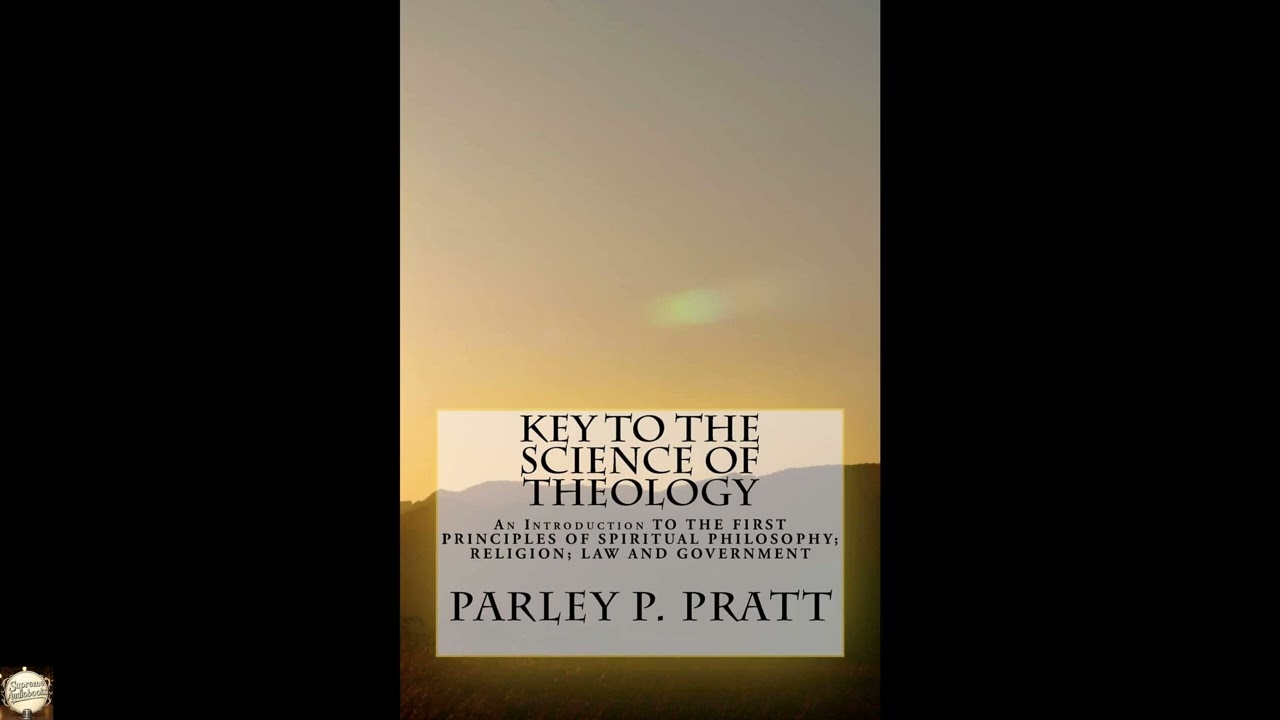
Key to the Science of Theology
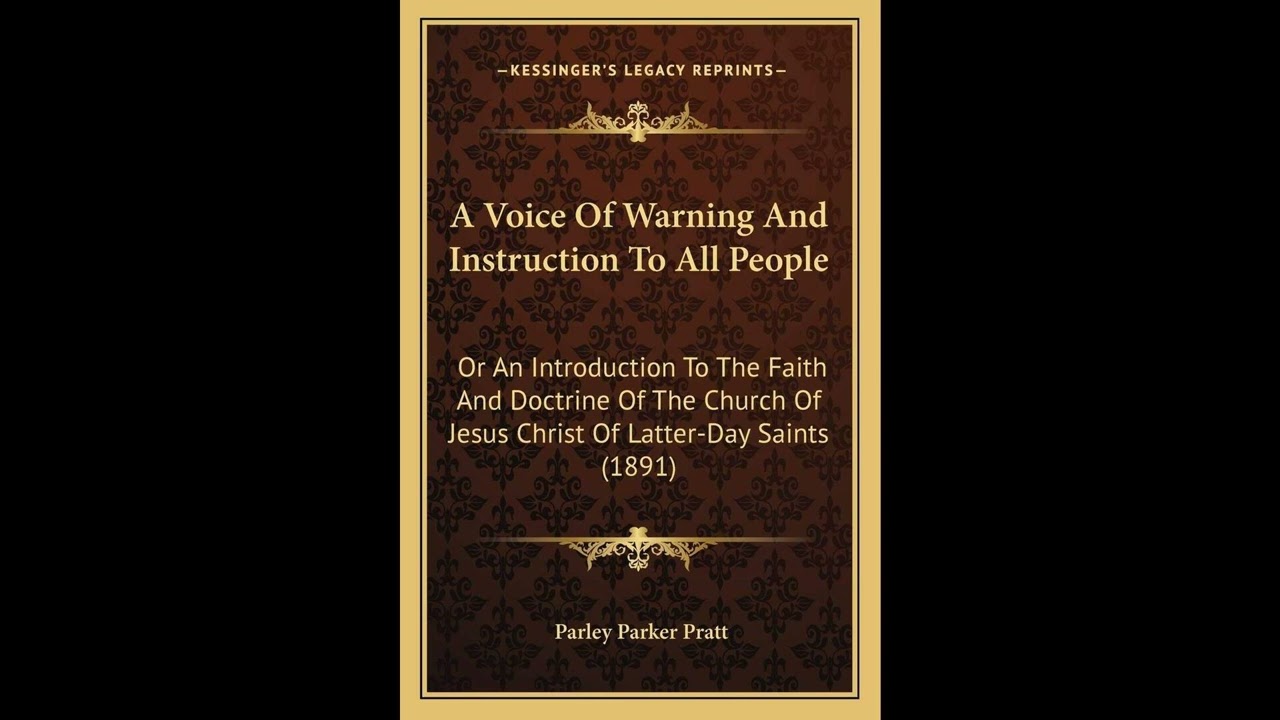
Key to the Science of Theology by Parley P. Pratt stands as a monumental intellectual endeavor from the mid-19th century, a time when profound questions about humanity's place in the cosmos were met with both scientific breakthroughs and spiritual reawakening. This book is not merely a theological treatise; it is a grand unification theory, an attempt to bridge the perceived chasm between scientific observation and spiritual revelation, offering a coherent, systematic view of existence. For listeners today, still grappling with the complexities of faith in an age of ever-advancing knowledge, Pratt’s work offers a surprisingly relevant framework for understanding the universe, God, and the human potential within a single, consistent philosophical system. It invites a re-examination of what theology can be when approached with both spiritual conviction and a rigorous intellectual curiosity. Pratt’s intellectual exposition begins by establishing a fundamental premise: that truth, whether discovered through scientific inquiry or divine revelation, is ultimately one and harmonious. He sets out to demonstrate that the principles governing the spiritual realm are not arbitrary or mystical, but are as rational and consistent as the laws of the physical world. The book methodically unpacks a theology that views God not as an unknowable, ethereal entity, but as a perfected, intelligent being, subject to and master of universal laws that are comprehensible to the human mind. The listener is led through discussions on the nature of spirit and matter, not as distinct opposites, but as different manifestations of the same eternal, elemental forces. The central intellectual conflict Pratt addresses is the tension between a burgeoning scientific materialism that sought to explain all phenomena through physical means, and traditional religious views that often relegated spiritual matters to the realm of the unprovable. Pratt’s “science of theology” posits that spiritual principles can be discerned, understood, and even experimented with, much like scientific laws. He outlines a cosmos teeming with life and intelligence, where creation is an ongoing process of organization and progression, not a static event. This intellectual arc systematically builds a framework for understanding human purpose, divine organization, the structure of the universe, and the ultimate destiny of intelligent beings, all within a coherent, interconnected system. The intellectual arc of Key to the Science of Theology is the unfolding of a vast, interconnected worldview. From the pre-existence of spirits to the post-mortal states of existence, from the principles governing the organization of worlds to the social order of heaven, Pratt constructs a comprehensive cosmology. He carefully lays out his arguments, moving from basic definitions of intelligence, elements, and eternity, to more complex discussions of agency, resurrection, and the potential for humanity to progress towards divinity. The intent is to show that God's plan is not opaque, but an understandable and logical system, waiting to be revealed and assimilated by rational minds. Parley P. Pratt, born in 1807 in Burlington, New York, was a pivotal figure in the early history of the Latter Day Saint movement. His life was one of profound spiritual seeking, dramatic conversions, extensive missionary work, and considerable personal sacrifice. Raised in a religiously diverse environment, Pratt initially felt a spiritual void, which he vigorously sought to fill through various denominations before encountering the teachings of Joseph Smith in 1830. His conversion was immediate and transformative, leading him to become one of the first apostles in the newly established church. Pratt’s intellect and persuasive abilities quickly made him an influential voice. He was a prodigious writer and orator, traveling thousands of miles across North America and to England, preaching and defending his faith. His early work, A Voice of Warning and Instruction to All People (1837), became an important missionary tool, introducing countless individuals to the tenets of his religion. He also penned Mormonism Unveiled: Zion's Watchman Unmasked, a forceful defense of his beliefs against criticism, and his Autobiography, which offers a vivid first-hand account of the trials and triumphs of the early Latter Day Saints. Pratt's place in the literary and religious canon is secure as a foundational apologist and theologian for a major American faith tradition. He helped articulate and disseminate the complex doctrines of his church to a wider public, often in the face of intense opposition and persecution. His writings are characterized by a powerful conviction, a systematic approach to theological questions, and a fervent desire to share what he believed to be restored truths. His life ended tragically in 1857, when he was murdered in Arkansas, a victim of the intense animosity and misunderstandings surrounding his religious beliefs and personal circumstances. One central theme running through Key to the Science of Theology is the rationality of divine truth and the harmony between faith and reason. Pratt consistently argues that God’s laws are not arbitrary edicts but are inherently logical and consistent with the observed universe. For instance, in his discussions on the nature of spirit, he describes it not as an ethereal, formless essence, but as a refined, intelligent form of matter, subject to eternal laws of organization and progression. This portrayal directly counters prevailing dualistic notions of spirit and matter, suggesting an inherent continuity between the physical and spiritual, thus demonstrating a fundamental coherence in God's creation. Another significant theme is the cosmic scope of salvation and progression, extending beyond individual human redemption to encompass the entire universe. Pratt describes an unending process of growth and development, where not only humans but also planets and stars undergo cycles of creation, perfection, and exaltation. He speaks of the pre-existence of spirits, their agency in a probationary state, and the potential for infinite future development towards godhood. This grand vision, where intelligent beings are co-eternal with the elements and participate in an eternal progression alongside God, exemplifies his ambitious attempt to place human existence within a truly universal and eternal context, highlighting the boundless potential for all intelligent life. Published in 1855, Key to the Science of Theology emerged during a period of profound intellectual and social ferment in America. The mid-19th century was characterized by rapid advancements in science and technology, which challenged traditional religious narratives and sparked intense debates about the origins of life and the nature of the universe. Scientific thinkers were pushing the boundaries of knowledge, and a growing skepticism toward literal biblical interpretations was evident. Simultaneously, America was still deeply immersed in religious revivalism, with numerous new religious movements springing up, each offering alternative interpretations of scripture and reality. Pratt's work directly responds to these cultural currents. He sought to demonstrate that his faith was not merely a subjective spiritual experience, but a coherent and scientific system of truth that could stand up to rational scrutiny. By framing theology as a "science," he aimed to appeal to the scientific temper of his age, presenting revelation as a higher form of knowledge that complemented, rather than contradicted, empirical observation. The book's ambitious scope—from cosmology to anthropology, from the nature of God to the potential of humanity—reflects a period when thinkers grappled with reconciling ancient spiritual truths with an increasingly modern, scientifically-informed worldview, particularly within the unique context of American frontier religion. Engaging with Key to the Science of Theology as an audiobook offers a distinct advantage for comprehending its intricate arguments. A skilled narrator can bring clarity and accessibility to Pratt's systematic presentation of complex theological and philosophical concepts, guiding the listener through the detailed expositions without the potential for visual fatigue. With several hours of listening time, it is an ideal companion for reflective moments, long commutes, or focused study sessions, allowing the grand scope of Pratt’s thought to unfold gradually. The measured pacing and thoughtful delivery can emphasize the logical progression of ideas, making the profound connections between science and spirituality resonate more deeply, encouraging careful consideration of each point within this foundational text.
Enjoyed Key to the Science of Theology? A few ways to support us
Audible & Amazon links are affiliate; we may earn a small commission at no extra cost.
About this production
Human narration by a volunteer reader from LibriVox.org, the public-domain audiobook project. LibriVox volunteers record literary works whose copyright has expired in the United States, releasing the resulting recordings into the public domain.
Key to the Science of Theology by Parley P. Pratt. The underlying text is in the U.S. public domain. We do not republish any modern copyrighted edition, translation, or commentary.
The 4K cinematic visuals accompanying this audiobook are generated by an AI image model from prompts derived from the source text. No copyrighted photos, paintings, or stock footage are used. AI generation is disclosed on every video on our YouTube channel as required by YouTube's altered/synthetic content policy.
English subtitles are transcribed from the LibriVox recording with OpenAI Whisper. Translations into the 11 other supported languages are produced by Meta's NLLB-200 neural translation model. No human translator's copyrighted translation is used.
Questions about sourcing or rights? See our DMCA & Sourcing policy or contact us.
Enjoyed this audiobook?
If you'd like to own a copy of Key to the Science of Theology or hear a professionally produced edition, the links below help support free audiobook production at no extra cost to you.
As an Amazon Associate we earn from qualifying purchases. Audible / print links are affiliate.