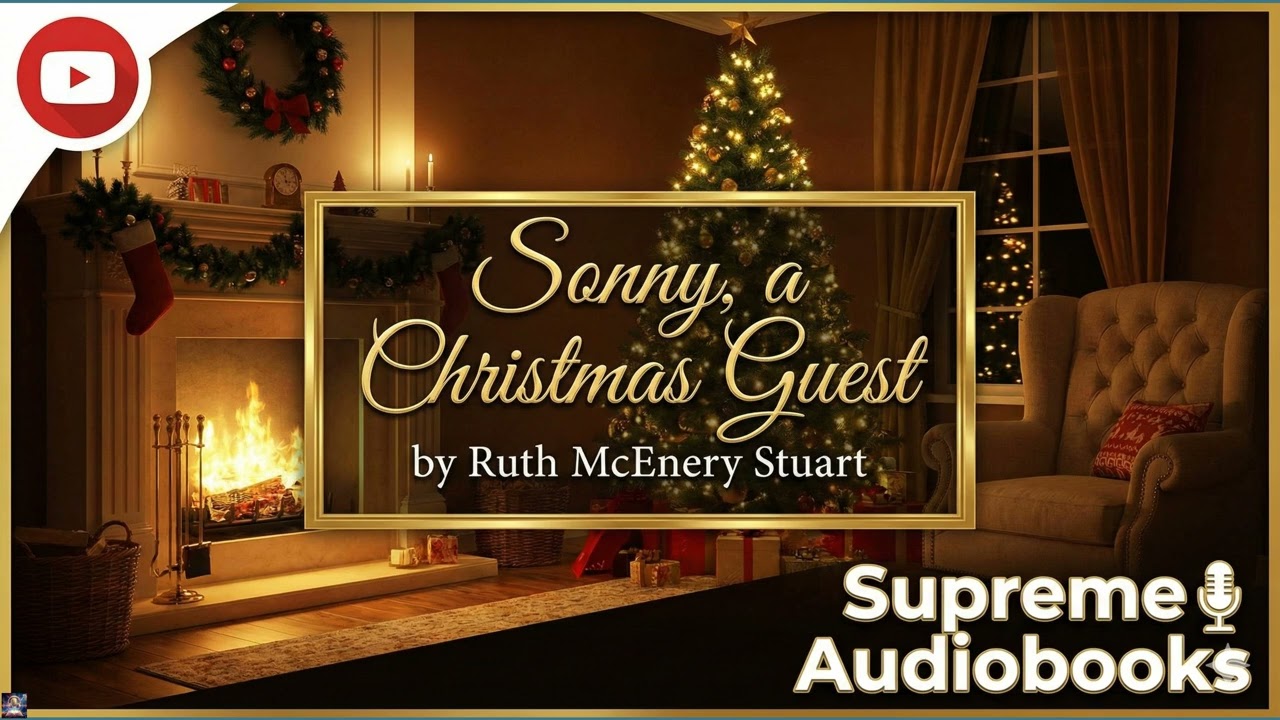
Sonny, a Christmas Guest
Step into a world both familiar and delightfully strange, where the heart of the American South beats with a gentle humor and an unexpected kindness. “Sonny, a Christmas Guest” by Ruth McEnery Stuart invites listeners into a bygone era, offering a charming and often hilarious account of a small boy whose arrival turns a quiet community upside down. More than just a festive tale, this story is a testament to the enduring power of family, the warmth of human connection, and the surprising ways in which even the most mischievous presence can bring joy and purpose. It is a comforting narrative that reminds us of the importance of open hearts, especially during the holiday season, and offers a quiet reflection on what it means to belong, making it a soothing antidote to the complexities of modern life. The story unfolds in a rural Southern setting, likely Arkansas, during the late nineteenth century – a landscape dotted with humble cabins, verdant fields, and neighbors who share both kinship and gossip over fences. At the center of this world is Sonny, a spirited and irrepressible young boy, whose arrival in the home of his doting but often overwhelmed Aunt Dicey sets the entire local social fabric a-flutter. Sonny is not just any child; he is a force of nature, full of innocent curiosity and an almost preternatural ability to find himself in the thick of humorous scrapes. His well-meaning but ultimately chaotic actions – from misplacing valuable items to disrupting local customs with childlike abandon – become the driving force of the narrative, creating a series of amusing predicaments for Aunt Dicey and the other residents. As the Christmas season approaches, Sonny’s presence becomes a focal point for the community’s various anxieties, superstitions, and ultimately, its boundless affection. The narrative follows the attempts of the adults to understand, guide, and often simply contain Sonny’s boundless energy. Each chapter presents a new scenario where Sonny’s earnest intentions lead to unforeseen consequences, often revealing the quirks and kindnesses of the adults around him. The story gently builds towards a climax where the true meaning of his "guest" status is fully realized, not through grand gestures, but through the accumulation of small acts of love and acceptance that transform his temporary stay into something much more profound. It is a story of gradual understanding, both from Sonny’s perspective as he navigates a new environment and from the community’s as they open their hearts to an unconventional arrival. Ruth McEnery Stuart, born in Marksville, Louisiana, in 1849, was a prominent voice in American literature during the late nineteenth and early twentieth centuries. Her life took a decisive turn after the death of her husband, Alfred Oden Stuart, in 1883, which prompted her to turn to writing to support herself and her young son. She initially moved to New Orleans, a city that profoundly influenced her work with its unique cultural blend, before eventually settling in New York City. Stuart gained considerable popularity for her "local color" stories, which deftly captured the dialects, customs, and unique character of the American South, particularly Arkansas and Louisiana. Her keen ear for regional speech and her sympathetic, often humorous, portrayals of both Black and white characters set her apart. She was a prolific contributor to popular magazines of the day, publishing numerous short stories and sketches that were widely read. Among her other notable works are "The Story of Babette, a Creole Girl," "George Washington Jones, a Christmas Gift That Went Wrong," and "A Golden Wedding and Other Tales," all of which further cemented her reputation as a master of Southern regional fiction. Stuart’s position in the literary landscape is that of a skilled observer who brought warmth and authenticity to her depictions of everyday life in a specific part of America undergoing significant social change. She was not only a chronicler of a region but also a subtle commentator on human nature. “Sonny, a Christmas Guest” artfully brings several significant themes to life. One prominent theme is the power of community and belonging, illustrated by the way Sonny, initially seen as an outsider or even a burden, gradually integrates into the lives of the townsfolk. We see this in the neighborly concern shown by Mrs. Poindexter and other characters, who, despite their exasperation with Sonny’s antics, never truly turn away from him, offering advice, comfort, and practical help to Aunt Dicey. Another key theme is childhood innocence and its often-unintended consequences. Sonny’s mischievousness is never malicious; it stems from a child’s unfiltered perspective on the world. For instance, his attempts to "help" with chores or his literal interpretations of adult phrases lead to laugh-out-loud moments that highlight the gulf between adult expectations and a child's understanding, while simultaneously revealing the pure heart beneath the mischief. Furthermore, the story beautifully enacts the spirit of generosity and the transformative power of the Christmas season. The holiday serves as more than just a backdrop; it amplifies the underlying good will and willingness to forgive that exists within the community. As Christmas approaches, the residents’ thoughts turn to family, charity, and togetherness, providing a natural stage for Sonny’s acceptance. Finally, Stuart’s meticulous attention to Southern regionalism and dialect forms a powerful thematic current. The language spoken by the characters, with its specific rhythms and colorful idioms, is not merely decorative; it is fundamental to their identity and culture, anchoring the story firmly in its geographical and historical context and making the characters feel wonderfully authentic and alive. The late nineteenth century, when “Sonny, a Christmas Guest” was written, was a fascinating period in American history, particularly in the South. The post-Reconstruction era saw the region grappling with profound economic, social, and political shifts following the Civil War. There was a widespread effort, both within the South and nationally, to redefine Southern identity. Culturally, there was a significant appetite for stories that depicted American life, moving away from purely European models. This era gave rise to the "local color" movement, which Stuart was a part of, where writers focused on depicting the unique characteristics of specific regions, including their dialects, customs, and landscapes. Many publishers and readers, particularly in the North, found these stories appealing as they offered a window into different parts of a rapidly unifying, yet regionally diverse, nation. For Southern authors like Stuart, it was an opportunity to present a nuanced, often humorous, and sympathetic portrayal of their home region, sometimes challenging popular stereotypes while also contributing to a broader national literary identity. Stuart’s work emerged from this context, offering a gentle, often comedic, perspective on rural Southern life, providing a sense of warmth and familiarity to readers across the country who sought authentic American narratives. Listening to "Sonny, a Christmas Guest" as an audiobook offers a particularly immersive and delightful experience. The story’s charm lies significantly in its authentic Southern dialect and the gentle, conversational tone of its characters. A skilled narrator brings these voices to life, allowing the listener to truly appreciate the humor and warmth embedded in Stuart's prose. The unhurried pacing of the narrative, perfect for its regional setting, translates beautifully in an audio format, inviting a relaxed listening experience. With a run time of several hours, this audiobook is an ideal companion for a long drive, a quiet afternoon at home, or as a comforting bedtime story. Pay close attention to the nuanced delivery of the dialogue and the way the narrator builds a vivid atmosphere, conjuring images of dusty roads, simple homes, and the rich, expressive cadences of a bygone era. It is an invitation to slow down and savor a classic tale.
Enjoyed Sonny, a Christmas Guest? A few ways to support us
Audible & Amazon links are affiliate; we may earn a small commission at no extra cost.
About this production
Human narration by a volunteer reader from LibriVox.org, the public-domain audiobook project. LibriVox volunteers record literary works whose copyright has expired in the United States, releasing the resulting recordings into the public domain.
Sonny, a Christmas Guest by Ruth McEnery Stuart. The underlying text is in the U.S. public domain. We do not republish any modern copyrighted edition, translation, or commentary.
The 4K cinematic visuals accompanying this audiobook are generated by an AI image model from prompts derived from the source text. No copyrighted photos, paintings, or stock footage are used. AI generation is disclosed on every video on our YouTube channel as required by YouTube's altered/synthetic content policy.
English subtitles are transcribed from the LibriVox recording with OpenAI Whisper. Translations into the 11 other supported languages are produced by Meta's NLLB-200 neural translation model. No human translator's copyrighted translation is used.
Questions about sourcing or rights? See our DMCA & Sourcing policy or contact us.
Enjoyed this audiobook?
If you'd like to own a copy of Sonny, a Christmas Guest or hear a professionally produced edition, the links below help support free audiobook production at no extra cost to you.
As an Amazon Associate we earn from qualifying purchases. Audible / print links are affiliate.