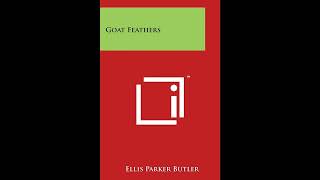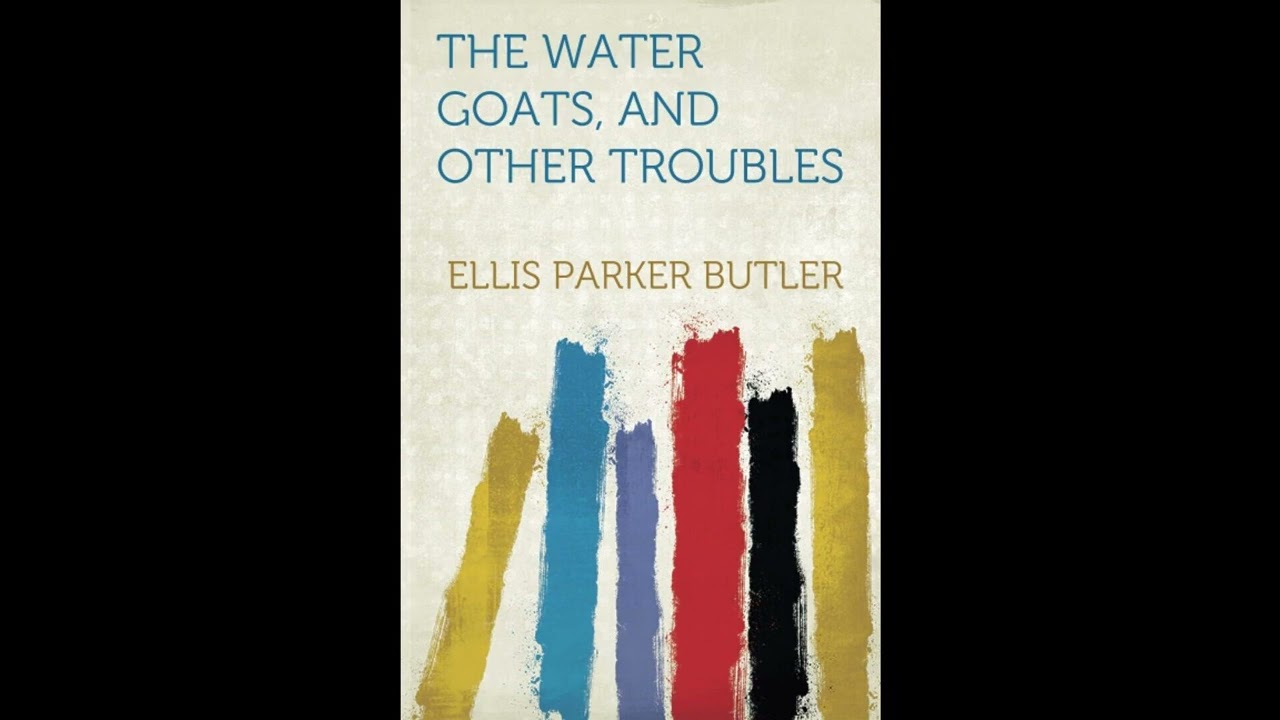
The Water Goats, and Other Troubles
Step into a world where the everyday morphs into the utterly absurd, where well-intentioned plans unravel into hilarious chaos, and where the gentle rhythm of small-town life becomes a stage for the universal comedy of human nature. Ellis Parker Butler's collection, "The Water Goats, and Other Troubles," invites listeners to shed the complexities of the modern age for a spell and rediscover the simple, profound joy of a good laugh at life's little predicaments. These stories, born from a keen eye for the foibles of neighbors and the baffling logic of bureaucracy, resonate still, reminding us that no matter the era, people remain wonderfully, predictably, and comically themselves. It’s a chance to find humor in the struggle, to recognize familiar frustrations rendered with wit and warmth, and to appreciate the enduring charm of American comedic writing from a bygone era. "The Water Goats, and Other Troubles" plunges into the quiet, often unsuspecting lives of ordinary citizens caught in the vortex of minor, yet comically escalating, dilemmas. The settings are typically Main Street America at the dawn of the twentieth century—a world of nascent suburbs, burgeoning townships, and the occasional idiosyncratic pet. Imagine a community where a seemingly innocuous town ordinance regarding livestock or pets can mushroom into a bureaucratic nightmare, or where a simple misunderstanding between neighbors can lead to wildly disproportionate consequences. The collection’s titular story, for instance, often centers on an unusual animal or a peculiar definition, perhaps a new type of creature that doesn’t quite fit existing categories, thereby creating endless confusion and red tape for the hapless owner and the bewildered local authorities. Characters in Butler's stories are immediately recognizable: the earnest but befuddled homeowner, the rigidly logical but hopelessly impractical clerk, the well-meaning spouse whose attempts to help only complicate matters further. Their struggles are not grand epics but rather miniature sagas of the everyday—the fight to properly classify an exotic pet, the attempt to resolve a property line dispute, or the effort to implement a well-intentioned but ultimately impractical household invention. Each story builds on a premise of elegant simplicity, then twists it into a Gordian knot of comic entanglement. The arc often involves a character's increasingly desperate efforts to apply logic or common sense to a situation that has defied both, leading them through a maze of regulations, misinterpretations, and human stubbornness, until the initial small problem has ballooned into a grand, delightful farce. Ellis Parker Butler, born in Muscatine, Iowa, in 1869, developed an early talent for observing the peculiar currents of American life. He moved to New York City as a young man, where he began a prolific career as a writer, contributing countless short stories, essays, and even poetry to popular magazines of the day, including The Saturday Evening Post, American Magazine, and Collier's Weekly. Though he would pass away in 1937 in Williamsville, Massachusetts, his literary legacy firmly established him as one of America's most beloved humorists of the early twentieth century. Butler's bibliography is extensive, encompassing over thirty books, but he remains most widely remembered for his iconic short story, "Pigs Is Pigs" (1906), a masterful comedic piece about a railway agent's pedantic insistence on classifying a shipment of guinea pigs as "pigs" for freight purposes, despite the sender's protests. This story, with its incisive satire of bureaucratic inflexibility, exemplifies the wit and charm that characterize much of his work, including the delightful predicaments found in "The Water Goats, and Other Troubles." The stories gathered here frequently distill common human experiences into a potent comedic essence, often by focusing on the clash between ordinary people and the often-unreasonable systems they navigate. One prominent theme is the absurdity of bureaucracy and red tape, where rules designed for order instead create chaos. Butler delighted in exposing the logical flaws that arise when systems are applied without common sense, creating scenarios where characters find themselves trapped in spirals of administrative nonsense. Think of the homeowner attempting to comply with a new zoning law, only to discover its language is so convoluted it prohibits virtually any action, or the simple act of registering a pet becoming an epic saga of forms and fees. Another recurring theme is the folly of human logic and stubbornness. Butler's characters often dig themselves deeper into trouble by clinging to their own narrow interpretations or refusing to concede a small point, thereby transforming a minor disagreement into a full-blown comic battle. He shows how good intentions can pave the way to hilarious blunders, or how a simple misunderstanding can escalate due to pride or poor communication. A further theme is the comedy of domestic and small-town life, showcasing the unique stresses and joys of living in close proximity with neighbors and family, where everyone's business is, to some extent, everyone else's. The interactions in these communities—the gossip, the rivalries, the well-meant advice—provide a rich backdrop for Butler's observations on human behavior, often revealing the universal truths beneath the local peculiarities. The period when Ellis Parker Butler was writing, roughly the first three decades of the twentieth century, was a time of immense change in America. The country was rapidly urbanizing and industrializing, with new technologies and expanded government functions creating an increasingly complex society. As more people moved to cities and suburbs, they encountered new forms of administration, regulations, and social structures. Humor, particularly the kind of gentle satire Butler practiced, became a popular way to process these changes, offering both entertainment and a means of critiquing the emerging bureaucratic apparatus and the sometimes bewildering aspects of modern life. Literary tastes were shifting, too, away from the more sentimental styles of the previous century towards a more direct, often humorous, engagement with contemporary issues, making Butler's brand of observational comedy highly resonant with his audience. His stories offered a mirror to their own experiences with the burgeoning complexities of daily existence, albeit a distorted, comical one. Listening to "The Water Goats, and Other Troubles" as an audiobook offers a singular pleasure, allowing Butler's precise comedic timing and the distinctive voices of his characters to truly shine. The narration, ideally delivered with a clear, engaging tone and a subtle appreciation for the author's wit, brings the predicaments of these ordinary Americans to life. You'll find yourself listening for the deliberate pacing as a minor issue slowly, inevitably, spirals into grand absurdity, or the nuanced inflection that captures a character’s growing bewilderment or mounting exasperation. The dialogue, often brimming with earnest yet misguided arguments, takes on an added dimension when spoken, allowing the full humor of Butler's carefully crafted exchanges to land with perfect effect. With several hours of content, it’s an ideal companion for a long drive, a quiet evening in, or whenever you need a dose of intelligent, good-natured humor that transcends its original era. Let the sounds of early 20th-century America—and its delightful troubles—wash over you, leaving you refreshed and thoroughly amused.
Enjoyed The Water Goats, and Other Troubles? A few ways to support us
Audible & Amazon links are affiliate; we may earn a small commission at no extra cost.
About this production
Human narration by a volunteer reader from LibriVox.org, the public-domain audiobook project. LibriVox volunteers record literary works whose copyright has expired in the United States, releasing the resulting recordings into the public domain.
The Water Goats, and Other Troubles by Ellis Parker Butler. The underlying text is in the U.S. public domain. We do not republish any modern copyrighted edition, translation, or commentary.
The 4K cinematic visuals accompanying this audiobook are generated by an AI image model from prompts derived from the source text. No copyrighted photos, paintings, or stock footage are used. AI generation is disclosed on every video on our YouTube channel as required by YouTube's altered/synthetic content policy.
English subtitles are transcribed from the LibriVox recording with OpenAI Whisper. Translations into the 11 other supported languages are produced by Meta's NLLB-200 neural translation model. No human translator's copyrighted translation is used.
Questions about sourcing or rights? See our DMCA & Sourcing policy or contact us.
Enjoyed this audiobook?
If you'd like to own a copy of The Water Goats, and Other Troubles or hear a professionally produced edition, the links below help support free audiobook production at no extra cost to you.
As an Amazon Associate we earn from qualifying purchases. Audible / print links are affiliate.