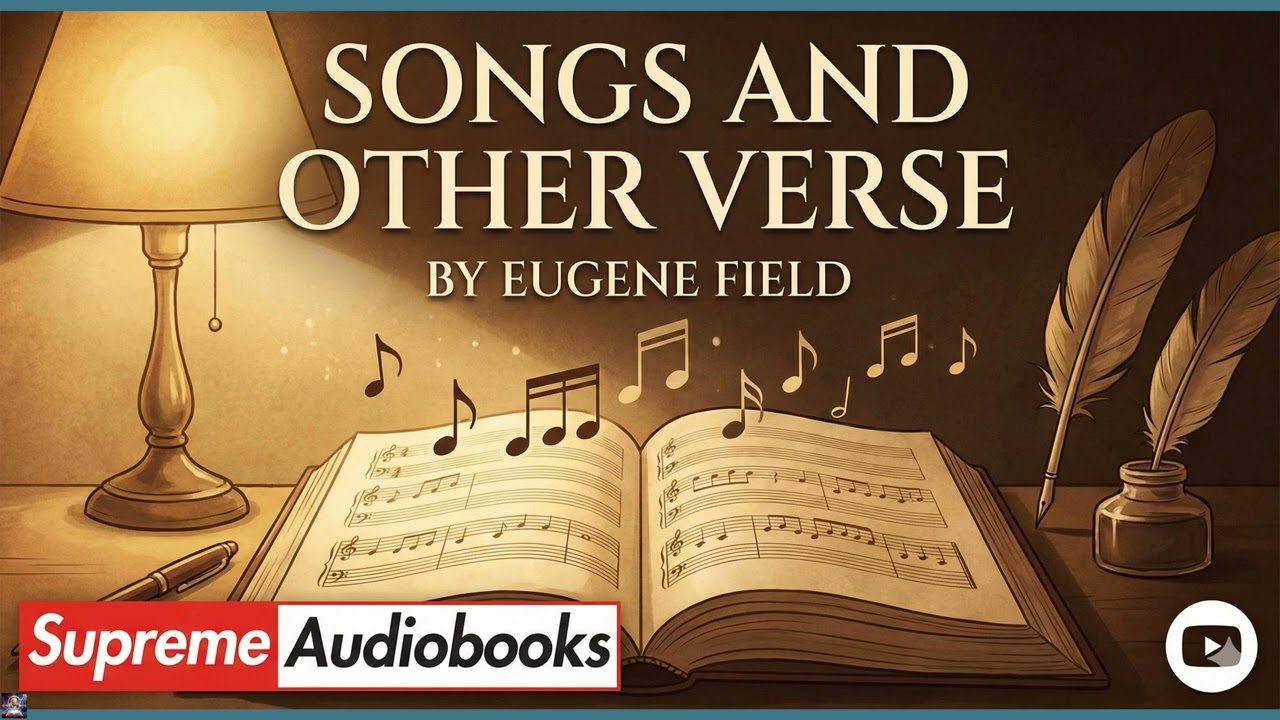
Songs and Other Verse
Eugene Field's "Songs and Other Verse" arrives as a gentle invitation, a collection that whispers from the turn of the twentieth century, yet still speaks with clarity and tenderness to our modern ears. It is more than just a book of poems; it is a key to a quieter, more reflective time, offering solace, whimsy, and poignant reminders of enduring truths. Here, in the melody of his carefully crafted lines, listeners will find both the innocent wonder of childhood beautifully rendered and the subtler, often humorous, observations of adult life. This anthology stands as a testament to Field's remarkable ability to articulate the universal emotions that bind generations, reminding us that joy, sorrow, dreams, and the comfort of home are threads woven through every human experience. Within these hours of listening, one encounters a diverse spectrum of human experience, painted with Field's distinctive touch. The collection leads us first into the magical realm of childhood, where imagination takes flight. We meet the beloved "Wynken, Blynken, and Nod," children sailing a wooden shoe on a sea of dew, their fantastical voyage an allegory for the dreams of sleeping innocents. The familiar sadness of "Little Boy Blue," with his dusty toys and the poignant wait for his return, evokes a deep sense of loss and the enduring power of memory. These lyrical pieces conjure an atmosphere of gentle nostalgia, inviting us to appreciate the fleeting nature of youth. Field's artistry extends far beyond the nursery. As the collection progresses, the verse shifts to embrace the adult world, often with a wry wit or reflective melancholy. We encounter poems that humorously satirize society's foibles, others celebrating domestic comfort and simple pleasures, and still others musing on the passage of time. His satirical verses offer clever commentary wrapped in approachable language. Then come the deeply personal pieces, touching on love, grief, and the search for meaning, revealing a complexity that enriches the experience. The arc of "Songs and Other Verse" is not a single narrative, but rather a passage through the many rooms of the human heart, each poem a window into a different facet of life, all rendered with grace and musicality. Eugene Field, born in St. Louis, Missouri, in 1850, led a life that echoed his varied verses – marked by bright beginnings, early loss, and a singular creative spirit. Orphaned in his youth, he developed a keen intellect and a lifelong love for books in Massachusetts. Though he briefly attended college, his true calling emerged from journalism. Field began as a newspaper reporter and columnist, eventually finding his stride as a humorist and poet for the Denver Tribune and later the Chicago Daily News. His daily column, "Sharps and Flats," became a celebrated platform for his wit, observations, and, most famously, his verse. Known affectionately as "the Children's Poet," Field's renown stemmed primarily from his children's literature, though he wrote across many genres. Earlier collections, like "A Little Book of Western Verse" (1889) and "Love-Songs of Childhood" (1894), cemented his reputation. He belonged to a distinct group of late 19th-century American writers who blended humor, sentiment, and the fantastical, capturing the nation's changing spirit. Field's personal collection of rare books and manuscripts was legendary, underscoring his deep reverence for literature. His life, cut short by an early death in 1895 at 45, left an indelible mark on American letters, establishing him as a cherished voice that continues to comfort and inspire. The appeal of Field's verse lies in its articulation of several core human experiences. One prominent theme is the sanctity and fragility of childhood innocence. Through poems like "Little Boy Blue," Field creates a profound empathy for the pure-hearted child and the aching memory of parents. The "little tin soldier" and "old Dutch doll" standing guard symbolize unchanging love and the stillness that follows loss, contrasting with youthful play. Another significant theme is the power of imagination and dreams as refuge and wonder. "Wynken, Blynken, and Nod" offers a quintessential example, transforming sleep into a shimmering adventure on the "Milky Way," reminding listeners that the inner world holds boundless possibilities. Beyond these more sentimental considerations, Field also deftly weaves in themes of nostalgia for simpler times and gentle humor and social commentary. His verses frequently evoke a bygone era of domestic warmth, painting scenes of comfort and community that resonated with a society undergoing rapid change. Even when his humor is sharp, it targets common foibles or daily absurdities rather than grand social injustices. His literary significance stems from this unique blend: he could move listeners to tears with an elegy for childhood, then evoke a chuckle with a clever turn of phrase, all while maintaining a voice that felt both approachable and deeply artistic. He crafted verse accessible to the masses, yet possessed a sophisticated understanding of rhythm, rhyme, and emotional resonance. Eugene Field's "Songs and Other Verse" emerged from late nineteenth-century America, a period known as the Gilded Age. This was a time of rapid industrial growth and social change, with burgeoning cities and stark contrasts of wealth. The Civil War was a recent memory, fostering a collective nostalgia for simpler, pre-industrial eras. Culturally, sentimentality in literature was highly valued, and popular journalism brought poetry and serialized stories directly into American homes. Field's work captured this mood precisely; his children's poems spoke to a growing appreciation for childhood innocence amidst increasing industrialization, offering an imaginative escape. Simultaneously, his humorous and satirical pieces provided a gentle counterpoint to the era's serious concerns, allowing him to connect directly with a wide public through his newspaper columns and become a beloved voice as mass media took hold. This poetry collection truly comes alive when experienced as an audiobook. The rhythm and rhyme of Field's verse, which sometimes gets lost on the page, become immediately apparent and deeply affecting through skilled narration. A talented reader can bring out the delicate humor, the quiet pathos, and the sheer musicality inherent in each poem, shaping the atmosphere with pacing and voice. Listen for the subtle shifts in tone—from the lilting cadence of a lullaby to the sharper delivery of a clever quip. With several hours of content, it is perfect for moments of quiet reflection, for sharing with children, or for dipping into during commutes or household tasks, allowing Field's unique voice to provide comfort and gentle stimulation.
Enjoyed Songs and Other Verse? A few ways to support us
Audible & Amazon links are affiliate; we may earn a small commission at no extra cost.
About this production
Human narration by a volunteer reader from LibriVox.org, the public-domain audiobook project. LibriVox volunteers record literary works whose copyright has expired in the United States, releasing the resulting recordings into the public domain.
Songs and Other Verse by Eugene Field. The underlying text is in the U.S. public domain. We do not republish any modern copyrighted edition, translation, or commentary.
The 4K cinematic visuals accompanying this audiobook are generated by an AI image model from prompts derived from the source text. No copyrighted photos, paintings, or stock footage are used. AI generation is disclosed on every video on our YouTube channel as required by YouTube's altered/synthetic content policy.
English subtitles are transcribed from the LibriVox recording with OpenAI Whisper. Translations into the 11 other supported languages are produced by Meta's NLLB-200 neural translation model. No human translator's copyrighted translation is used.
Questions about sourcing or rights? See our DMCA & Sourcing policy or contact us.
Enjoyed this audiobook?
If you'd like to own a copy of Songs and Other Verse or hear a professionally produced edition, the links below help support free audiobook production at no extra cost to you.
As an Amazon Associate we earn from qualifying purchases. Audible / print links are affiliate.