Songs Out Of Doors
Step into a world where the rustling leaves speak ancient wisdom and the clear stream offers solace to a weary spirit. Henry Van Dyke's Songs Out Of Doors extends an invitation to rediscover the profound beauty and restorative power of the natural world. This collection, a cornerstone of classic American letters, resonates profoundly today, offering a tranquil antidote to the ceaseless demands of modern life. It serves as a gentle reminder that amidst our hurried existences, there remains a persistent, enduring source of peace and wonder waiting just beyond our thresholds, if only we pause long enough to listen. Van Dyke’s collection carries its listener through a meticulously observed natural landscape, painting scenes that range from the hushed solemnity of a winter forest to the exuberant rebirth of spring, the sun-drenched days of summer, and the contemplative quietude of autumn. Rather than a conventional narrative with characters and a linear plot, this book presents a series of lyrical observations, poetic reflections, and intimate essays, each acting as a window into the speaker's engagement with his surroundings. The "main character" here is the perceptive and philosophical speaker himself, whose sensitivity to the subtle shifts of light, sound, and season becomes our guide. He is a keen fisherman, a patient walker of woods, and a profound admirer of all things wild and untamed. The central through-line within these "songs" is the human heart's persistent longing for connection with something greater than itself, often found in the quiet majesty of nature. The collection progresses not through dramatic external events, but through the deepening insights and spiritual revelations that the speaker garners from his outdoor encounters. From the simple pleasure of casting a fly into a stream to the awe inspired by a mountain vista, or the quiet contemplation of a bird’s song, the author leads us through a seasonal and emotional arc. This arc illuminates how the natural world can serve as both a mirror for human experience and a sanctuary where the spirit finds rejuvenation and clarity, fostering a profound sense of belonging and peace. Henry Van Dyke, born in Germantown, Pennsylvania, in 1852 and passing in 1933, lived a life as rich and varied as the landscapes he celebrated. An American author, poet, educator, and diplomat, Van Dyke was a figure of considerable influence in his time. He received his education at Princeton University and Princeton Theological Seminary, eventually returning to his alma mater to hold the prestigious chair of English Literature. His career also extended into public service, most notably as the United States Minister to the Netherlands and Luxembourg during the tumultuous period of the First World War. His diverse experiences—from the academic halls to the diplomatic stage and the quiet contemplation of nature—infused his writing with a unique blend of intellectual rigor, moral conviction, and lyrical grace. He is remembered not only for his nature writing but also for beloved works like The Other Wise Man, a short story that reimagines the traditional Nativity narrative, and Little Rivers: A Book of Essays in Profitable Idleness, which shares a thematic kinship with Songs Out Of Doors. Van Dyke's literary output often reflected a late Romantic sensibility, emphasizing the individual's spiritual relationship with nature and promoting a gentle, often Christian, moral philosophy. He occupied a significant place in the American literary canon as a voice that blended aesthetic appreciation with ethical purpose, bridging the gap between an earlier transcendentalist tradition and the emerging conservationist movement. Among the specific themes that grace the pages of Songs Out Of Doors, one finds a powerful affirmation of nature’s healing power. Van Dyke illustrates this with tender precision, describing, for instance, how the rhythmic whisper of wind through pine trees can soothe a troubled mind, or how the simple act of watching a river flow can dissipate the anxieties of modern life. He points to the restorative calm found in a secluded forest glade, where the concerns of the human world seem to recede. Another prominent theme is spiritual reflection and the profound presence of the divine within the natural world. He portrays the majesty of a sunrise or the intricate design of a flower not merely as beautiful phenomena, but as tangible expressions of a greater, benevolent creator, transforming mundane observations into moments of profound spiritual insight. Further, the collection celebrates the simple, enduring joys of outdoor life. Whether it is the quiet thrill of a successful fishing trip, the camaraderie around a flickering campfire under a canopy of stars, or the invigorating solitude of a long walk through autumn woods, Van Dyke consistently highlights the profound contentment derived from direct engagement with the elements. Finally, the book tenderly observes the inexorable passage of time and the cyclical nature of the seasons. He reflects on autumn’s vibrant but poignant descent into winter’s slumber, followed by the hopeful resurgence of life in spring, showing how these natural rhythms mirror, and often inform, the human experience of change, loss, and renewal. This collection emerged during a pivotal era in American history, the late nineteenth and early twentieth centuries, a period marked by profound industrialization, rapid urbanization, and significant social upheaval. As cities grew denser and technology advanced, many Americans experienced an increasing disconnect from the rural landscapes that had defined previous generations. In response, a powerful counter-current emerged, a yearning for the authenticity and tranquility of nature. Literary figures like Van Dyke, echoing earlier Transcendentalist writers such as Ralph Waldo Emerson and Henry David Thoreau, offered a literary refuge, a reaffirmation of the spiritual and moral value inherent in wild places. This work offered readers a necessary escape, a connection to a simpler, more elemental existence amidst the complexities of a swiftly changing world, contributing to a nascent American conservationist ethos. Listening to Songs Out Of Doors as an audiobook offers a uniquely immersive and contemplative experience. The inherent lyrical quality of Henry Van Dyke’s prose and poetry, with its measured cadences and evocative imagery, is perfectly suited for vocal interpretation. A skilled narrator can bring forth the subtle rhythms, the delicate emotional nuances, and the rich descriptive details that might be missed in a silent reading. The several-hour run length allows for an extended period of engagement, making it an ideal companion for long walks in nature, quiet moments of reflection, or as a calming presence during daily routines. A thoughtful narration, with its unhurried pacing, expressive voice, and careful attention to atmosphere, creates an intimate connection to the speaker’s observations, transforming a listening session into a shared moment of natural discovery and inner peace.
Enjoyed Songs Out Of Doors? A few ways to support us
Audible & Amazon links are affiliate; we may earn a small commission at no extra cost.
About this production
Human narration by a volunteer reader from LibriVox.org, the public-domain audiobook project. LibriVox volunteers record literary works whose copyright has expired in the United States, releasing the resulting recordings into the public domain.
Songs Out Of Doors by Henry Van Dyke. The underlying text is in the U.S. public domain. We do not republish any modern copyrighted edition, translation, or commentary.
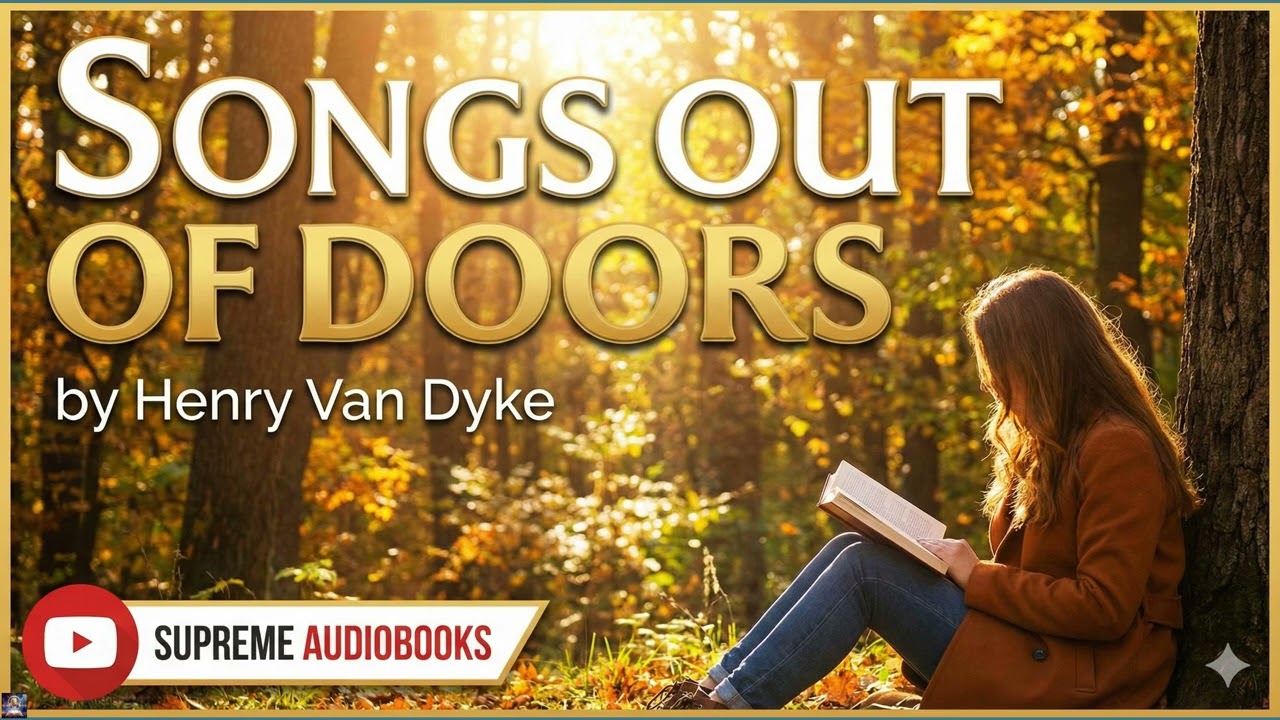
The 4K cinematic visuals accompanying this audiobook are generated by an AI image model from prompts derived from the source text. No copyrighted photos, paintings, or stock footage are used. AI generation is disclosed on every video on our YouTube channel as required by YouTube's altered/synthetic content policy.
English subtitles are transcribed from the LibriVox recording with OpenAI Whisper. Translations into the 11 other supported languages are produced by Meta's NLLB-200 neural translation model. No human translator's copyrighted translation is used.
Questions about sourcing or rights? See our DMCA & Sourcing policy or contact us.
Enjoyed this audiobook?
If you'd like to own a copy of Songs Out Of Doors or hear a professionally produced edition, the links below help support free audiobook production at no extra cost to you.
As an Amazon Associate we earn from qualifying purchases. Audible / print links are affiliate.