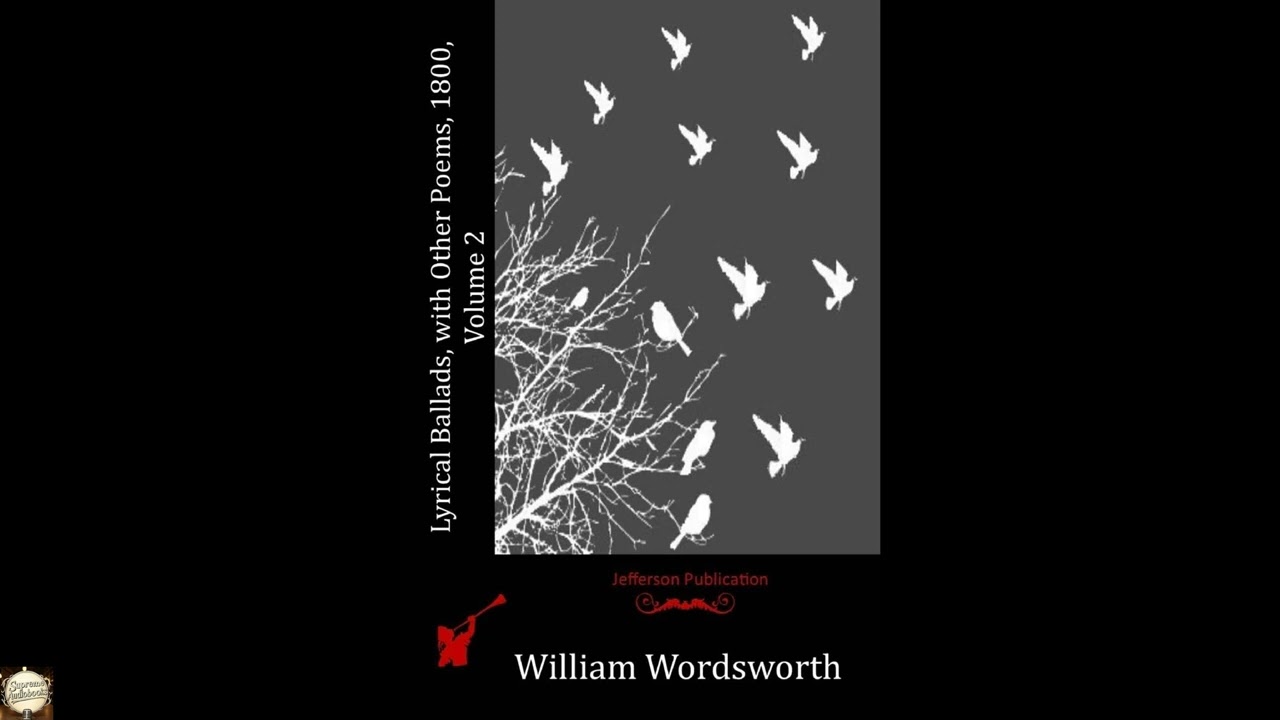
Lyrical Ballads with Other Poems, 1800, Volume 2
The 1800 edition of Lyrical Ballads with Other Poems, Volume 2, stands as a landmark in literary history, not merely as a collection of verses, but as a manifesto for a new way of seeing the world and expressing its essence. This particular volume, a continuation of the groundbreaking 1798 collection, deepened the poetic revolution initiated by its authors, establishing a foundation for what we now recognize as English Romanticism. It challenged the prevailing literary conventions of its era, turning away from grand, classical subjects and ornate language to find profound beauty and truth in the everyday, the rural, and the individual human heart. Listening to this work today offers a unique window into the genesis of modern poetic sensibility, inviting us to reconsider our relationship with nature, memory, and the unspoken feelings that shape our lives. It reminds us that the most profound insights often arise from the simplest observations, rendered in language that feels both natural and deeply resonant. This collection, rather than presenting a single linear narrative, unfolds as a series of resonant vignettes and lyrical meditations, each a small world unto itself. The settings are predominantly the rustic landscapes of the English countryside: windswept fells, serene lakes, winding paths, and humble cottages. The figures encountered are not heroes of epic tales but rather shepherds, solitary wanderers, young children, and women grappling with loss or solitude – people whose lives, though outwardly unremarkable, hold deep emotional and psychological weight. The central tension running through these pieces often involves the individual’s interaction with the natural world, the way memory colors present experience, and the subtle struggles between innocence and experience, joy and sorrow. A child's simple song might evoke deep philosophical reflection, or a solitary walk through a familiar landscape could trigger a powerful re-evaluation of one's past and present self. The collection progresses not through a traditional plot, but through an accumulation of feeling and insight. Each poem contributes to a larger exploration of humanity's inner life and its inseparable connection to the external world. There is a persistent focus on capturing "the real language of men," aiming for a directness and emotional authenticity that was novel for its time. We witness characters grappling with universal human experiences—grief, wonder, isolation, the solace found in beauty—all filtered through a keen observational lens. The pieces invite contemplation, shifting from straightforward descriptions of rural life to profound reflections on time, the spirit, and the enduring power of nature to console and instruct. There is no singular climactic event, but rather a series of smaller epiphanies, each poem serving as a moment of heightened awareness, drawing the listener into the intimate space of thought and feeling. While the author of this particular audiobook listing is generically listed as "Unknown," the true architects of Lyrical Ballads, and particularly the dominant voice in the 1800 edition, were William Wordsworth and Samuel Taylor Coleridge. Their collaboration began in the late 1790s, when their shared intellectual fervor and poetic aspirations drew them together in Somerset. Wordsworth, born in 1770 in Cockermouth, Cumberland, was deeply influenced by the landscapes of the Lake District, which became the spiritual heart of much of his poetry. His formative years included studies at Cambridge and a transformative period in revolutionary France, where he was exposed to radical political ideas before returning to England disillusioned but creatively energized. Coleridge, born in 1772 in Ottery St Mary, Devon, was a prodigious scholar and thinker, whose contributions to the 1798 Lyrical Ballads included the iconic "The Rime of the Ancient Mariner." However, by the 1800 edition, which included Wordsworth's pivotal Preface, Wordsworth’s influence and the number of his contributions had significantly grown, making him the collection’s primary voice. Wordsworth settled in Grasmere in the Lake District in 1799, a place he would call home for the remainder of his long and prolific life, shaping his perspective on nature and the human condition. His output includes monumental works such as The Prelude, a vast autobiographical epic poem, and a host of shorter lyrics that cemented his place as a central figure in English literature, recognized for his revolutionary approach to poetic subject matter and language. The enduring significance of Lyrical Ballads lies in its radical redefinition of poetry's purpose and scope. One of its central themes is the profound connection between humanity and the natural world, portraying nature not as a mere backdrop but as a vital, animate force that shapes character, inspires moral reflection, and offers solace. For instance, in "Lines Written a Few Miles Above Tintern Abbey," the speaker revisits a beloved landscape and finds that the memories of its beauty have sustained him through years of city life, confirming nature's capacity to renew the spirit and connect us to a deeper sense of self. This theme is enacted through detailed observations of scenery, infused with subjective feeling, suggesting that true wisdom can be found in contemplating the simple majesty of the outdoors. Another critical theme is the celebration of the common person and everyday life. Rejecting the neoclassical emphasis on classical heroes or mythological figures, the poems often focus on rural laborers, children, or those on the margins of society, revealing their inherent dignity and the depth of their emotions. A piece like "The Idiot Boy" gently portrays the simple joys and challenges within a humble family, highlighting the tender bonds that tie people together regardless of social standing or intellectual capacity. The collection asserts that profound universal truths are not exclusive to the grand or the heroic, but reside just as powerfully within the ordinary experiences and sensibilities of common folk. These themes, delivered in an accessible, direct style, marked a pivotal departure from the elevated diction and aristocratic subjects that had largely defined English poetry for centuries prior. This period, straddling the late eighteenth and early nineteenth centuries, was a time of immense political and social upheaval. The reverberations of the French Revolution, with its initial promise of liberty and then its descent into violence, deeply influenced European intellectual thought, fostering both hope and disillusionment. In England, the early stages of the Industrial Revolution were beginning to transform society, leading to rapid urbanization and the displacement of traditional rural communities. Amidst this backdrop of change, Enlightenment rationalism, which emphasized logic and order, was gradually giving way to a new cultural current that prioritized emotion, imagination, and the individual's subjective experience—the nascent Romantic movement. Lyrical Ballads emerged precisely from this ferment, offering a powerful antidote to the prevailing literary modes of the time, which often adhered to strict classical forms, polished urbanity, and didactic moralizing. Wordsworth and Coleridge deliberately sought to break from this tradition, to create poetry that spoke directly to the heart and soul, using "language really used by men" to evoke genuine feeling rather than intellectual wit. Their work served as a rallying cry for a new generation of writers, emphasizing sincerity, spontaneous emotion, and the sublimity found in nature, effectively laying the groundwork for much of the poetry that would follow throughout the 19th century and beyond. It was a revolutionary act, both in subject and style, designed to reawaken the imagination of readers grown weary of formal constraints. Listening to Lyrical Ballads with Other Poems, Volume 2, as an audiobook provides an exceptionally immersive and authentic experience. Poetry, after all, was originally an oral art form, and hearing these verses read aloud allows their intrinsic rhythms, cadences, and sonic qualities to truly resonate. The several hours of content allow for a deep dive into the collection, giving listeners time to absorb the emotional nuances and the carefully chosen language of each poem. A skilled narrator can bring out the subtleties in Wordsworth's voice—the contemplative hush, the sudden surge of wonder, the quiet sorrow—and differentiate between the diverse characters and emotional states depicted. Pay close attention to the pacing, which can range from gentle, meditative flows to more urgent, narrative moments, and how the voice guides you through the often profound shifts in perspective within each piece. This auditory experience connects you directly to the raw, groundbreaking spirit of a work that irrevocably changed the course of English literature.
Enjoyed Lyrical Ballads with Other Poems, 1800, Volume 2? A few ways to support us
Audible & Amazon links are affiliate; we may earn a small commission at no extra cost.
About this production
Human narration by a volunteer reader from LibriVox.org, the public-domain audiobook project. LibriVox volunteers record literary works whose copyright has expired in the United States, releasing the resulting recordings into the public domain.
Lyrical Ballads with Other Poems, 1800, Volume 2 by William Wordsworth and Samuel Taylor Coleridge. The underlying text is in the U.S. public domain. We do not republish any modern copyrighted edition, translation, or commentary.
The 4K cinematic visuals accompanying this audiobook are generated by an AI image model from prompts derived from the source text. No copyrighted photos, paintings, or stock footage are used. AI generation is disclosed on every video on our YouTube channel as required by YouTube's altered/synthetic content policy.
English subtitles are transcribed from the LibriVox recording with OpenAI Whisper. Translations into the 11 other supported languages are produced by Meta's NLLB-200 neural translation model. No human translator's copyrighted translation is used.
Questions about sourcing or rights? See our DMCA & Sourcing policy or contact us.
Enjoyed this audiobook?
If you'd like to own a copy of Lyrical Ballads with Other Poems, 1800, Volume 2 or hear a professionally produced edition, the links below help support free audiobook production at no extra cost to you.
As an Amazon Associate we earn from qualifying purchases. Audible / print links are affiliate.