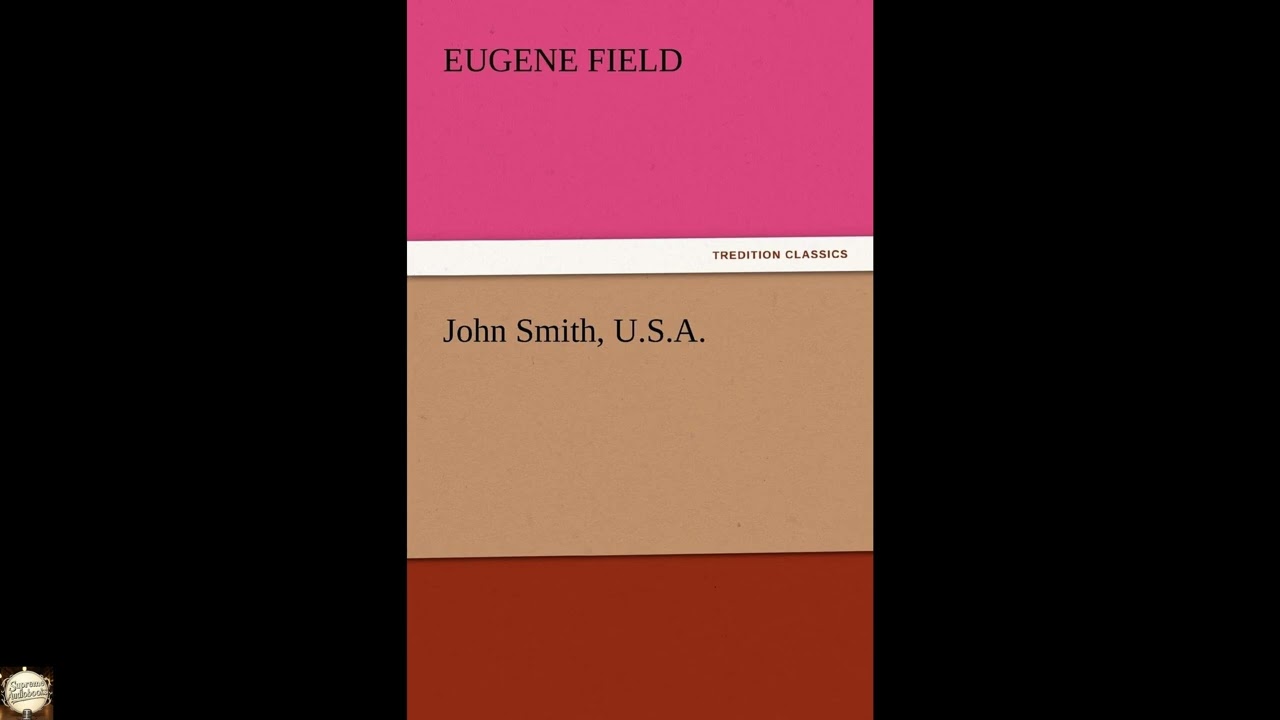
John Smith, U.S.A
Within the annals of American letters, some narratives stand as immediate reflections of their time, while others quietly distill the essence of an era, becoming more profound with each passing generation. Eugene Field's John Smith, U.S.A. belongs squarely to the latter category, a gently subversive yet deeply affectionate portrait of the American spirit at a pivotal moment. Far from a grand historical epic, this understated novel instead offers an intimate look at the daily struggles and quiet triumphs of an ordinary man who, by his very name, embodies the nation itself. It is a story that prompts us to consider what it means to be American – then and now – through the eyes of someone who simply sought to live a decent life amidst the currents of change. Listeners today will find in its pages not just a historical curiosity, but a resonant echo of the enduring quest for identity and belonging that shapes every individual's experience of their homeland. The story unfolds in a rapidly expanding late nineteenth-century America, a nation still grappling with the scars of conflict yet eagerly embracing the promises of progress. Our protagonist, John Smith, is introduced as a man of unassuming demeanor and quiet resolve, residing in a burgeoning Midwestern town that mirrors the country's own swift metamorphosis. A veteran of the Civil War, John carries the invisible burdens of his past service with a stoic grace, his days now marked by the steady rhythm of his work as a printer for the local newspaper. His life, while outwardly simple, is colored by a deep observation of the people around him and the subtle shifts in community values. The central conflict emerges not from a single dramatic event, but from John's gentle resistance to the encroaching commercialism and the erosion of neighborly bonds he witnesses daily. As the narrative progresses, John finds himself at the crossroads of tradition and innovation. He cherishes the familiar rhythms of small-town life, the shared stories, and the quiet dignity of honest labor, but the world around him is accelerating, driven by new technologies and a relentless pursuit of profit. His personal challenges mirror these larger societal shifts: a beloved local landmark is threatened by development, long-held community events fade into memory, and even the very language of public discourse begins to change, favoring bombast over thoughtful reflection. Through a series of vignettes – from his attempts to save an old oak tree that shades the town square to his gentle disputes with the ambitious new editor of his paper – Field paints a compelling picture of a man attempting to maintain his integrity and sense of purpose in a world increasingly alien to him, all while wrestling with his own personal regrets and hopes for the future of his country. Eugene Field, born in St. Louis, Missouri, in 1850, made his indelible mark on American literature primarily as a poet and a journalist. His early life was marked by a somewhat itinerant education, attending Williams College, Knox College, and the University of Missouri, though he never graduated. He began his professional life in journalism, working for various newspapers in Missouri, Colorado, and finally Chicago, where he achieved widespread recognition for his daily column, "Sharps and Flats," for the Chicago Daily News. This column, which he wrote from 1883 until his untimely death in 1895, became a beloved feature, celebrated for its wit, satire, and often sentimental observations on life and culture. While John Smith, U.S.A. might not be as widely recognized as his cherished children's poems like "Wynken, Blynken, and Nod" or "Little Boy Blue," it nevertheless showcases the same gentle humor, keen observational skills, and underlying pathos that defined much of his output. Field was a master of the "local color" movement, drawing inspiration from the everyday lives and dialects of ordinary Americans. His writing often blended the humorous with the poignant, reflecting a deep affection for childhood innocence and a nostalgic yearning for simpler times, even as he acutely observed the complexities of the modern world. His place in the literary canon is secured by his unique blend of journalism, poetry, and storytelling, which offered comfort and reflection to a rapidly changing nation. Several core themes emerge with quiet power from John Smith's story, each rendered with Field's characteristic blend of sentiment and precise detail. One prominent idea is the nature of American identity itself – not as a grand, unified ideal, but as a mosaic of individual experiences and local loyalties. We see this in John's unwavering connection to his hometown, where the names on the war monument and the familiar faces at the general store collectively define his sense of belonging. His efforts to preserve the town's character are not about resisting progress wholesale, but about holding onto the shared memories and common decency that, for him, constitute the true "U.S.A." A second theme is the delicate balance between continuity and change. John is not entirely opposed to innovation; he understands the world moves forward. Yet, he laments the loss of particular values, like the genuine community spirit he remembers from his youth. An example of this is a scene where a lively, impromptu town debate over a new electric streetcar line highlights not just the practical arguments, but the deeper philosophical divide between those who embrace the new at all costs and those who seek to temper it with respect for tradition and collective memory. A third compelling idea is the quiet dignity of the common person and the profound impact of individual acts of resilience. John Smith is no hero of epic proportions, but his steadfastness in the face of indifference, his commitment to his principles, and his unspoken wisdom lend him a profound, relatable heroism. When he quietly organizes a group of children to clear debris from a neglected public park, rather than waiting for distant city authorities, he exemplifies how small, sustained efforts can ripple outwards, inspiring a renewed sense of shared responsibility. Furthermore, the book subtly explores the idea of memory and remembrance – how personal recollections shape a collective understanding of history and identity. John's frequent, often unarticulated, reflections on his wartime experiences and his memories of departed friends serve as a reminder that the present is always informed by the past, and that honoring what came before is essential for understanding where one stands. Eugene Field composed John Smith, U.S.A. during the late nineteenth century, a dynamic and often turbulent period in American history. Following the Civil War and the Reconstruction era, the nation experienced a massive surge in industrialization, rapid urbanization, and significant immigration. This was an age of great technological advancement, from the proliferation of railroads to the advent of electricity, which dramatically reshaped daily life and the economic landscape. Alongside this material progress, there was a growing sense of national identity, but also widespread social change, often marked by a tension between traditional rural values and the emerging complexities of metropolitan life. Literarily, this was a time when realism was beginning to assert its dominance, moving away from earlier romantic traditions, though sentimentalism and regional writing remained popular. Field’s work, including John Smith, U.S.A., reflects these currents, often blending the sentimental warmth of a bygone era with a journalistic eye for the details of contemporary life. The book emerged as a contemplation of what it meant to be an "average" American citizen amidst such profound transformations, a gentle call to remember the foundational values of community, integrity, and simple human connection in the face of relentless modernization and the expanding scale of the American experience. Listening to John Smith, U.S.A. as an audiobook offers a unique opportunity to immerse oneself in Field's distinctive narrative voice. The run length of several hours makes it an ideal companion for a series of commutes, an afternoon of gardening, or simply quiet evenings at home. A skilled narrator can bring out the understated humor and subtle pathos inherent in Field's prose, allowing the listener to truly inhabit the world of John Smith. Pay close attention to the pacing – the measured rhythm of the narration should mirror the protagonist's own calm demeanor, punctuated by moments of quiet reflection or gentle wit. The voice work will be crucial in distinguishing the various townspeople, giving each their own unique inflection, from the earnest to the slightly eccentric. The dialogue, often wry and observational, comes alive when spoken aloud, revealing the layers of character and the atmosphere of a changing nation through conversations both trivial and profound. An attentive ear will discover how the audio experience enhances the novel's nostalgic mood, creating an intimate, almost conversational connection with a quintessential American story.
Enjoyed John Smith, U.S.A? A few ways to support us
Audible & Amazon links are affiliate; we may earn a small commission at no extra cost.
About this production
Human narration by a volunteer reader from LibriVox.org, the public-domain audiobook project. LibriVox volunteers record literary works whose copyright has expired in the United States, releasing the resulting recordings into the public domain.
John Smith, U.S.A by Eugene Field. The underlying text is in the U.S. public domain. We do not republish any modern copyrighted edition, translation, or commentary.
The 4K cinematic visuals accompanying this audiobook are generated by an AI image model from prompts derived from the source text. No copyrighted photos, paintings, or stock footage are used. AI generation is disclosed on every video on our YouTube channel as required by YouTube's altered/synthetic content policy.
English subtitles are transcribed from the LibriVox recording with OpenAI Whisper. Translations into the 11 other supported languages are produced by Meta's NLLB-200 neural translation model. No human translator's copyrighted translation is used.
Questions about sourcing or rights? See our DMCA & Sourcing policy or contact us.
Enjoyed this audiobook?
If you'd like to own a copy of John Smith, U.S.A or hear a professionally produced edition, the links below help support free audiobook production at no extra cost to you.
As an Amazon Associate we earn from qualifying purchases. Audible / print links are affiliate.