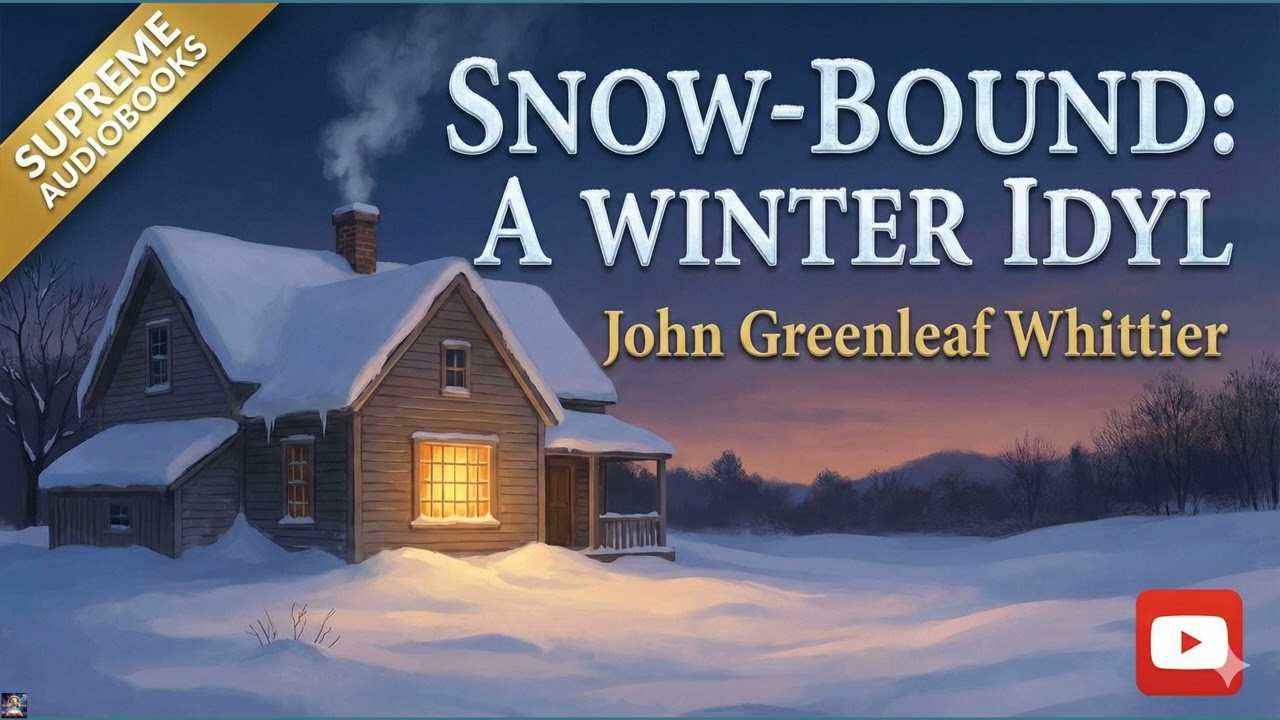
Snow-bound a Winter Idyl
Imagine a world suddenly hushed, transformed by an insistent, relentless snowfall that blots out the familiar and creates an entirely new landscape of white. That is the initial scene awaiting the listener in John Greenleaf Whittier's "Snow-bound: A Winter Idyl," a narrative poem that captures the profound human experience of isolation, togetherness, and the enduring power of memory. This is more than just a description of a snowstorm; it is an intimate portrait of a family made profoundly present to each other by nature's dramatic intervention. Today, as much as in its own time, the poem offers solace and a quiet reminder of what truly sustains us when the outside world recedes, inviting a modern audience to slow down and find beauty and meaning in shared space and simple moments. The narrative opens not with a bang, but with a quiet accumulation – the first flakes falling, then a gathering intensity that builds into a full-blown blizzard. Set in a quintessential New England farmhouse, the poem meticulously details the onset of a historic snowstorm that swiftly engulfs the world outside, rendering roads impassable and cutting off the homestead from all contact. Within hours, the family is trapped, the windows glazed over with ice, the doors blocked by massive drifts. The central conflict, if one can call it that in an idyll, is the family's gentle confrontation with nature's overwhelming force. They do not fight it; they surrender to it, turning their focus inward to the warmth of the hearth and the company of one another. Inside, a small cast of characters comes to life around the fire. There is the industrious father, whose practical wisdom helps them manage the immediate crisis, and the mother, a figure of quiet grace and domestic comfort. The children, excited by the novelty of their imprisonment, join the family circle alongside a maiden aunt with her store of local legends, and a scholarly uncle whose stories often take a more solemn turn. Two additional figures complete the group: the local schoolmaster, a temporary guest, and a reserved, gentle woman described as "the friend." Together, this varied group passes the time, sharing stories, recalling memories, and finding a unique bond in their shared, unexpected seclusion. The story arc is less about dramatic events and more about the deepening intimacy of this confined space, the rich interior landscape blossoming as the exterior world remains frozen and still. John Greenleaf Whittier, born in 1807 in Haverhill, Massachusetts, emerged from a modest Quaker farming background, a heritage that profoundly shaped his moral sensibility and commitment to social justice. Largely self-educated, he devoured books and developed an early talent for verse, publishing his first poem in a local newspaper at a young age. His early career was significantly marked by his fervent involvement in the abolitionist movement. He became a vocal and influential advocate, serving as editor for several anti-slavery newspapers and playing a foundational role in the American Anti-Slavery Society. This period of his life was characterized by passionate activism, even personal risk, as he championed the cause of freedom for enslaved people through his writing and public work. Following the Civil War, with the abolitionist cause achieved, Whittier shifted his focus, though never abandoning his moral compass. He turned more toward poetry that celebrated New England life, history, and natural landscapes, becoming one of the most beloved of the "Fireside Poets"—a group of American poets whose works were widely read and memorized in homes across the nation. His work, including poems like "The Barefoot Boy" and "Barbara Frietchie," resonated with a broad audience for its accessibility, clear moral vision, and evocative depictions of rural American life. Whittier passed away in 1892, leaving behind a legacy as a poet of conscience, deeply connected to the land and values of his native region. "Snow-bound" enacts several profound themes. One prominent idea is the transformative power of nature and the human capacity for resilience in its face. The raging storm isolates the family, forcing them to rely on their inner resources and each other. The blizzard is not an antagonist to be defeated, but rather a catalyst for a deeper connection, demonstrating how adversity can forge stronger bonds and reveal hidden strengths within a community. The family’s response—building warmth, sharing stories, finding comfort in routine—illustrates a steadfast endurance. Another central theme is the sanctity of home and family. The poem celebrates the hearth as a sanctuary, a haven against the encroaching wilderness and the world's cares. The details of domestic life—the crackling fire, the shared meals, the conversations—are imbued with a gentle reverence, underscoring the idea that true wealth lies in familial connection and shared history. The specific recollections, the mother's quiet presence, the father's tales of olden days, all contribute to a portrait of an ideal domestic space, one where love and memory are tangible forces. The poem also touches upon nostalgia and the bittersweet beauty of memory, as it is presented as a recollection of an earlier, perhaps simpler, time. Published in 1866, "Snow-bound" appeared at a pivotal moment in American history. The Civil War had just concluded, leaving the nation scarred but united, grappling with the immense cost and the process of Reconstruction. This was a period of immense change, both politically and socially, with rapid industrialization beginning to reshape the landscape and traditional ways of life. Whittier's poem offered a balm to a fractured society, a nostalgic look back at a quieter, more unified past, focusing on universal themes of family and community rather than the divisive politics of the recent conflict. It spoke to a yearning for stability, comfort, and the enduring values of American rural life amidst a period of profound national upheaval and uncertainty. Listening to "Snow-bound" as an audiobook allows the poem's narrative flow and rhythmic qualities to truly come alive. Whittier crafted his lines with an ear for natural speech and evocative imagery, and a skilled narrator can convey the poem's gentle pacing and the subtle shifts in atmosphere, from the initial dread of the approaching storm to the cozy warmth of the hearth and the eventual quiet triumph of clearing the snow. The duration of several hours ensures that the listener can fully immerse themselves in the unfolding idyll, allowing the poem to wash over them, much like the snow itself. Pay attention to how the voice brings out the distinct personalities of the family members through their dialogue and recollections, and how the narration crafts an auditory landscape that evokes both the chilling beauty of the winter world outside and the comforting intimacy within the snow-bound home.
Enjoyed Snow-bound a Winter Idyl? A few ways to support us
Audible & Amazon links are affiliate; we may earn a small commission at no extra cost.
About this production
Human narration by a volunteer reader from LibriVox.org, the public-domain audiobook project. LibriVox volunteers record literary works whose copyright has expired in the United States, releasing the resulting recordings into the public domain.
Snow-bound a Winter Idyl by John Greenleaf Whittier. The underlying text is in the U.S. public domain. We do not republish any modern copyrighted edition, translation, or commentary.
The 4K cinematic visuals accompanying this audiobook are generated by an AI image model from prompts derived from the source text. No copyrighted photos, paintings, or stock footage are used. AI generation is disclosed on every video on our YouTube channel as required by YouTube's altered/synthetic content policy.
English subtitles are transcribed from the LibriVox recording with OpenAI Whisper. Translations into the 11 other supported languages are produced by Meta's NLLB-200 neural translation model. No human translator's copyrighted translation is used.
Questions about sourcing or rights? See our DMCA & Sourcing policy or contact us.
Enjoyed this audiobook?
If you'd like to own a copy of Snow-bound a Winter Idyl or hear a professionally produced edition, the links below help support free audiobook production at no extra cost to you.
As an Amazon Associate we earn from qualifying purchases. Audible / print links are affiliate.
More by John Greenleaf Whittier
Historical Papers - Volume VI - Part III
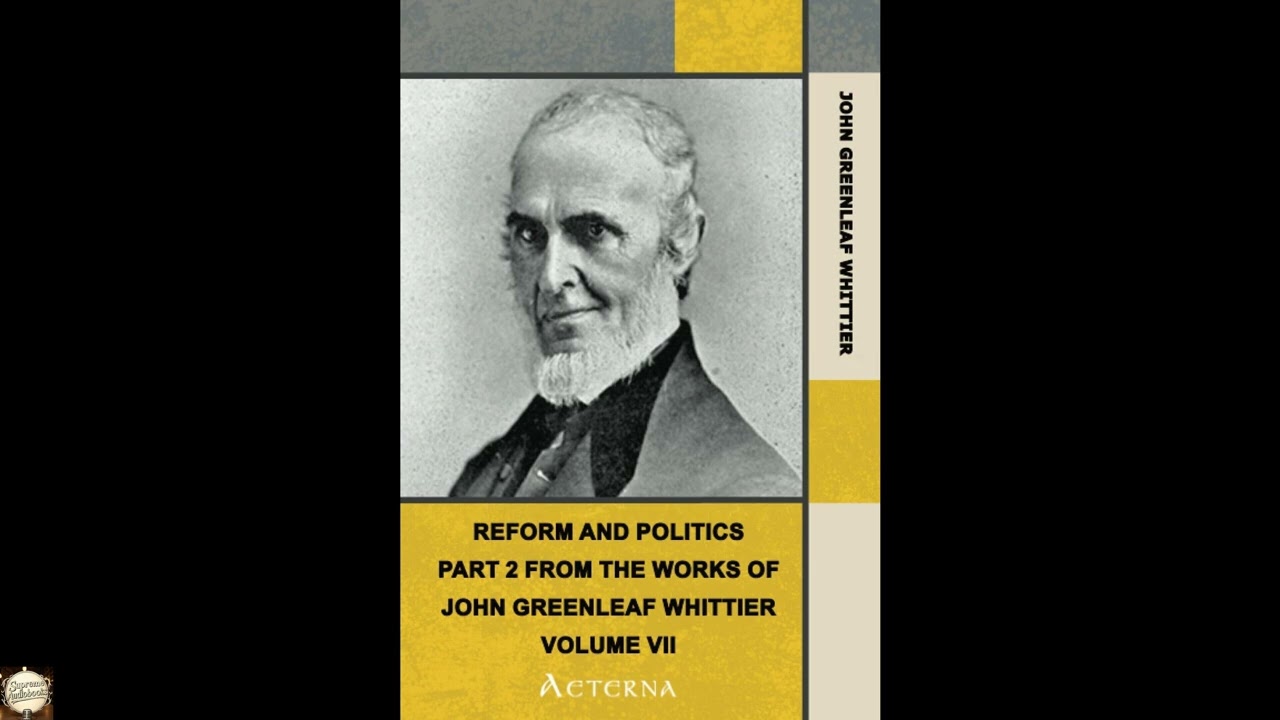
Reform and Politics. Part 2 from The Works of John Greenleaf Whittier, Volume VII
Anti-Slavery Poems 3. Part 3 From Volume III of The Works of John Greenleaf Whittier- Full Audiobook