Silhouettes
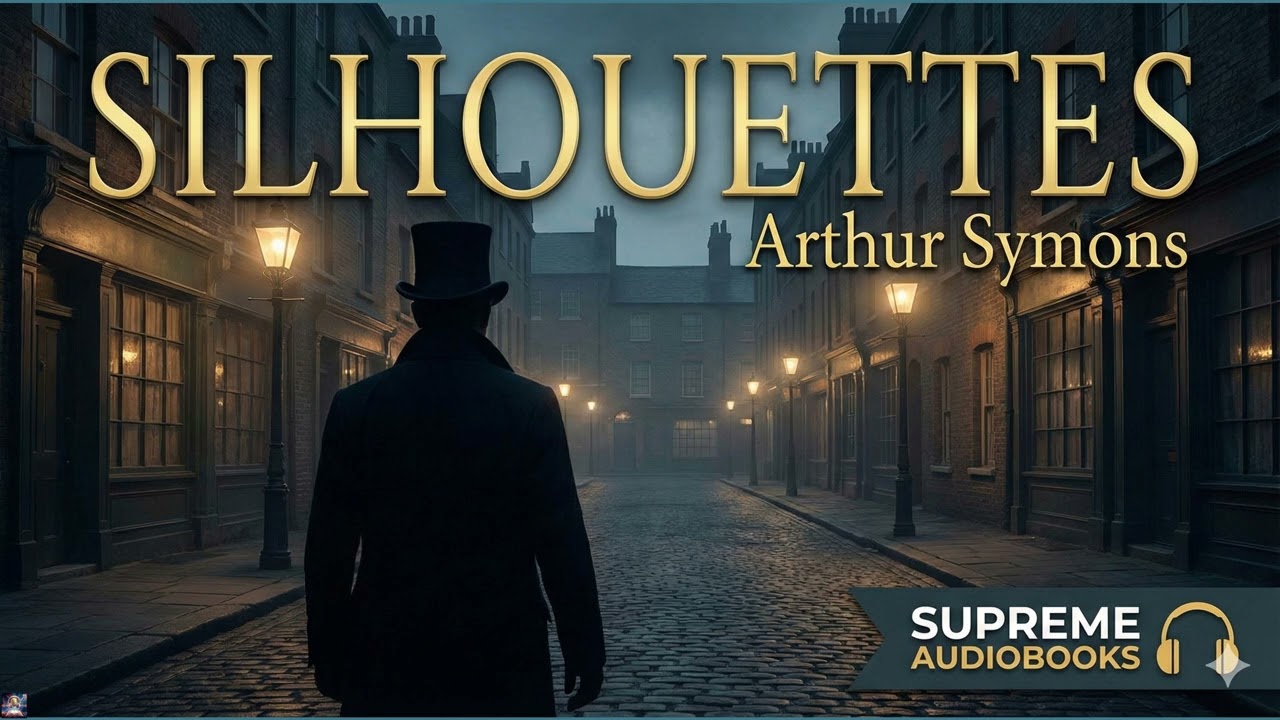
Arthur Symons’s Silhouettes offers more than just a collection of poems; it is a meticulously crafted portal into the gaslit streets and shadowed interiors of fin-de-siècle Europe, a period charged with both artistic innovation and a profound sense of cultural unease. Published at the cusp of modernity, this groundbreaking work captures the essence of an era defined by fleeting beauty, sensory overload, and the search for meaning amidst an increasingly complex urban landscape. Listening to Silhouettes today allows us to step back into a time when poetry was the supreme medium for crystallizing mood and observation, offering a visceral and intimate experience of a world that feels both distant and eerily relevant in its contemplation of change, artificiality, and the human psyche. It is a work that speaks directly to the sensibilities of a world grappling with identity, art, and the very nature of existence itself. The "story" within Silhouettes does not unfold with a traditional plot or named protagonists, but rather as a sequence of vividly rendered impressions, much like the changing scenes viewed from a carriage window in a bustling city. The setting shifts between the smoky, vibrant music halls of London and Paris, the quiet solitude of artistic studios, and the melancholic introspection of a sensitive observer. The "main character" is often the speaker himself—a flâneur, perhaps, or a solitary aesthete—who moves through these environments, capturing the ephemeral glow of a dancer beneath the stage lights, the anonymous faces in a crowd, or the sudden, overwhelming sensation of a moment. This observer, always slightly detached yet deeply attuned, functions as our guide through a world poised between Victorian morality and modern liberation. The central conflict of the collection is an internal one, a constant tension between the allure of artificial beauty—the painted faces, the theatrical stages, the constructed urban environment—and the underlying realities of decay, transience, and emotional truth. We encounter figures like the "La Mélinite," a celebrated dancer whose performance embodies a brief, exhilarating perfection, only to fade with the curtain's fall. The arc of the work moves from these outward observations of public life and performance into more intimate, psychological landscapes, depicting moments of personal reverie, disillusionment, and a quiet yearning for something unattainable. Each poem acts as a snapshot, a silhouette against the backdrop of time, building a cumulative sense of a particular mood and sensibility that defines the period. Arthur William Symons, born in Wales in 1865, lived a life deeply immersed in the literary and artistic currents of his time. He began his career in London, quickly becoming a central figure in the Decadent and Aesthetic movements of the late nineteenth century. Symons was a key member of the famous Rhymers' Club, a gathering of poets that included W. B. Yeats and Lionel Johnson, known for their pursuit of art for art’s sake. His critical prowess led him to edit The Savoy, a short-lived but highly influential literary and art magazine that pushed against the moralistic constraints of the Victorian era. Symons was not merely a poet but also a distinguished critic and a vital translator who introduced English readers to the French Symbolist poets—figures like Stéphane Mallarmé and Paul Verlaine—whose influence is keenly felt throughout Silhouettes. Symons's life was marked by both professional acclaim and personal struggles, most notably a severe mental breakdown in 1908 that profoundly affected his later work and public perception. Despite this, he remained a prolific writer, producing numerous volumes of poetry, essays, and critical studies until his death in 1945. His place in the literary canon is significant for bridging the gap between the waning traditions of Victorian literature and the nascent stirrings of Modernism. He provided a crucial conduit for European aesthetic ideas into English letters, advocating for a poetry of mood, suggestion, and sensory experience over narrative or didacticism. His body of work, though sometimes overshadowed, stands as a testament to the intellectual ferment and artistic ambition of his era. Silhouettes enacts several compelling themes that resonate with listeners even today. One dominant theme is the ephemeral nature of beauty and experience. Symons frequently returns to the image of the dancer or the performer, whose artistry exists only for the duration of a performance, fading into memory as quickly as it appears. Consider the portrayal of a ballerina, described not as a fixed entity but as a “twisting flame” or a “sudden gleam,” emphasizing the transient, almost hallucinatory quality of her grace. Another key theme is urban alienation and the paradox of city life. The poems often depict crowds, streets, and music halls, highlighting both the intoxicating energy and the profound sense of isolation one can feel within them. A listener might encounter a scene where countless strangers pass by, each a fleeting impression, contributing to a sense of both belonging and utter solitude in the vastness of the metropolis. Furthermore, Symons masterfully engages with the theme of aestheticism and artificiality. He is fascinated by the beauty found in manufactured environments and cultivated performances, often privileging the lamp-lit stage over natural landscapes. The very title Silhouettes suggests a focus on outline, shadow, and the artifice of presentation rather than robust reality. This ties into a persistent strain of melancholy and psychological introspection that permeates the collection. The speaker often turns inward, reflecting on the subjective nature of perception, the sorrow of unfulfilled desires, and the pervasive sense of ennui that was characteristic of the Decadent movement. These poems are not merely descriptions; they are emotional landscapes, inviting the listener to feel the weight of a moment, the whisper of a memory, or the quiet ache of disillusionment. Silhouettes emerged from a particular cultural and historical moment: the fin-de-siècle, often described as a period of profound transition and anxiety. Published in 1896, the collection reflects the societal shifts occurring as the Victorian era drew to a close. Culturally, there was a growing weariness with the perceived moral strictures and industrial utilitarianism of the preceding decades. Artists and writers, particularly in France, began to champion a new aesthetic, prioritizing sensation, subjectivity, and the pursuit of beauty for its own sake—a movement Symons helped bring to England. Politically, the British Empire was at its zenith, yet underneath the surface, there were nascent doubts about progress and the future, contributing to a sense of a world on the brink of significant, often unsettling, change. In the literary world, this period saw a reaction against the didacticism and narrative focus of Victorian literature. The Rhymers' Club and periodicals like The Yellow Book and The Savoy, which Symons was instrumental in, championed a more refined, introspective, and often melancholic style. Silhouettes is a direct product of this milieu, absorbing the influence of French Symbolism with its emphasis on mood, suggestion, and the evocative power of language. It arose from a desire to capture the fleeting impressions of modern life, to render the psychological interiority of the individual, and to find beauty in the artificial and the transient, offering a counterpoint to the more robust, outward-looking literature that had preceded it. It was a bid for emotional precision and a nuanced understanding of human experience in a rapidly modernizing world. Listening to Silhouettes as an audiobook transforms the experience of these delicate, atmospheric poems. The spoken word brings Symons's careful rhythms and musicality to the forefront, allowing the listener to truly absorb the cadence and flow of his verse. A narrator's voice can amplify the subtle shifts in mood, from the bustling energy of a city street to the quiet contemplation of an inner thought. The run length, several hours in total, provides ample time for immersive engagement, perfect for reflective moments or as a backdrop to a quiet evening. Pay attention to the narrator’s pacing, which will likely be unhurried and thoughtful, allowing the images and emotions to fully develop. Notice how the voice handles the subtle irony or the underlying melancholy, bringing out the nuances of Symons’s descriptive language and his evocation of sensory detail. The lack of traditional dialogue places emphasis on the narrator’s interpretation of the speaker’s internal world, creating an atmospheric soundscape that truly embodies the fin-de-siècle sensibility.
Enjoyed Silhouettes? A few ways to support us
Audible & Amazon links are affiliate; we may earn a small commission at no extra cost.
About this production
Human narration by a volunteer reader from LibriVox.org, the public-domain audiobook project. LibriVox volunteers record literary works whose copyright has expired in the United States, releasing the resulting recordings into the public domain.
Silhouettes by Arthur Symons. The underlying text is in the U.S. public domain. We do not republish any modern copyrighted edition, translation, or commentary.
The 4K cinematic visuals accompanying this audiobook are generated by an AI image model from prompts derived from the source text. No copyrighted photos, paintings, or stock footage are used. AI generation is disclosed on every video on our YouTube channel as required by YouTube's altered/synthetic content policy.
English subtitles are transcribed from the LibriVox recording with OpenAI Whisper. Translations into the 11 other supported languages are produced by Meta's NLLB-200 neural translation model. No human translator's copyrighted translation is used.
Questions about sourcing or rights? See our DMCA & Sourcing policy or contact us.
Enjoyed this audiobook?
If you'd like to own a copy of Silhouettes or hear a professionally produced edition, the links below help support free audiobook production at no extra cost to you.
As an Amazon Associate we earn from qualifying purchases. Audible / print links are affiliate.