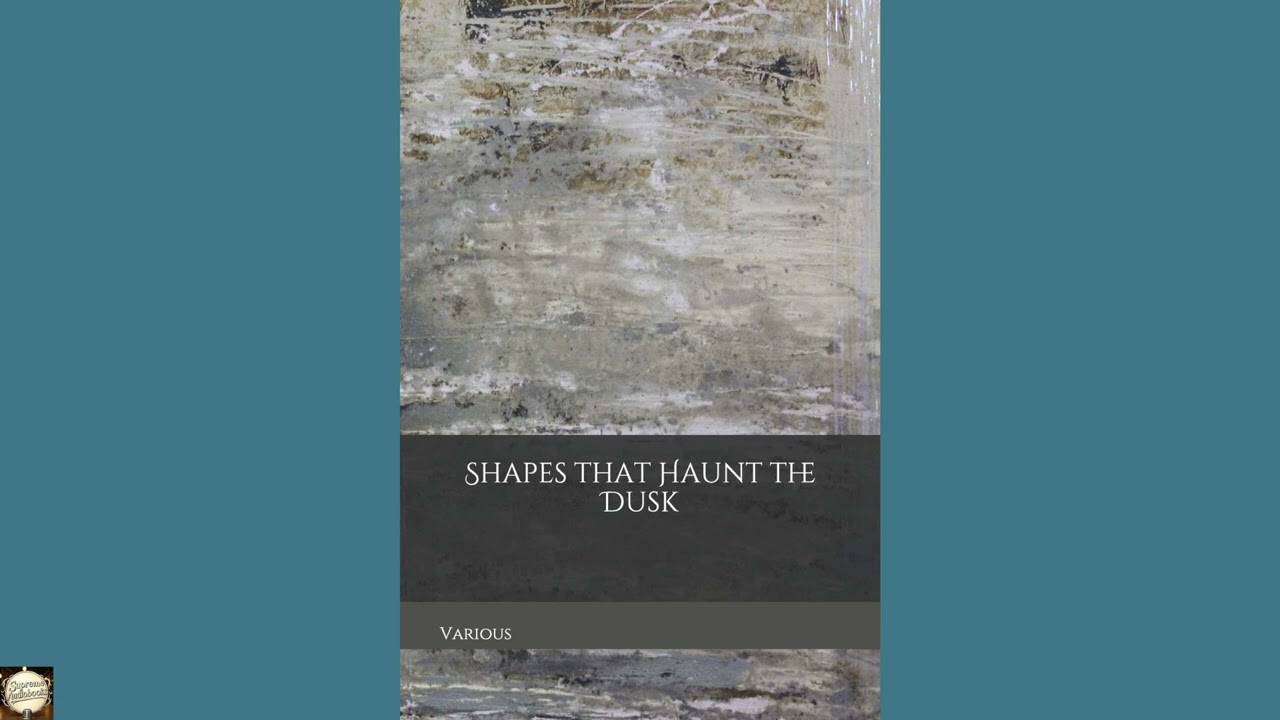
Shapes that Haunt the Dusk
The human mind, a landscape often more terrifying and mysterious than any shadowed forest or crumbling ruin, lies at the heart of Shapes that Haunt the Dusk. This collection of unsettling narratives, curated from the distinctive voice of Georg Schock and his literary contemporaries, reaches across the generations to whisper its disquieting truths into our present anxieties. It is a work that does not rely on overt shock or explicit horror, but rather on the insidious power of suggestion, the slow creep of psychological unease, and the profound discomfort of the inexplicable. For listeners today, these stories offer more than mere entertainment; they provide a chilling mirror to the persistent questions of identity, sanity, and the unseen forces that subtly govern human experience, reminding us that the most profound terrors often reside not in the supernatural, but in the fragile machinery of our own perceptions. Across these collected pages, listeners will encounter a series of interwoven tales, each contributing to a pervasive atmosphere of psychological dread and quiet disquiet. The settings vary, from isolated country manors shrouded in mist and ancient, decaying city districts choked by fog, to the hushed, gaslit interiors of scholarly retreats and the oppressive stillness of ancestral homes. The protagonists are often solitary figures: the introspective academic whose research unearths something profoundly disturbing, the sensitive young woman besieged by premonitions and visions that blur the line between reality and hallucination, or the jaded observer who slowly unravels the disturbing secrets lurking beneath a seemingly placid surface. The central conflict in these narratives rarely manifests as an external antagonist; instead, it is an internal battle against the erosion of sanity, the insidious influence of inherited trauma, or the dawning realization of a pervasive, existential unknown that defies rational explanation. Each story functions not as a self-contained riddle to be solved, but as a carefully constructed psychological study. A scholar might find himself obsessed with a bizarre phenomenon observed only at twilight, its subtle manifestations slowly consuming his reason. A young heir returning to a dilapidated family estate could uncover a lineage not just of wealth, but of an unspoken curse or a creeping madness that has afflicted generations. The arc of these stories often involves a gradual descent into uncertainty, a slow peeling back of the layers of comforting reality to reveal a substratum of the uncanny. The tension builds not through jump scares, but through meticulous detail, unsettling implication, and the increasing isolation of characters caught in the grip of forces they can neither comprehend nor escape. What truly "haunts" these narratives is not simply the spectral, but the very nature of human perception and the terrifying possibility that the world we believe to know is far more malleable and malicious than we dare to admit. Georg Schock, the primary voice behind this collection, emerged from the intellectual ferment of Central Europe during the late nineteenth and early twentieth centuries. Born into a scholarly family in a quiet, provincial town — perhaps within the Austro-Hungarian Empire or the German states — Schock’s early life was marked by a rigorous classical education and a deep fascination with philosophy, folklore, and the burgeoning field of psychology. While details of his private life remain somewhat elusive, it is understood he preferred the solitude of his study to the clamor of public life, dedicating himself to his literary pursuits. His prose, often described as meticulously crafted and richly atmospheric, established him as a singular figure, distinct from the more overt naturalists and realists of his time. He was known for a deliberate, almost hypnotic style that evoked a profound sense of atmosphere, leaning into the psychological nuances of his characters. While Shapes that Haunt the Dusk stands as a definitive representation of his stylistic concerns, Schock’s other works, such as "The Whispering Labyrinth" and "Chronicles of the Unseen," further cement his reputation as a master of the subtle uncanny. He was not directly affiliated with a single dominant literary movement, yet his work resonated with both the Symbolists for its evocative imagery and the Decadents for its exploration of internal decay and the beautiful grotesque. Schock’s influence extended subtly through the literary landscape, often inspiring a cadre of like-minded writers who shared his particular sensibility for psychological dread and the existential unknown, hence the "and more" in the collection's attribution. He is remembered not for sensationalism, but for his profound ability to disturb the reader at a deeper, more intellectual level, securing his quiet but enduring place among the architects of modern literary unease. The central themes woven throughout Shapes that Haunt the Dusk resonate with a powerful, enduring force. Foremost among them is the fragility of perception and the subjective nature of reality. In one chilling tale, an esteemed botanist, meticulous in his observations, slowly begins to perceive minute, unsettling changes in the familiar landscape surrounding his secluded laboratory—patterns in the moss, shadows that seem to shift independently of light sources—which eventually lead him to question his own sanity and the very fabric of his objective world. This blurring of objective and subjective reality pushes characters, and by extension the listener, into a profound state of uncertainty. Another pervasive theme is the weight of inherited history and the persistent hauntings of the past. A recurring motif features characters who discover ancestral secrets, often through dusty journals or forgotten artifacts, which unleash not physical specters, but a psychological burden—a generational curse of melancholia, an unspoken crime, or a terrifying predisposition—that inexorably shapes their present fate. The past here is not dead; it is a living, malevolent force. Further, the collection frequently engages with the subtle manifestations of the unseen and unknowable. Schock’s narratives resist explicit supernatural explanations, instead hinting at forces just beyond human comprehension, existing in the liminal spaces of twilight and shadow. A character might be plagued by a recurring sound that no one else hears, or observe peculiar patterns of light that defy scientific explanation, creating an internal terror far more potent than any overt monster. This often ties into the theme of isolation and the dissolution of identity. Characters, frequently solitary or estranged from society, find their inner worlds collapsing under the weight of these unexplained phenomena. A recluse, convinced he is being watched by entities that only appear in peripheral vision, finds his self-identity slowly eroding as his attempts to communicate his distress are met with skepticism, leaving him utterly alone with his burgeoning madness. These themes coalesce to form a powerful testament to the human struggle against the encroaching darkness, both within and without. The period in which Shapes that Haunt the Dusk was conceived and published — spanning the fin-de-siècle and the early years of the twentieth century — was a time of immense social, scientific, and philosophical upheaval. Europe stood poised between the fading certainties of the Victorian age and the terrifying modernity of a new century. Rapid industrialization brought both progress and profound anxieties, leading to a sense of societal fragmentation and a questioning of traditional values. The emergence of psychoanalysis, particularly the theories of Sigmund Freud, profoundly shifted understanding of the human mind, revealing the unconscious as a vast, often disturbing, realm. This intellectual climate provided fertile ground for literature that moved beyond simple morality tales or social realism. Writers like Schock, acutely attuned to these shifts, found new metaphors for modern anxieties in the psychological gothic and the uncanny. Culturally, there was a growing fascination with spiritualism, mesmerism, and occult practices, existing alongside a fervent belief in scientific progress. This dichotomy between rationalism and the inexplicable fed directly into the kind of stories collected here. Schock’s work emerged as a literary response to these tensions, using the unsettling to articulate the inexpressible fears of an age grappling with the unknown, both in the external world and within the depths of the psyche. It represents a pivot away from purely externalized horror towards an exploration of internal landscapes, reflecting a broader literary movement that sought to investigate the darker currents of human experience and the limits of perception in a rapidly changing world. To experience Shapes that Haunt the Dusk as an audiobook is to invite a truly immersive and intimate encounter with its carefully constructed atmosphere. The sustained narrative length of several hours allows the listener to settle deeply into the pervasive sense of dread and mystery, rather than merely passing through it. A skilled narrator becomes the conduit for Georg Schock’s distinctive prose, their voice guiding the listener through the intricate psychological terrain of each story. Listen for the nuanced inflections that distinguish characters—the nervous tremor of a scholar on the verge of discovery, the quiet desperation in a woman’s premonition. The pacing, often deliberate and measured, is crucial; a good performance will allow the unsettling implications to slowly unfold, giving full weight to the evocative descriptions and the subtle shifts in tone. The quiet spaces between words, the careful enunciation of a key phrase, and the pervasive atmospheric quality of the narration enhance the sense of unease, allowing the "shapes that haunt the dusk" to truly take form in the listener's imagination. It is an experience designed not just to be heard, but to be felt, lingering long after the final word.
Enjoyed Shapes that Haunt the Dusk? A few ways to support us
Audible & Amazon links are affiliate; we may earn a small commission at no extra cost.
About this production
Human narration by a volunteer reader from LibriVox.org, the public-domain audiobook project. LibriVox volunteers record literary works whose copyright has expired in the United States, releasing the resulting recordings into the public domain.
Shapes that Haunt the Dusk by Georg Schock and more. The underlying text is in the U.S. public domain. We do not republish any modern copyrighted edition, translation, or commentary.
The 4K cinematic visuals accompanying this audiobook are generated by an AI image model from prompts derived from the source text. No copyrighted photos, paintings, or stock footage are used. AI generation is disclosed on every video on our YouTube channel as required by YouTube's altered/synthetic content policy.
English subtitles are transcribed from the LibriVox recording with OpenAI Whisper. Translations into the 11 other supported languages are produced by Meta's NLLB-200 neural translation model. No human translator's copyrighted translation is used.
Questions about sourcing or rights? See our DMCA & Sourcing policy or contact us.
Enjoyed this audiobook?
If you'd like to own a copy of Shapes that Haunt the Dusk or hear a professionally produced edition, the links below help support free audiobook production at no extra cost to you.
As an Amazon Associate we earn from qualifying purchases. Audible / print links are affiliate.