The Poems and Prose of Ernest Dowson, With a Memoir
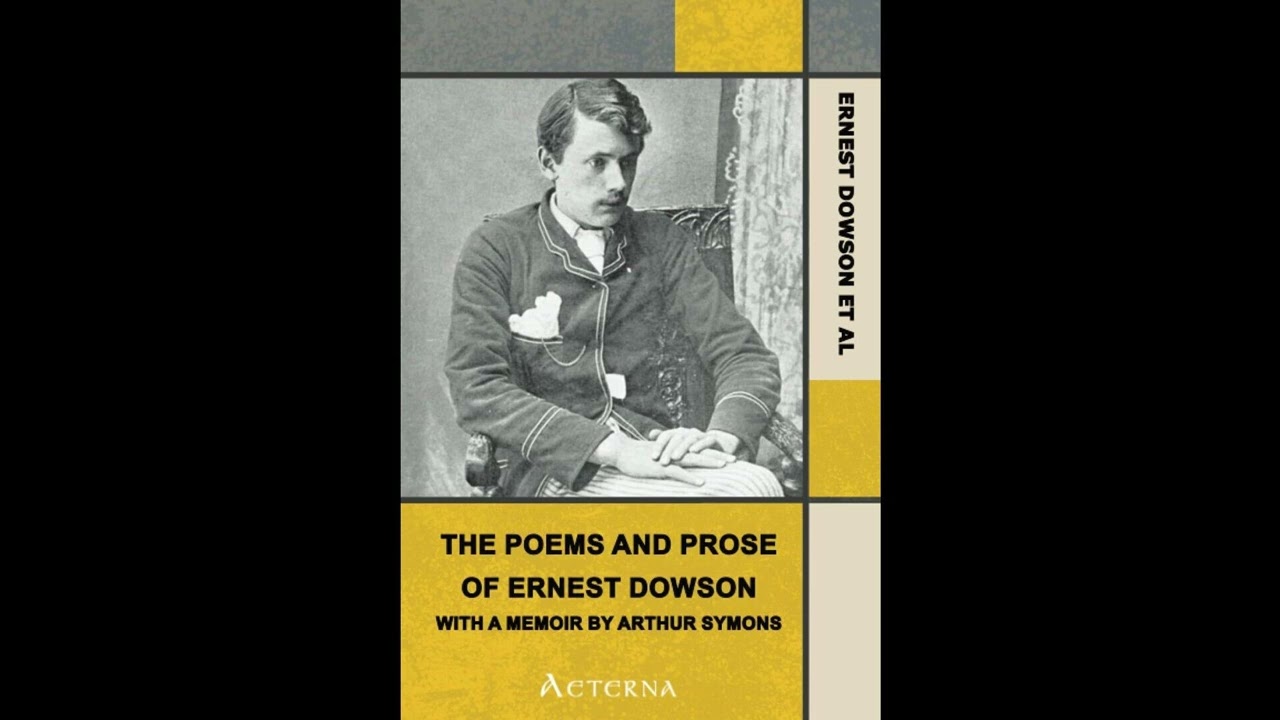
For anyone seeking to understand the fleeting, often melancholic beauty of the fin-de-siècle, The Poems and Prose of Ernest Dowson, With a Memoir stands as an essential document. This volume collects the complete lyrical output and short fictional pieces of Ernest Dowson, a figure whose brief, intense life came to embody the Aesthetic and Decadent movements of late Victorian England. Framed by the intimate and incisive memoir of his contemporary and friend, Arthur Symons, this collection is more than just an anthology; it is a poignant study of a poet’s soul, a record of a specific artistic moment, and a testament to the enduring power of fragile verse. It offers a direct, personal window into an era defined by a yearning for beauty amidst perceived decay, inviting listeners to immerse themselves in a sensibility both distant and surprisingly resonant with contemporary anxieties about art, life, and meaning. The narrative spine of this collection is Arthur Symons’s memoir, which guides the listener through the tragically short existence of Ernest Dowson. Symons chronicles Dowson’s life from his early promise as a brilliant, classical scholar at Oxford, through his association with the bohemian literary circles of London and Paris, to his eventual decline and early death. We witness Dowson’s development within the Rhymers' Club, a gathering of poets who met at the Cheshire Cheese pub, advocating for a return to formal beauty and musicality in verse, distinct from the moralizing tone of much Victorian poetry. The "setting" is therefore less a fixed location and more a shifting series of dimly lit rooms, gaslit streets, and the cafes of both capitals, places where art was debated, lives were lived intensely, and often, tragically, wasted. Dowson himself stands as the central character, revealed not only through Symons’s recollections but also through his own poems and prose. His personal struggles, particularly his unrequited infatuation with Adelaide Foltinowicz – the young daughter of a Polish restaurant owner – and his profound struggles with alcoholism and tuberculosis, form a significant part of the biographical "story." Symons portrays a man of immense sensitivity and charm, whose dedication to his art was absolute, yet whose grip on worldly practicalities was tenuous at best. The "arc" of this narrative follows a trajectory from youthful, if already wistful, artistic dedication towards a profound and inescapable sorrow, reflected in the increasing despair evident in Dowson’s later verses. Arthur Symons, the author of this memoir, was a prominent poet, critic, and editor himself, born in 1865 in Milford Haven, Wales, and passing away in 1945. He was a central figure in the literary landscape of the late nineteenth and early twentieth centuries, playing a crucial role in introducing European Symbolism to English-speaking audiences. Symons was a close friend to many of the era’s literary luminaries, including W.B. Yeats, Paul Verlaine, and Dowson himself. He edited the influential literary magazine The Savoy and authored significant critical works like The Symbolist Movement in Literature, which served as a foundational text for understanding the new trends in poetry. Symons’s own poetic output, exemplified in collections such as London Nights, reflects his deep engagement with the aesthetic principles of the Decadent movement, characterized by a focus on urban life, sensuality, and psychological introspection. His critical writings and translations cemented his reputation as an astute observer and interpreter of literary innovation. Symons’s position, both as a contemporary and a keen analyst of the period, makes his account of Dowson’s life particularly insightful, offering an empathetic yet clear-eyed perspective on the complex interplay between artistic genius and personal unraveling that so often marked the figures of the fin de siècle. His personal connection to Dowson renders the memoir not merely an academic biography but a heartfelt elegy from one fellow artist to another. Central to Dowson’s writing, and illuminated by Symons, is the theme of melancholy and loss. His most famous poem, “Non Sum Qualis Eram Bonae sub Regno Cynarae,” perfectly encapsulates this pervasive sense of regret and the inability to escape past affections, even amidst new experiences. The refrain, "I have been faithful to thee, Cynara! in my fashion," echoes the speaker’s profound and unchanging sorrow. This isn't merely sadness; it's a specific, cultivated melancholy, a feeling of being haunted by memory and the fleeting nature of joy. Another significant theme is the pursuit of beauty for its own sake, a cornerstone of Aestheticism. Dowson's verse often favors musicality, precise imagery, and a sense of detached observation over overt moralizing. His poems frequently evoke delicate, ethereal scenes, often tinged with decay or wistfulness, such as the faint bloom of the heliotrope or the muted glow of gaslight. This aesthetic ideal is closely tied to the theme of unrequited or idealized love, where the beloved figure remains distant, pure, and often unobtainable, serving as a catalyst for the speaker’s profound, though often static, emotional state. The very artifice and formal perfection of his verse become a refuge from the chaotic, disappointing realities of life. The period in which Dowson and Symons wrote was known as the fin de siècle, a time of profound cultural shifts and anxieties. The late nineteenth century saw a reaction against the perceived moral earnestness and industrial materialism of the Victorian era. There was a widespread sense of impending change, a feeling of being at the "end of a century," which fostered both a yearning for new aesthetic experiences and a premonition of decline. Literary movements like Aestheticism and Decadence flourished, partly as an escape from, and partly as a commentary on, a society that seemed increasingly complex and spiritually depleted. Influences from French Symbolist poets like Charles Baudelaire and Paul Verlaine were crucial, as English writers like Dowson and Symons absorbed their emphasis on suggestion, musicality, and the evocative power of language. The Rhymers’ Club, formed in the late 1880s, provided a breeding ground for these ideas, fostering a shared commitment to verse that was formally elegant and emotionally nuanced. Dowson's output emerged from this milieu, reflecting a collective search for meaning and beauty in a world that felt increasingly fragmented, a quest that often led to personal fragility and artistic intensity. To hear The Poems and Prose of Ernest Dowson, With a Memoir as an audiobook is to gain a deeper appreciation for the inherent musicality and subtle emotional resonance of Dowson's verse and Symons's thoughtful commentary. The sensitive narration brings out the rhythmic patterns and the delicate sonic qualities of Dowson's poetry, making his lines about faded roses, distant bells, or hushed evenings truly come alive. Over its several hours, the pacing allows listeners to fully absorb the quiet sorrow and refined beauty, dwelling on individual poems and Symons's insights. Listen for the narrator’s nuanced delivery, which can convey the wistful tone without overstating it, allowing the listener to settle into the period's particular atmosphere—the gaslight glow, the rustle of a forgotten book, the murmur of a late-night conversation.
Enjoyed The Poems and Prose of Ernest Dowson, With a Memoir? A few ways to support us
Audible & Amazon links are affiliate; we may earn a small commission at no extra cost.
About this production
Human narration by a volunteer reader from LibriVox.org, the public-domain audiobook project. LibriVox volunteers record literary works whose copyright has expired in the United States, releasing the resulting recordings into the public domain.
The Poems and Prose of Ernest Dowson, With a Memoir by Arthur Symons. The underlying text is in the U.S. public domain. We do not republish any modern copyrighted edition, translation, or commentary.
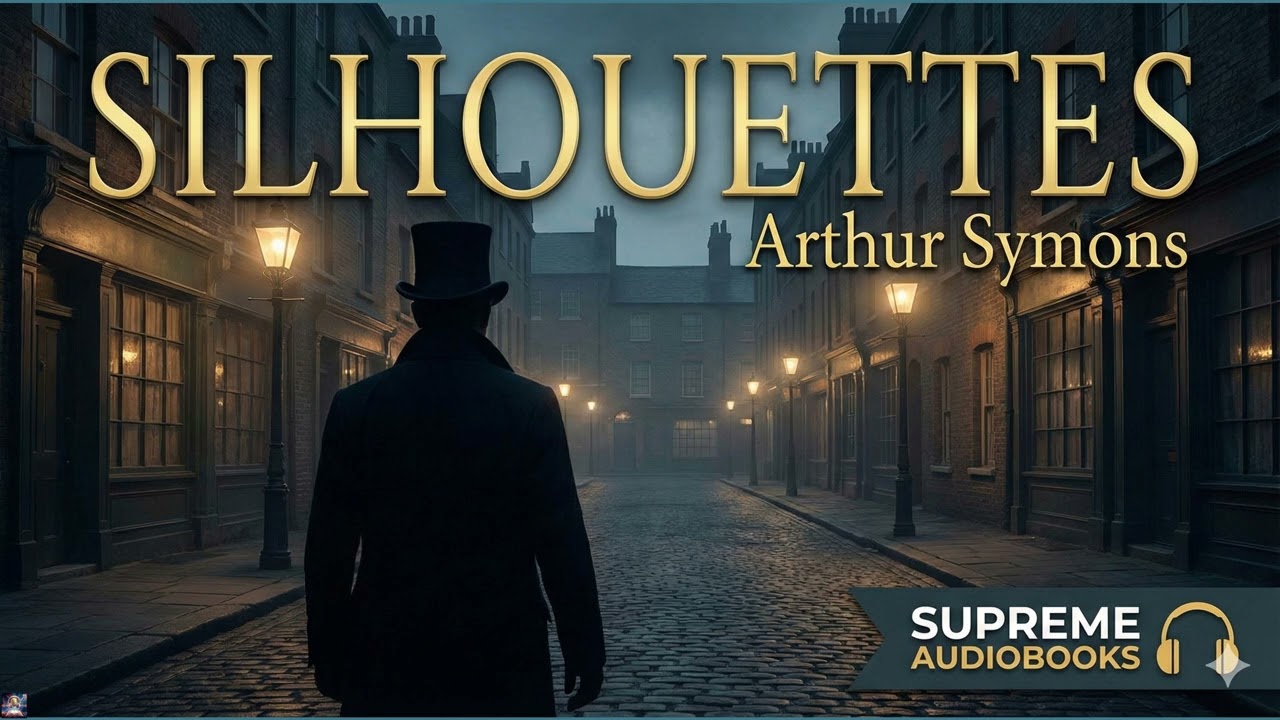
The 4K cinematic visuals accompanying this audiobook are generated by an AI image model from prompts derived from the source text. No copyrighted photos, paintings, or stock footage are used. AI generation is disclosed on every video on our YouTube channel as required by YouTube's altered/synthetic content policy.
English subtitles are transcribed from the LibriVox recording with OpenAI Whisper. Translations into the 11 other supported languages are produced by Meta's NLLB-200 neural translation model. No human translator's copyrighted translation is used.
Questions about sourcing or rights? See our DMCA & Sourcing policy or contact us.
Enjoyed this audiobook?
If you'd like to own a copy of The Poems and Prose of Ernest Dowson, With a Memoir or hear a professionally produced edition, the links below help support free audiobook production at no extra cost to you.
As an Amazon Associate we earn from qualifying purchases. Audible / print links are affiliate.