Peter Schlemihl
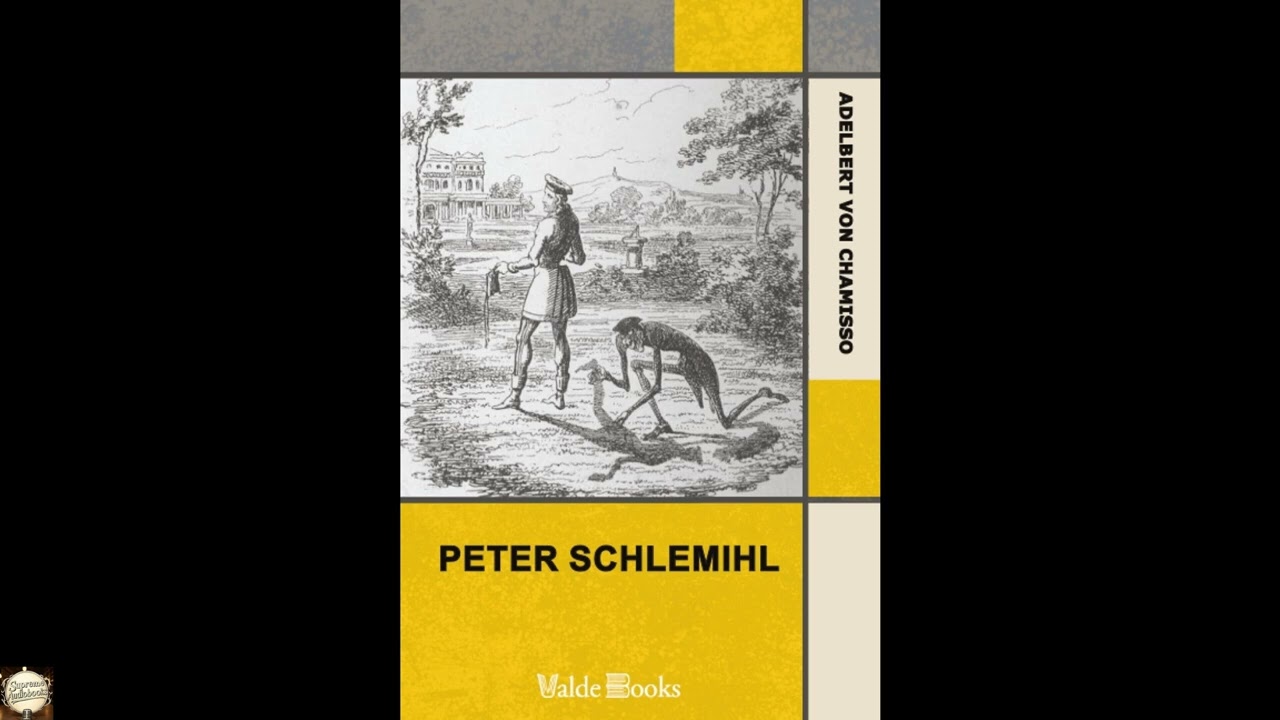
Imagine a world where your very reflection, your shadow, is not merely an optical phenomenon but an essential part of your identity, your social currency, and even your soul. Now imagine a man who sells his for an endless supply of gold. Adelbert von Chamisso's Peter Schlemihl, originally published in 1814, invites listeners into this fantastical premise, presenting a deceptively simple fable that quickly becomes a profound meditation on what it truly means to belong, what sacrifices we make for material gain, and how society judges those who deviate from the norm. This classic work of German Romanticism remains remarkably relevant today, a poignant mirror reflecting our own anxieties about authenticity, image, and the sometimes-unseen costs of our deepest desires. The story introduces us to Peter Schlemihl, a young man of modest means and unassuming character, adrift in the world without much direction or fortune. He finds himself at a grand party hosted by the wealthy Mr. Thomas, where he witnesses an extraordinary spectacle. A mysterious, gray-suited man appears, capable of producing any object from his pocket upon request: a telescope, a tent, three saddled horses—each appearing instantly. Intrigued and a little bewildered, Peter is approached by this peculiar individual, who offers him an astonishing proposition. In exchange for Peter's shadow, the Gray Man, whose name is later revealed as John, will grant him Fortunatus's purse, a magical pouch that will never cease to produce gold coins. Seeing an opportunity to escape his poverty and secure his future, and initially dismissing a mere shadow as inconsequential, Peter agrees to the bargain. With the bottomless purse in hand, Peter’s initial joy is boundless. He quickly becomes immensely wealthy, settling into a life of luxury and attempting to purchase his way into society. He buys opulent homes, finest clothes, and surrounds himself with servants. Yet, his newfound prosperity is soon overshadowed by a devastating realization: he has no shadow. As he steps out into the sunlight, people stare, whisper, and point. Children mock him. Lovers recoil in horror when they discover his unnatural condition. His wealth, as powerful as it is, cannot buy him acceptance or a normal life. He is an outcast, a pariah, forever marked by his invisible flaw. Desperate to reclaim his shadow, Peter is haunted by the Gray Man, who occasionally reappears, offering to return the shadow in exchange for Peter’s soul. This refusal sets Peter on a path of isolation and self-discovery, abandoning his gold and embarking on a solitary existence where he eventually finds solace and a different kind of fulfillment in the natural world, far from the judging eyes of society. The author, Adelbert von Chamisso, was a man whose own life mirrored themes of displacement and belonging. Born in 1781 into an aristocratic French family, he was forced to flee France during the Revolution and settle in Germany. This experience as an émigré, living between two cultures and languages, deeply influenced his perspective. He served in the Prussian army during the Napoleonic Wars, a conflict that saw him fighting against his native France. Later in life, Chamisso found his true calling as a naturalist and botanist, famously joining the Russian scientific expedition around the world aboard the Rurik from 1815 to 1818. He made significant contributions to botany, curating the botanical garden in Berlin, and produced lyrical poetry in German, becoming a respected figure in the German Romantic movement. His personal experiences of being an outsider, a "foreigner" in different contexts, undoubtedly lent a profound authenticity to Peter Schlemihl's struggles with identity and acceptance. At its core, Peter Schlemihl raises potent questions about the nature of identity and belonging. The shadow, a seemingly trivial physical attribute, becomes a potent symbol of social acceptance and one's visible presence in the world. Without it, Peter is not simply missing a part of himself; he is missing his place within society, becoming a ghost to those around him. When Peter tries to walk among people, they gasp and recoil, unable to reconcile his apparent humanity with the absence of his shadow. This immediately marks him as an outsider, illustrating society’s unforgiving intolerance for anything perceived as abnormal. The story also starkly contrasts materialism with intangible worth. The bottomless purse offers immense wealth, but at the cost of something far more fundamental—a connection to the human world, a reflection of one's inner self. Peter's initial joy in his wealth quickly turns to despair as he realizes that gold cannot buy him back what he has lost. Furthermore, the work touches on the concept of alienation and otherness. Peter’s struggle is a poignant illustration of what it feels like to be an outcast, to be judged and rejected based on a single, unconventional trait. Even those who initially find him charming or attractive eventually abandon him when his shadowless state is revealed, demonstrating the superficiality of societal acceptance. The Gray Man, a figure akin to Mephistopheles, represents the temptation of easy solutions and the devilish bargains we might strike, highlighting the theme of moral compromise. Peter’s eventual embrace of a life of scientific study and solitude, using the seven-league boots he acquires, suggests a different kind of fulfillment, one found in intellectual pursuit and independence from societal judgment, rather than through conformity. When Adelbert von Chamisso penned Peter Schlemihl in 1813-1814, Europe was still reeling from the Napoleonic Wars. The Holy Roman Empire had dissolved, and the German states were undergoing a period of intense cultural and nationalistic redefinition. This era saw the flourishing of German Romanticism, a movement characterized by a renewed interest in folklore, the supernatural, the individual's emotional experience, and the often-melancholy contemplation of nature and destiny. Chamisso's work emerged from this crucible of social upheaval and artistic ferment, reflecting the anxieties of a fragmented nation grappling with identity, external threats, and the spiritual condition of its people. His own experience as a French aristocrat transplanted into German society, fighting on German soil against his former homeland, provided a unique lens through which to examine themes of rootlessness and the search for belonging, all filtered through the fantastic allegory of a missing shadow. Listening to Peter Schlemihl as an audiobook offers a unique opportunity to immerse oneself in the story's dreamlike atmosphere and the protagonist's internal struggle. A skilled narrator can bring out the nuanced shifts in Peter’s emotional state—from initial elation to profound despair, and ultimately to a quiet resignation and a new form of contentment. The pacing of the narration can emphasize the relentless societal pressure Peter faces, the eerie appearances of the Gray Man, and the contemplative solitude of his later life. The spoken word allows the listener to fully appreciate the fable-like quality of the prose, the subtle irony, and the underlying philosophical weight of Chamisso’s writing. The relatively concise run length makes it perfect for focused listening sessions, allowing the listener to truly connect with Peter Schlemihl’s extraordinary predicament and ponder the profound implications of his singular choice.
Enjoyed Peter Schlemihl? A few ways to support us
Audible & Amazon links are affiliate; we may earn a small commission at no extra cost.
About this production
Human narration by a volunteer reader from LibriVox.org, the public-domain audiobook project. LibriVox volunteers record literary works whose copyright has expired in the United States, releasing the resulting recordings into the public domain.
Peter Schlemihl by Adelbert von Chamisso. The underlying text is in the U.S. public domain. We do not republish any modern copyrighted edition, translation, or commentary.
The 4K cinematic visuals accompanying this audiobook are generated by an AI image model from prompts derived from the source text. No copyrighted photos, paintings, or stock footage are used. AI generation is disclosed on every video on our YouTube channel as required by YouTube's altered/synthetic content policy.
English subtitles are transcribed from the LibriVox recording with OpenAI Whisper. Translations into the 11 other supported languages are produced by Meta's NLLB-200 neural translation model. No human translator's copyrighted translation is used.
Questions about sourcing or rights? See our DMCA & Sourcing policy or contact us.
Enjoyed this audiobook?
If you'd like to own a copy of Peter Schlemihl or hear a professionally produced edition, the links below help support free audiobook production at no extra cost to you.
As an Amazon Associate we earn from qualifying purchases. Audible / print links are affiliate.