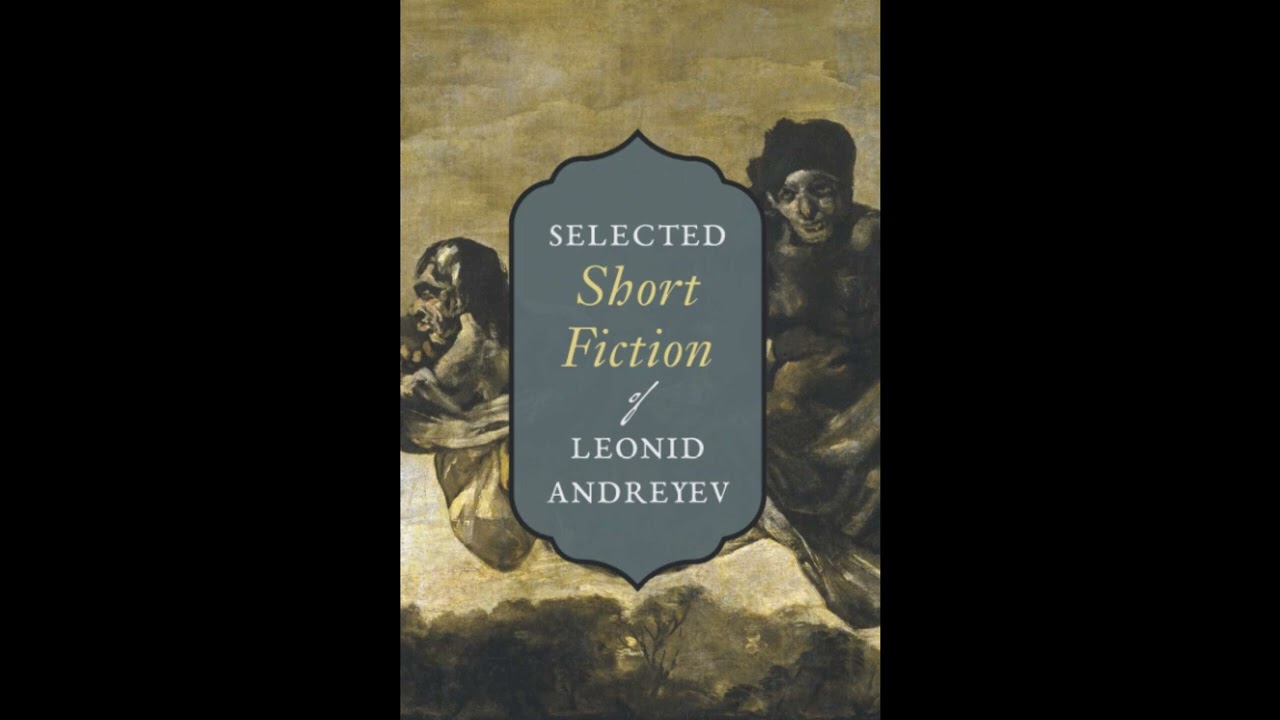
Selected Short Fiction of Leonid Andreyev
Stepping into the world of Leonid Andreyev’s selected short fiction is akin to entering a chamber of mirrors reflecting the starkest truths of the human condition. These stories, born from the crucible of early 20th-century Russia, offer an unflinching gaze into the depths of psychology, morality, and the often-bleak landscape of existence. Andreyev, a figure of profound literary significance, possessed a unique gift for articulating the anxieties that haunt us all—the struggle for meaning in a chaotic world, the chilling face of human cruelty, and the profound isolation that can grip the individual soul. Even a century later, his narratives pulsate with a raw, unsettling power, speaking to the universal fears and philosophical quandaries that remain as relevant today as they were when first penned, making this collection a vital and thought-provoking listen for anyone seeking literature that challenges and resonates. The short stories gathered here transport the listener into a succession of vivid, often disturbing, scenarios where ordinary lives intersect with extraordinary circumstances. One might find themselves witness to the last hours of a group of condemned men, each grappling with their impending fate in profoundly different ways—some finding a strange peace, others consumed by terror or defiance, all forcing a confrontation with the ultimate unknown. Another story might plunge into the psychological aftermath of war, not through grand battles, but through the fragmented perceptions of a soldier returning home, his mind shattered by what he has seen and done, perceiving the world through a terrifying, crimson haze of madness. Andreyev often places his characters in extreme situations, whether they are political prisoners, impoverished clerks, or even children, and meticulously dissects their internal turmoil and moral compromises. These narratives frequently open in settings that feel both specific to their time and place—the snow-swept streets of a Russian city, a desolate prison cell, a crowded courtroom—yet their emotional core is universally recognizable. The central conflict usually stems from an individual's struggle against an overwhelming, often indifferent, world, or against the darker impulses within themselves. Characters are forced to confront their own limitations, the limitations of society, and the often-brutal hand of fate. There is a discernible arc in many of these pieces, beginning with a seemingly stable, if often grim, reality, only for it to unravel under the weight of an unexpected event, a moral challenge, or a creeping psychological disintegration, pushing the protagonist toward a stark, often tragic, revelation about themselves or humanity. Leonid Nikolaevich Andreyev, born in Oryol, Russia, in 1871, lived a life as dramatic and turbulent as many of his fictional creations. His early years were marked by hardship and personal tragedy, including the loss of his father and a period of intense poverty that shaped his worldview. After studying law at universities in Moscow and Saint Petersburg, he turned to journalism and, crucially, began writing short stories. His talent was quickly recognized by none other than Maxim Gorky, who became an early mentor and advocate, helping Andreyev gain prominence within Russia's literary circles. Andreyev’s rise coincided with the "Silver Age" of Russian literature, a period of intense artistic experimentation and philosophical inquiry. He distinguished himself by moving away from the strict realism of his predecessors, incorporating elements of symbolism and expressionism into his prose. His works often grappled with philosophical questions, influenced by thinkers like Arthur Schopenhauer and Friedrich Nietzsche, and he became known for his psychological depth, his focus on the irrational aspects of human behavior, and his premonitions of societal collapse. Among his most notable works are the novel The Red Laugh, a chilling depiction of the psychological toll of war, and the novella The Seven Who Were Hanged, a profoundly moving study of individuals facing execution. As the political climate in Russia grew increasingly volatile, especially after the 1905 Revolution, Andreyev became a fierce critic of both tsarist oppression and, later, the Bolshevik regime. His disillusionment with the direction of his country led him to exile in Finland, where he died in 1919, leaving behind a body of work that continues to challenge and provoke. Andreyev’s short fiction consistently returns to several profound themes, illuminating the darker corners of the human spirit. One pervasive theme is existential despair and the search for meaning in a chaotic universe. Characters often confront the futility of their struggles against an indifferent fate, as seen in the story where a man sentenced to death finds himself contemplating the vast, uncaring cosmos in his final hours, stripping away all illusions of personal significance. The raw terror of non-existence, or the realization that life itself offers no inherent meaning, becomes a central conflict for many of his protagonists. Another recurring theme is the irrationality of human behavior and the thin veneer of civilization. Andreyev frequently portrays moments when reason collapses under pressure, revealing base instincts or inexplicable cruelty. In one particularly harrowing narrative, a seemingly ordinary man commits an act of shocking violence without clear motive, suggesting the ever-present potential for brutality lurking beneath the surface of everyday life. This disruption of logic serves to underline his cynical view of humanity's capacity for progress or inherent goodness, often revealing that individuals are driven by primal urges and unexamined neuroses. Furthermore, isolation and alienation feature prominently, with many characters experiencing profound loneliness even when surrounded by others. The failure of communication, the inability to truly understand another soul, leaves them stranded in their own subjective realities. Andreyev's work emerged during a period of immense social and political upheaval in Russia, a time known as the "Silver Age" of Russian literature, following the "Golden Age" of Tolstoy and Dostoevsky. The late 19th and early 20th centuries were marked by growing dissatisfaction with the Tsarist regime, escalating social unrest, and intellectual ferment. The defeat in the Russo-Japanese War (1904-1905) and the subsequent 1905 Revolution shattered any remaining illusions of imperial invincibility and triggered widespread cynicism and disillusionment. Andreyev’s writings, often dark and psychologically intense, perfectly captured the mood of a society teetering on the brink. He gave voice to the anxieties, the moral confusion, and the sense of impending catastrophe that permeated the cultural consciousness of pre-revolutionary Russia. His stories were a reflection of a world grappling with modernity, industrialization, and the erosion of traditional faith, searching for new philosophical moorings in an increasingly fragmented reality. Listening to Leonid Andreyev's selected short fiction as an audiobook offers a uniquely intimate and powerful way to experience his intense narratives. The spoken word amplifies the psychological tension inherent in his prose, allowing the narrator's voice to guide the listener through the characters' spiraling thoughts and emotional depths. The performance lends itself particularly well to Andreyev's often stark dialogue, where every word can carry immense weight, and to his vivid, sometimes unsettling, atmospheric descriptions. Over several hours of listening, one can truly immerse themselves in Andreyev's world, feeling the dread, the philosophical weight, and the stark beauty of his storytelling. The careful pacing of the narration can build suspense and allow moments of profound reflection to sink in, making the experience of these classic tales even more resonant and thought-provoking.
Enjoyed Selected Short Fiction of Leonid Andreyev? A few ways to support us
Audible & Amazon links are affiliate; we may earn a small commission at no extra cost.
About this production
Human narration by a volunteer reader from LibriVox.org, the public-domain audiobook project. LibriVox volunteers record literary works whose copyright has expired in the United States, releasing the resulting recordings into the public domain.
Selected Short Fiction of Leonid Andreyev by Leonid Andreyev. The underlying text is in the U.S. public domain. We do not republish any modern copyrighted edition, translation, or commentary.
The 4K cinematic visuals accompanying this audiobook are generated by an AI image model from prompts derived from the source text. No copyrighted photos, paintings, or stock footage are used. AI generation is disclosed on every video on our YouTube channel as required by YouTube's altered/synthetic content policy.
English subtitles are transcribed from the LibriVox recording with OpenAI Whisper. Translations into the 11 other supported languages are produced by Meta's NLLB-200 neural translation model. No human translator's copyrighted translation is used.
Questions about sourcing or rights? See our DMCA & Sourcing policy or contact us.
Enjoyed this audiobook?
If you'd like to own a copy of Selected Short Fiction of Leonid Andreyev or hear a professionally produced edition, the links below help support free audiobook production at no extra cost to you.
As an Amazon Associate we earn from qualifying purchases. Audible / print links are affiliate.