Notes from Underground
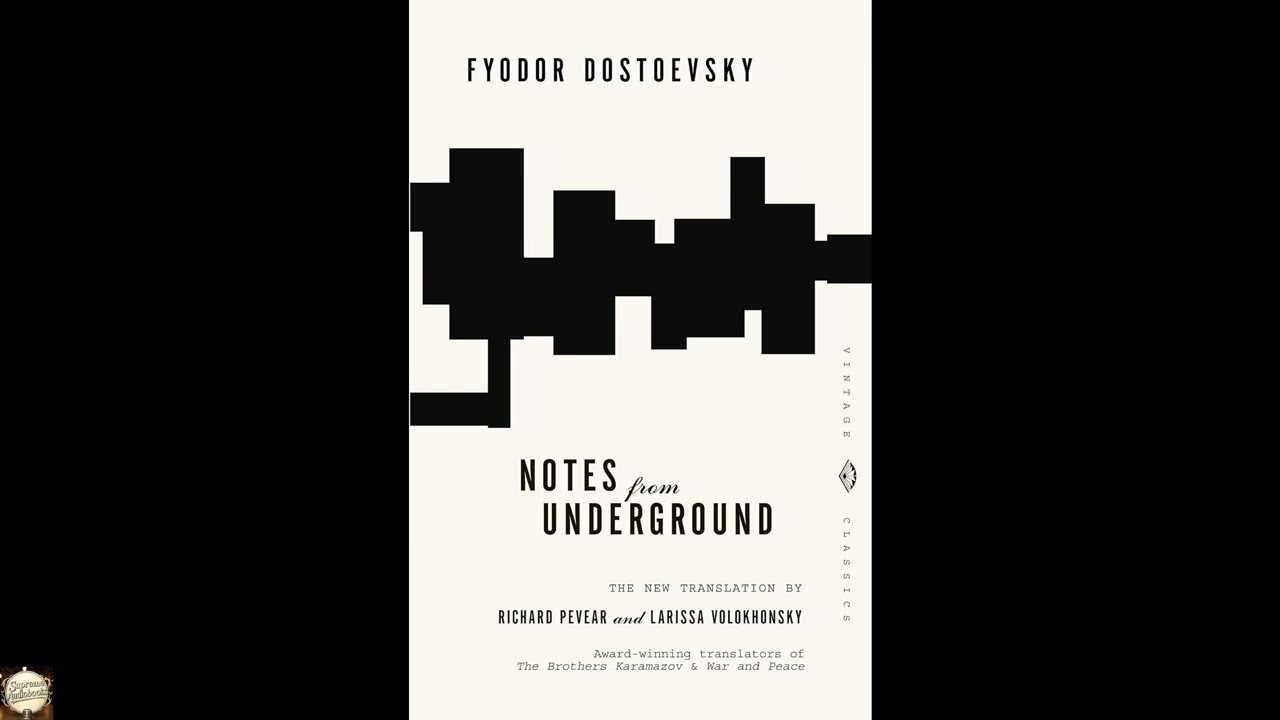
Imagine a voice, raw and unvarnished, pouring out from the shadowy corners of a St. Petersburg apartment – a voice that indicts society, human nature, and even itself with a chilling precision. This is the world of Fyodor Dostoevsky’s Notes from Underground, a book that, upon its publication in 1864, shattered conventional notions of heroism and rational progress. More than a century and a half later, its searing examination of resentment, free will, and the perverse satisfaction of self-sabotage still resonates with profound clarity, speaking directly to the anxieties of modern life and the complicated, often contradictory impulses that drive us all. It asks: what if the ideal of perfect rationality is a cage, and the desire for freedom, even self-destructive freedom, is our most fundamental urge? The book unfolds as a confession, a tirade delivered by an unnamed, bitter former civil servant living in squalor in St. Petersburg during the mid-nineteenth century. He is the "Underground Man," a man plagued by hyper-consciousness and a profound sense of alienation. In the first part, aptly titled "The Underground," he outlines his philosophy, or rather, his anti-philosophy. He rails against utopian ideals, against the belief that humanity can be perfected through reason and science, and against the very idea that humans always act in their own rational self-interest. He argues vehemently that people will often choose suffering, humiliation, and spite purely to assert their own will, their "caprice," proving that they are not mere cogs in a logical machine. The second part, "Apropos of the Wet Snow," shifts from theoretical ranting to a series of humiliating anecdotes from the Underground Man's past, illustrating his theories in action. These are memories from some twenty years prior, when he was in his mid-twenties. We witness his desperate attempts to assert himself in society, which invariably lead to public humiliation and self-inflicted wounds. There is his obsessive desire to bump into an officer on the Nevsky Prospekt, his disastrous and socially awkward attempt to rejoin old school friends for a farewell dinner, and his subsequent, even more painful encounter with Liza, a young prostitute whom he tries to "save" with a dramatic speech, only to cruelly turn on her when she visits him at his home. These incidents lay bare the depths of his insecurity, his perverse pride, and his inability to form genuine connections. The narrative closes with the Underground Man still trapped in his intellectual and emotional prison, forever writing, but never truly acting. The author behind this unsettling vision, Fyodor Dostoevsky, lived a life as dramatic and turbulent as many of his characters. Born in Moscow in 1821, the son of a stern military doctor, Dostoevsky initially trained as an engineer before dedicating himself to literature. His early career as a writer was interrupted by a harrowing experience in 1849: he was arrested and condemned to death for his involvement with the Petrashevsky Circle, a group of utopian socialist intellectuals. The sentence was commuted to four years of hard labor in a Siberian penal colony, followed by several years of compulsory military service in exile. This period of intense suffering and spiritual awakening profoundly reshaped Dostoevsky’s worldview, turning him away from his earlier radical leanings towards a fervent embrace of Christian faith and a deep skepticism of purely rationalist ideologies. Upon his return to St. Petersburg, he grappled with epilepsy, gambling addiction, and mounting debts, even as he produced some of the most enduring novels in world literature. His later works include towering achievements such as Crime and Punishment, The Idiot, Demons (The Possessed), and The Brothers Karamazov, all of which grapple with themes of faith, doubt, crime, punishment, freedom, and the complexities of the human soul, earning him a singular place in the literary canon as a pioneer of psychological realism and a forerunner to existentialism. Notes from Underground stands as a pivotal work, not only for Dostoevsky's own development but for the entirety of modern literature. One of its central concerns is the radical assertion of free will against the perceived determinism of rational self-interest. The Underground Man insists that a human being will purposely act against their own benefit, even against common sense, simply to prove they are not a "piano key" or a "stop in an organ," a predictable mechanism. His decision to humiliate Liza, after delivering an impassioned speech about her dignity, exemplifies this: he consciously chooses cruelty not out of malice but to assert his own perverse sense of freedom and superiority, immediately regretting it but unable to retract the action. Another vital idea running through the text is the debilitating effect of over-consciousness and intellectual paralysis. The Underground Man's acute self-awareness and endless internal monologues prevent him from any meaningful action or genuine connection. He constantly analyzes his own motives, anticipating every possible outcome and retort, until he becomes inert. When faced with the opportunity for camaraderie with his old schoolmates, for instance, his mind is so consumed with perceived slights, social awkwardness, and self-aggrandizing fantasies that he utterly sabotages the evening, reducing himself to a pathetic spectacle. The book therefore poses a profound question: can too much self-awareness be a curse, leading to isolation rather than enlightenment? The cultural and intellectual landscape of mid-nineteenth century Russia provides crucial context for Notes from Underground. It was a time of intense ferment, with a burgeoning intelligentsia grappling with imported Western European ideas. Figures like Nikolai Chernyshevsky, a prominent radical thinker, advocated for utilitarianism, rational egoism, and utopian socialism, proposing that society could be perfected through scientific principles and that humans, being rational, would naturally choose what was best for them. Chernyshevsky’s novel What Is to Be Done?, published just a year before Dostoevsky's work, presented a vision of communal living and perfectly rational individuals. Dostoevsky, having witnessed the grim realities of human nature in Siberia and grown wary of abstract ideologies, saw these optimistic, rationalist philosophies as dangerously naïve, failing to account for the darker, irrational, and often self-destructive impulses within the human psyche. Notes from Underground was his direct polemical response, a blistering critique aimed at dismantling the very foundations of these "crystal palace" visions of human perfectibility. It argued that the urge for freedom and individuality, even if expressed through spite or self-harm, was more fundamental to human nature than any rational calculation of benefit. Listening to Notes from Underground as an audiobook offers a uniquely visceral and immediate experience. Since the entire first part consists of the Underground Man’s unceasing, unfiltered monologue, and the second part recounts his memories with his constant, intrusive commentary, hearing his voice aloud allows for an unparalleled immersion into his tormented mind. The narrator’s pacing and vocal nuances become crucial, conveying the character's shifting moods – from aggressive philosophical certainty to pathetic self-pity, from intellectual arrogance to abject despair. The "several hours" runtime makes it ideal for a focused listen, allowing the listener to fully absorb the rhythm of his arguments, the surprising shifts in his emotional landscape, and the chilling intimacy of his confession. It is an experience that promises not comfort, but profound, unsettling insight into the contradictions that define us.
Enjoyed Notes from Underground? A few ways to support us
Audible & Amazon links are affiliate; we may earn a small commission at no extra cost.
About this production
Human narration by a volunteer reader from LibriVox.org, the public-domain audiobook project. LibriVox volunteers record literary works whose copyright has expired in the United States, releasing the resulting recordings into the public domain.
Notes from Underground by Fyodor Dostoevsky. The underlying text is in the U.S. public domain. We do not republish any modern copyrighted edition, translation, or commentary.
The 4K cinematic visuals accompanying this audiobook are generated by an AI image model from prompts derived from the source text. No copyrighted photos, paintings, or stock footage are used. AI generation is disclosed on every video on our YouTube channel as required by YouTube's altered/synthetic content policy.
English subtitles are transcribed from the LibriVox recording with OpenAI Whisper. Translations into the 11 other supported languages are produced by Meta's NLLB-200 neural translation model. No human translator's copyrighted translation is used.
Questions about sourcing or rights? See our DMCA & Sourcing policy or contact us.
Enjoyed this audiobook?
If you'd like to own a copy of Notes from Underground or hear a professionally produced edition, the links below help support free audiobook production at no extra cost to you.
As an Amazon Associate we earn from qualifying purchases. Audible / print links are affiliate.