A Desperate Character and Other Stories
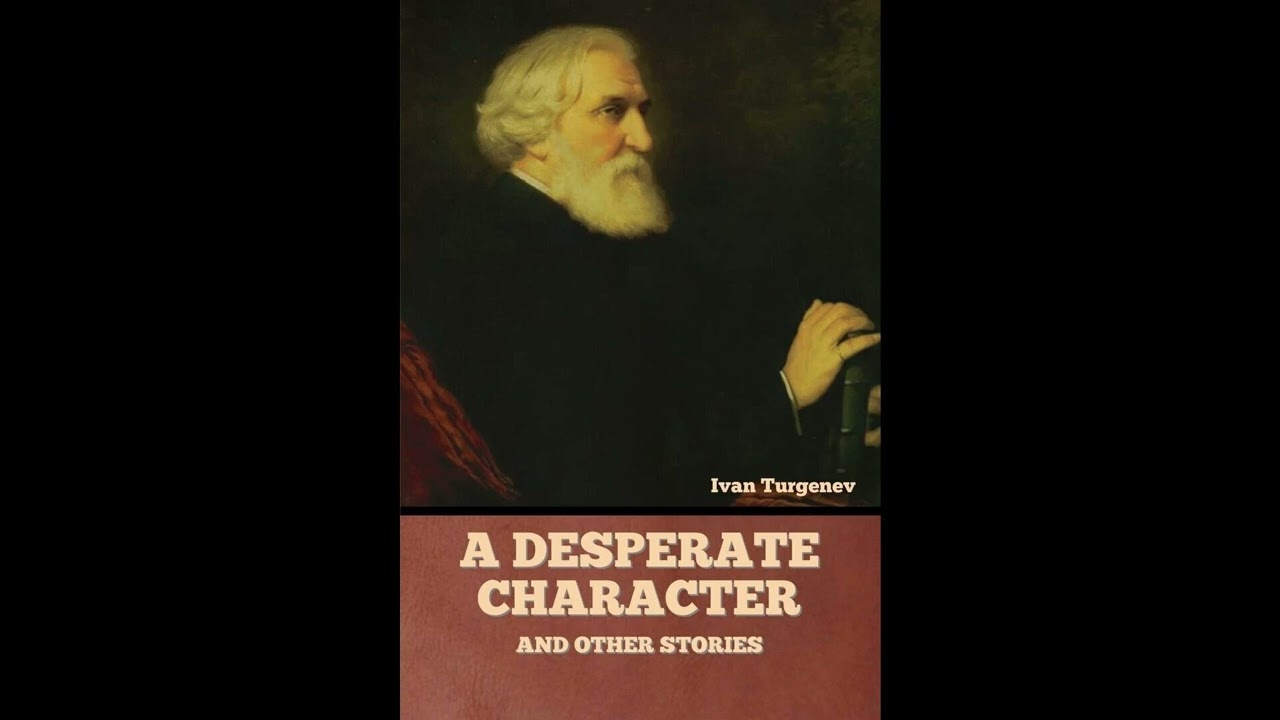
Step into the evocative world of nineteenth-century Russia, a landscape of profound social change, internal turmoil, and the often-melancholy beauty of human experience, as illuminated by one of its greatest literary figures. Ivan Turgenev's "A Desperate Character and Other Stories" offers more than just a collection of narratives; it presents a series of meticulously crafted psychological portraits, each a window into the souls of individuals grappling with love, disillusionment, ambition, and the relentless march of history. These tales resonate today because they speak to universal dilemmas: the conflict between idealism and reality, the weight of unfulfilled potential, and the quiet heroism or tragedy found in ordinary lives. They invite listeners to ponder not just the fate of their characters, but the enduring questions of what it means to be alive, to strive, and to fail against the backdrop of a changing world. The titular story, "A Desperate Character," introduces us to Mikhail Ivanovich, a figure who embodies the type of "superfluous man" often depicted in Russian literature. Set amidst the gentle, sometimes decaying, gentry estates of provincial Russia, Mikhail appears as a man of formidable intellect and genuine good intentions, yet utterly incapable of sustained, productive action. He flits from one grand scheme to another—be it an agricultural innovation, a scholarly pursuit, or a passionate defense of a political ideal—only to abandon each with the same casual indifference he embraced it. His charm is undeniable, his insights often piercing, but these qualities are continually undermined by a profound laziness and a peculiar inability to commit, leaving a trail of half-finished projects and disappointed acquaintances. The narrative follows an observer's attempts to understand this enigmatic figure, watching as Mikhail grapples with his own potential and the quiet desperation of a life that promises much but delivers little, constantly adrift between aspiration and apathy. Beyond Mikhail Ivanovich, the collection's other stories expand this canvas, painting further vivid studies of Russian life and character. We encounter individuals from various strata of society, from landowners pondering the future of their estates to young lovers caught in the web of social convention, and peasants navigating a world on the cusp of dramatic change. Each narrative carefully constructs its world, often through the eyes of a reflective narrator, allowing for deep dives into the emotional landscapes of its protagonists. Turgenev excels at capturing the quiet drama of everyday existence, the unspoken longings, and the subtle shifts in human relationships, all rendered with a delicate, lyrical precision that makes the characters feel both intimately familiar and profoundly specific to their time and place. Ivan Sergeevich Turgenev, born in Oryol, Russia, in 1818, into a wealthy landowning family, was one of the giants of nineteenth-century Russian literature. His early life was marked by a complex relationship with his autocratic mother, who managed her vast estate and serfs with an iron hand—an experience that profoundly influenced his later, more sympathetic portrayals of the peasantry and his critique of serfdom. Turgenev received an excellent education, studying at the universities of Moscow, St. Petersburg, and Berlin, where he absorbed Western philosophical and literary currents. Unlike many of his contemporaries, he spent much of his adult life living abroad, primarily in Germany and France, maintaining a lifelong, somewhat complicated, attachment to the opera singer Pauline Viardot. This distance provided him with a unique perspective on Russia, allowing him to observe its social and political transformations with both deep affection and critical detachment. Turgenev's literary career began with poetry and plays, but he found his true voice in prose fiction. His groundbreaking collection A Sportsman's Sketches (1852), depicting the lives and humanity of Russian serfs, is often credited with influencing Emperor Alexander II's decision to emancipate the serfs in 1861. His major novels—including Rudin, A Nest of Gentlefolk, On the Eve, and the most famous, Fathers and Sons—established him as a master of psychological realism and a keen observer of the shifting intellectual landscape of Russia. Turgenev’s careful, elegant prose style, his focus on the nuances of human relationships, and his balanced portrayal of different social classes set him apart, placing him firmly among the pantheon of Russian literary figures, alongside Tolstoy and Dostoevsky. He passed away in Bougival, near Paris, in 1883, leaving behind a legacy of enduring works that continue to shape our understanding of the Russian soul. "A Desperate Character and Other Stories" vividly enacts several enduring themes crucial to Turgenev’s body of work. One prominent thread is the figure of the "superfluous man," exemplified by Mikhail Ivanovich. These characters, often educated and sensitive members of the gentry, find themselves unable to translate their intellect or ideals into meaningful action, adrift in a society that offers them no clear role. Mikhail’s recurring pattern of grand pronouncements followed by indolence perfectly illustrates this theme; he represents the potential for greatness squandered by an inner paralysis, a recurring lament in Russian literature of the period. Another central theme is that of unrequited love and missed opportunities, a subtle current running through many of the collection's narratives. Characters often experience profound emotional connections that, for reasons of social convention, personal timidity, or simple misunderstanding, never fully blossom, leaving behind a lingering sense of wistfulness and regret. Furthermore, Turgenev’s work often engages with the theme of societal transition and the erosion of the old order. Many stories reflect the anxieties of the Russian gentry as serfdom neared its end and new ideas—sometimes radical, sometimes liberating—began to challenge established norms. The quiet desperation of characters clinging to fading traditions, or the uncertainty of those trying to embrace new ways, provides a poignant commentary on a nation in flux. Turgenev’s lyrical descriptions of the Russian landscape, often a character in itself, also serve as a crucial theme, mirroring the inner states of his protagonists and underscoring the deep connection between man and nature, a common source of solace and reflection for his often-troubled figures. These layered themes give his stories an enduring power, reflecting universal human dilemmas through a distinctly Russian lens. The historical period in which Turgenev wrote many of these stories, particularly the latter half of the nineteenth century, was a time of immense ferment in Russia. The looming emancipation of the serfs, which finally occurred in 1861, created an atmosphere of both hope and apprehension, profoundly altering the social and economic fabric of the nation. This era saw the rise of an educated intelligentsia grappling with Western liberal ideas, socialist thought, and nascent revolutionary movements, often leading to clashes between generations and ideologies—the so-called "fathers and sons" conflict that Turgenev famously dramatized. His stories emerged from this crucible, reflecting the anxieties of a society questioning its foundations, examining the role of the individual, and debating its path forward. Turgenev's unique position, often observing Russia from afar, allowed him to capture these seismic shifts with a nuanced perspective, portraying both the beauty and the tragedy of a nation in constant transformation. His characters, caught between tradition and modernity, embody the very spirit of a nation undergoing a profound identity crisis. To experience "A Desperate Character and Other Stories" as an audiobook is to immerse oneself in Turgenev’s particular brand of contemplative realism, enhanced by the power of voice. The lyrical quality of his prose, often characterized by subtle emotional shifts and evocative descriptions of the Russian countryside, lends itself perfectly to auditory interpretation. A skilled narrator can bring out the quiet intensity of his characters' internal struggles, the delicate wit in their dialogue, and the pervasive, often melancholic, atmosphere of the settings. The collection, spanning several hours, is ideal for both focused listening sessions where one can savor the nuances of each tale, or for more casual engagement, allowing individual stories to unfold during commutes or moments of quiet reflection. Listening allows for a deeper appreciation of Turgenev’s precise pacing, his masterful use of voice to distinguish character, and the rich emotional textures he weaves into every narrative, transforming the written word into a deeply personal and resonant experience.
Enjoyed A Desperate Character and Other Stories? A few ways to support us
Audible & Amazon links are affiliate; we may earn a small commission at no extra cost.
About this production
Human narration by a volunteer reader from LibriVox.org, the public-domain audiobook project. LibriVox volunteers record literary works whose copyright has expired in the United States, releasing the resulting recordings into the public domain.
A Desperate Character and Other Stories by Ivan Turgenev. The underlying text is in the U.S. public domain. We do not republish any modern copyrighted edition, translation, or commentary.
The 4K cinematic visuals accompanying this audiobook are generated by an AI image model from prompts derived from the source text. No copyrighted photos, paintings, or stock footage are used. AI generation is disclosed on every video on our YouTube channel as required by YouTube's altered/synthetic content policy.
English subtitles are transcribed from the LibriVox recording with OpenAI Whisper. Translations into the 11 other supported languages are produced by Meta's NLLB-200 neural translation model. No human translator's copyrighted translation is used.
Questions about sourcing or rights? See our DMCA & Sourcing policy or contact us.
Enjoyed this audiobook?
If you'd like to own a copy of A Desperate Character and Other Stories or hear a professionally produced edition, the links below help support free audiobook production at no extra cost to you.
As an Amazon Associate we earn from qualifying purchases. Audible / print links are affiliate.