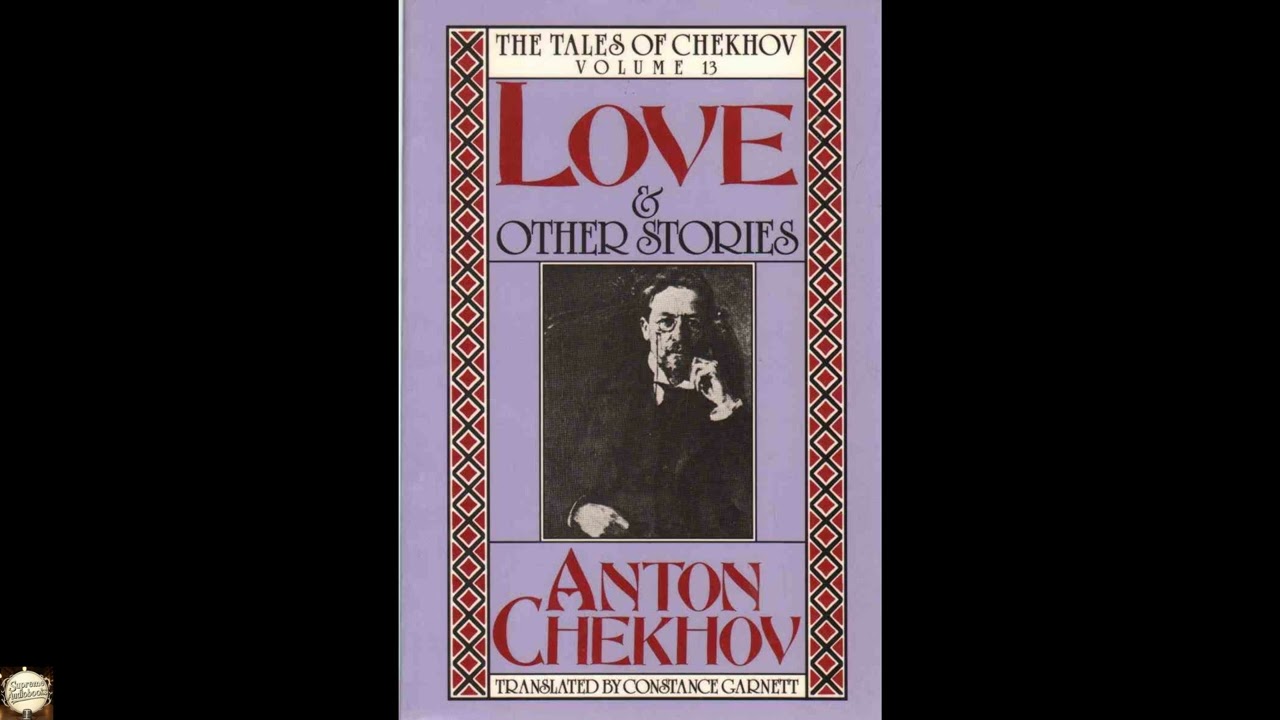
Love and Other Stories (The Tales of Chekhov)
Step into the world of Anton Pavlovich Chekhov, a literary architect whose short stories, collected here as "Love and Other Stories," offer a window into the nuanced, often bittersweet realities of late 19th-century Russia. This collection is more than a series of disconnected narratives; it's an invitation to pause and witness the quiet dignity, profound longing, and often heartbreaking self-deception that define human existence. Chekhov has a singular ability to distill the essence of a life, a relationship, or a moral dilemma into a few potent pages, leaving an indelible mark on the listener. His work speaks to the universal desire for connection, the pain of misunderstanding, and the relentless march of time, themes that remain profoundly relevant in any era, illuminating the complexities of the heart and the often-unspoken truths that govern our lives. The settings for these tales are typically the quiet, dusty provincial towns and bustling, impersonal cities of Russia, or the serene but often suffocating country estates where life moves at a deliberate, often stagnant pace. Within these backdrops, we meet a diverse cast of ordinary people: doctors burdened by empathy, disillusioned teachers, landowners grappling with changing times, civil servants trapped in bureaucratic routines, and men and women caught in the tender, perplexing dance of love. Characters often find themselves at a crossroads, wrestling with internal conflicts that rarely resolve with dramatic explosions but rather with a sigh, a fleeting moment of clarity, or a deepening sense of resignation. The central conflict in many of these stories isn't an external battle against a villain or an insurmountable obstacle, but rather an internal struggle against loneliness, societal expectations, the suffocating weight of convention, or the simple, devastating inability to truly express one's heart. Take, for instance, the quiet desperation of a man who discovers love late in life, only to find himself entangled in an affair that is both beautiful and morally ambiguous, wrestling with the implications for his carefully constructed world. Or consider the poignant tale of a woman trapped in a loveless marriage, finding a momentary escape and connection that promises liberation but ultimately reveals the profound limitations of her circumstances. Chekhov's stories frequently trace the arc of a nascent affection, an unexpected passion, or a long-simmering regret, often culminating not in a grand resolution, but in an acute, often melancholic, understanding of human nature's inherent paradoxes. His plots seldom offer neat conclusions; instead, they reflect the messiness of life itself, where true feelings are often suppressed, opportunities are missed, and the most significant events unfold within the confines of a character's own mind. Anton Pavlovich Chekhov, born in Taganrog, Russia, in 1860, lived a life that profoundly informed his literary output until his death in 1904. The son of a grocer, he initially pursued a medical degree at the University of Moscow, a profession he continued to practice sporadically throughout his writing career. His experiences as a country doctor brought him into intimate contact with the lives of ordinary Russians from all social strata, offering him an unparalleled insight into their struggles, hopes, and daily existence. This medical background likely contributed to his keen eye for psychological detail and his dispassionate yet deeply empathetic portrayal of human suffering and joy. Chekhov began writing short, humorous sketches to support his family while still a medical student, quickly gaining popularity for his wit and observational prowess. However, he soon transitioned to more serious, psychologically complex short stories and groundbreaking plays that cemented his place as one of the giants of world literature. His visit to the penal colony on Sakhalin Island in 1890, documented in his non-fiction work Sakhalin Island, was a pivotal experience, exposing him to extreme human suffering and injustice, which deepened the social conscience evident in much of his later fiction. Beyond his short stories, Chekhov is equally renowned for his influential plays, including The Seagull, Uncle Vanya, Three Sisters, and The Cherry Orchard, which revolutionized theater with their subtle realism and focus on mood and character rather than overt plot. He is often considered a key figure in the development of modernism, pushing the boundaries of realism toward a more nuanced psychological naturalism. Chekhov's work is celebrated for several enduring themes, meticulously woven into the fabric of everyday life. One pervasive theme is unfulfilled desire and loneliness. His characters often yearn for love, for meaning, for a richer existence, but are frequently thwarted by their own inhibitions, societal constraints, or a simple inability to connect authentically. Consider a story where a man recounts his deep affection for a married woman, a love that remains unspoken and unconsummated for years, leaving him with a profound sense of loss for what might have been. Another central theme is the stasis and mundanity of existence, where characters are often trapped in repetitive routines or provincial dullness, their lives characterized by a quiet resignation rather than grand ambitions. We might encounter a character who, despite intellectual aspirations, finds themselves mired in a pointless, bureaucratic job, their dreams slowly fading into the background of an unremarkable life. Furthermore, Chekhov consistently examines the complex nature of human connection and the illusion of love. His stories often reveal how love can be misunderstood, fleeting, or intertwined with self-deception and social artifice. A married man might pursue an affair, convinced of its profound nature, only to recognize later the hypocrisy and the emotional cost for all involved. Finally, a subtle but persistent social critique underpins many of his narratives, gently exposing the provincialism, the bureaucracy, the class divisions, and the intellectual idleness prevalent in Russian society. He shows us how societal structures and prevailing attitudes can stifle individual potential and perpetuate cycles of unhappiness, all without resorting to overt political statements or heavy-handed moralizing. The late 19th century in Russia, the period when Chekhov was writing, was a time of immense social and political ferment, standing on the precipice of profound change. Tsarist autocracy was still firmly in place, but beneath the surface, forces of modernization, industrialization, and revolutionary thought were gaining momentum. There was a burgeoning intelligentsia grappling with Russia's identity and future, widespread rural poverty, and a decaying aristocracy struggling to maintain its relevance. Culturally, the era saw a move away from the grand, epic novels of Tolstoy and Dostoevsky, with their sweeping moral pronouncements and philosophical debates. Instead, there was a growing interest in realism and naturalism, focusing on the lives of ordinary people, their psychology, and the minute details of daily existence. Chekhov's work perfectly captured this shift, offering a microscopic view of human behavior and societal ills, often without judgment, allowing the reader to draw their own conclusions about the quiet tragedies and fleeting joys he depicted. His concise, unsentimental style emerged as a powerful counterpoint to the more verbose literary traditions that preceded him. Listening to Chekhov's "Love and Other Stories" as an audiobook offers a uniquely intimate experience, enhancing the quiet power of his prose. The narrator's voice becomes a conduit for Chekhov's subtle observations, allowing the listener to absorb the nuances of character and atmosphere without the visual distractions of the page. The run length, totaling several hours, makes it an ideal companion for commutes, leisurely walks, or quiet evenings, providing ample opportunity to immerse oneself in each carefully constructed narrative. Pay close attention to the pacing, which often mirrors the deliberate rhythms of provincial life, and how the narrator's interpretation of dialogue can convey unspoken emotions and deep-seated conflicts. The atmospheric descriptions, the understated humor, and the moments of profound melancholy all gain an added dimension when delivered through skilled vocal performance, inviting you to truly inhabit the world of these indelible tales.
Enjoyed Love and Other Stories (The Tales of Chekhov)? A few ways to support us
Audible & Amazon links are affiliate; we may earn a small commission at no extra cost.
About this production
Human narration by a volunteer reader from LibriVox.org, the public-domain audiobook project. LibriVox volunteers record literary works whose copyright has expired in the United States, releasing the resulting recordings into the public domain.
Love and Other Stories (The Tales of Chekhov) by Anton Pavlovich Chekhov. The underlying text is in the U.S. public domain. We do not republish any modern copyrighted edition, translation, or commentary.
The 4K cinematic visuals accompanying this audiobook are generated by an AI image model from prompts derived from the source text. No copyrighted photos, paintings, or stock footage are used. AI generation is disclosed on every video on our YouTube channel as required by YouTube's altered/synthetic content policy.
English subtitles are transcribed from the LibriVox recording with OpenAI Whisper. Translations into the 11 other supported languages are produced by Meta's NLLB-200 neural translation model. No human translator's copyrighted translation is used.
Questions about sourcing or rights? See our DMCA & Sourcing policy or contact us.
Enjoyed this audiobook?
If you'd like to own a copy of Love and Other Stories (The Tales of Chekhov) or hear a professionally produced edition, the links below help support free audiobook production at no extra cost to you.
As an Amazon Associate we earn from qualifying purchases. Audible / print links are affiliate.