Obryv
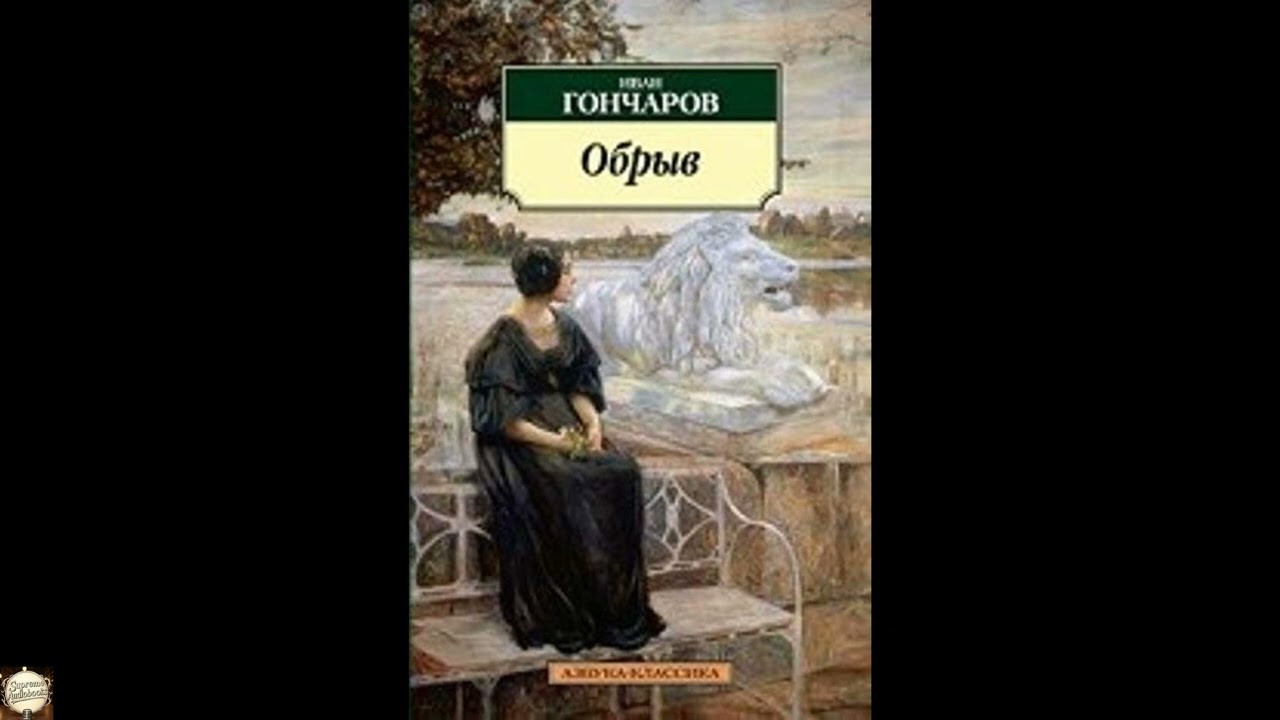
Ivan Goncharov's Obryv, often translated as The Precipice, stands as a monumental work in Russian literature, a sweeping novel that captures a pivotal moment in a nation's soul. First published in 1869, this sprawling narrative offers more than just a story; it presents a panoramic view of Russia grappling with profound social and intellectual shifts, as old traditions clash with revolutionary new ideas. At its core, it is a human drama, following individuals caught between the security of the past and the uncertainty of a future defined by radical thought and personal freedom. For listeners today, the questions Obryv raises about belief, responsibility, the nature of love, and the search for authentic purpose resonate deeply, offering insights into how societies and individuals navigate periods of intense transformation. The story unfolds primarily on the peaceful, secluded estate of Malinovka, nestled on the banks of the Volga River, a setting that initially feels like a sanctuary from the world's complexities. Here, the formidable but loving matriarch, Tatiana Markovna Bereshkova, presides over her granddaughters, the gentle, conventional Marfinka, and the intelligent, idealistic Vera. Their lives are disrupted by the arrival of Boris Pavlovich Raisky, Tatiana Markovna's restless, artistic grandnephew. Raisky, a dilettante artist from St. Petersburg, arrives seeking inspiration and attempting to finally settle down and find his life's meaning, but primarily acts as an observer, attempting to shape the lives around him into artistic forms. His presence introduces a metropolitan energy and a keen, if often misguided, perspective into the quiet country existence. As the narrative progresses, Raisky becomes increasingly fascinated by Vera, whose independent spirit and burgeoning intellect make her a figure of both admiration and concern for him. Vera, discontent with the traditional expectations placed upon her, begins to fall under the influence of Mark Volokhov, a young man who embodies the emerging nihilistic and radical philosophies sweeping through Russia. Volokhov's cynical worldview and revolutionary ideas challenge Vera's established beliefs and the deeply rooted values of her grandmother. This intellectual and emotional magnetism draws Vera towards a moral precipice, where her ideals are tested against the harsh realities of unbridled freedom and potentially destructive ideologies. The central conflict intensifies as Raisky, seeing the danger, struggles to understand and protect Vera, while also grappling with his own artistic ambitions and a lifelong search for an ideal love he can never quite grasp. The story builds toward a profound personal crisis for Vera, forcing her to confront the consequences of her choices and the true meaning of responsibility. Ivan Aleksandrovich Goncharov, born in Simbirsk in 1812, was a prominent figure in the golden age of Russian realism. The son of a wealthy grain merchant, Goncharov received a good education, including a period at Moscow University. He spent much of his adult life working as a civil servant in St. Petersburg, famously serving as a literary censor, a position that put him at the heart of the intellectual and political debates of his time. This unique vantage point undoubtedly sharpened his observations of society and human character. His travels, particularly an extensive voyage around the world aboard the frigate Pallada in the 1850s, also broadened his perspective, culminating in a travelogue, The Frigate Pallas. While Obryv is a significant achievement, Goncharov is perhaps best known for his earlier novel, Oblomov, published in 1859, which introduced the iconic character of Ilya Ilyich Oblomov, a man epitomizing the inertia and spiritual paralysis known as "Oblomovism." This concept became a widely recognized term in Russian culture, referring to the tendency toward passivity and idleness. Goncharov's body of work, though not as extensive as some of his contemporaries like Tolstoy or Dostoevsky, is characterized by meticulous psychological detail, subtle humor, and a deep understanding of the social dynamics of 19th-century Russia. He is remembered for his ability to portray the nuances of character and the evolving cultural landscape with both sympathy and critical insight. Among the central concerns of Obryv is the stark opposition between tradition and modernity. Tatiana Markovna, with her unwavering adherence to ancient customs and deep-seated faith, represents the steadfast Russia of the past, while Volokhov embodies the iconoclastic, often destructive, forces of radical progress. This tension is powerfully depicted in the numerous debates and silent struggles within the household, particularly as Vera, standing at the crossroads, weighs the wisdom of her grandmother against the allure of new ideas. Another prominent theme is the role of women in society. Vera's yearning for intellectual freedom and a life beyond domestic confines mirrors the growing aspirations of women in Russia and beyond, contrasting sharply with Marfinka's contented acceptance of traditional feminine roles and the societal expectations placed upon them. Her struggle for autonomy against societal norms is a powerful testament to the awakening female consciousness of the era. Furthermore, Obryv offers a profound commentary on the nature of artistic purpose and the perils of dilettantism. Raisky, perpetually sketching and observing, sees the lives around him as material for his art but struggles to commit to genuine creation. His inability to translate observation into action or sustained effort highlights the dangers of mere idealism without practical application, reflecting a broader societal critique of individuals who theorize but do not build. The novel also carefully examines the complexities of love and idealism, particularly through Vera's experience. Her youthful idealism, while admirable, leaves her vulnerable to manipulation and disillusionment, showing how pure intentions can be led astray when confronted with cynical opportunism, forcing a reconsideration of what true affection and commitment entail. The mid-19th century in Russia was a period of immense upheaval, a time often referred to as the era of the Great Reforms. Obryv was conceived and written against the backdrop of significant social and political change, including the abolition of serfdom in 1861, a landmark event that profoundly reshaped the country's economic and social structures. This emancipation, while heralded as progressive, also created widespread uncertainty and societal dislocations. Concurrently, Russia witnessed the rise of various intellectual movements, including nihilism and early forms of socialism, which challenged the traditional autocratic and religious foundations of the state. This generational clash, often framed as the "fathers and sons" conflict popularized by Turgenev, saw younger generations rejecting the values and authority of their elders in favor of radical ideologies. Goncharov's novel perfectly encapsulates this tension, providing a literary mirror to the fervent debates about Russia's future, the moral responsibilities of the intelligentsia, and the impact of Western thought on a deeply traditional society. The work emerged from a necessity to grapple with these defining questions of its age. Listening to Obryv as an audiobook offers a unique opportunity to immerse oneself in Goncharov's meticulously constructed world. The sheer length of the novel, spanning many hours, benefits immensely from a skilled narrator who can guide the listener through its intricate plot and numerous philosophical discussions. A strong narration can provide distinct voices to the diverse cast, from Tatiana Markovna's unwavering wisdom and Raisky's restless intellectualism to Vera's earnest idealism and Volokhov's unsettling cynicism, helping to differentiate characters and convey their emotional depth. The pacing of the narration can allow for reflection on the weighty moral dilemmas presented, giving space for the listener to consider the novel's critiques of societal change and individual responsibility. Furthermore, a well-performed audiobook can subtly enhance the atmosphere of the remote Volga estate, evoking both its tranquil beauty and the brewing storm of ideas that threatens to disrupt its peace, making the subtle shifts in dialogue and mood all the more palpable.
Enjoyed Obryv? A few ways to support us
Audible & Amazon links are affiliate; we may earn a small commission at no extra cost.
About this production
Human narration by a volunteer reader from LibriVox.org, the public-domain audiobook project. LibriVox volunteers record literary works whose copyright has expired in the United States, releasing the resulting recordings into the public domain.
Obryv by Goncharov Ivan Aleksandrovich. The underlying text is in the U.S. public domain. We do not republish any modern copyrighted edition, translation, or commentary.
The 4K cinematic visuals accompanying this audiobook are generated by an AI image model from prompts derived from the source text. No copyrighted photos, paintings, or stock footage are used. AI generation is disclosed on every video on our YouTube channel as required by YouTube's altered/synthetic content policy.
English subtitles are transcribed from the LibriVox recording with OpenAI Whisper. Translations into the 11 other supported languages are produced by Meta's NLLB-200 neural translation model. No human translator's copyrighted translation is used.
Questions about sourcing or rights? See our DMCA & Sourcing policy or contact us.
Enjoyed this audiobook?
If you'd like to own a copy of Obryv or hear a professionally produced edition, the links below help support free audiobook production at no extra cost to you.
As an Amazon Associate we earn from qualifying purchases. Audible / print links are affiliate.