Samantha on the Woman Question
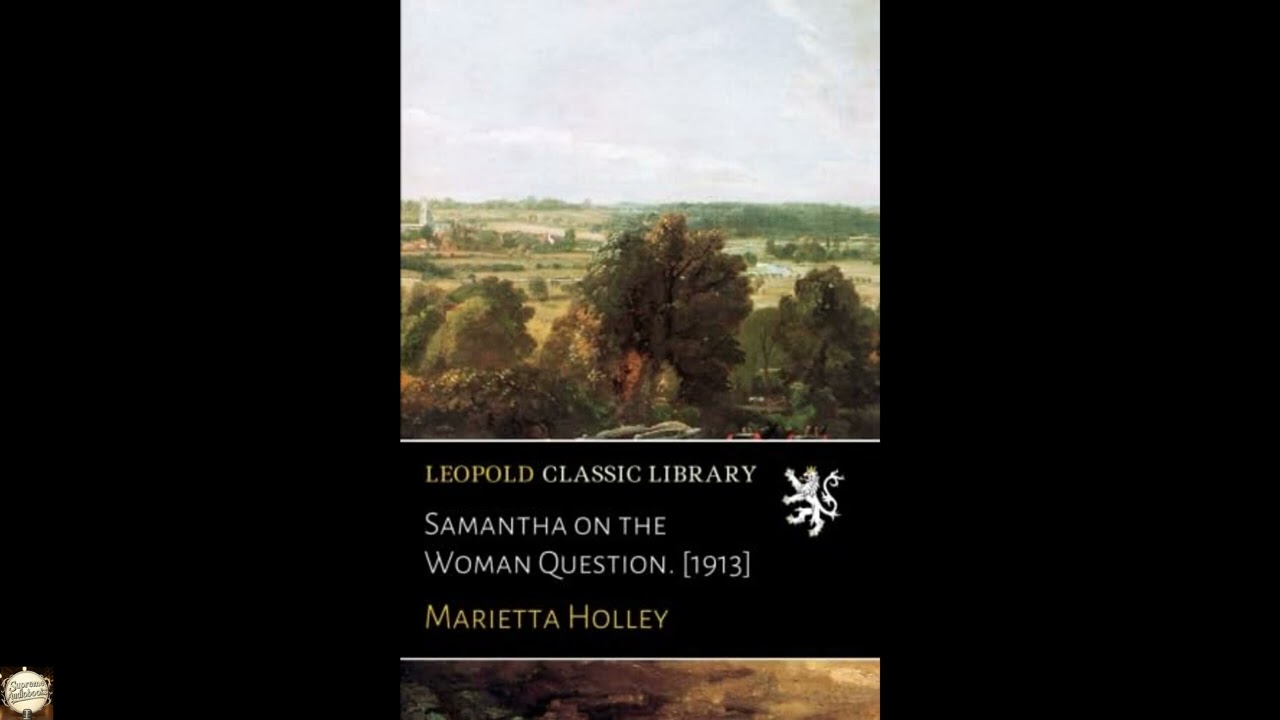
Stepping into the boots of Samantha Allen, a plainspoken, good-hearted farm wife from rural upstate New York, Samantha on the Woman Question offers a perspective on one of the early twentieth century's most significant social debates. This isn't a dry academic treatise, but a lively, humorous, and surprisingly sharp commentary on the suffrage movement, women's changing roles, and the enduring struggle for equality. Through Samantha’s distinctive voice, author Marietta Holley invites listeners to laugh while they think, presenting arguments for and against women’s rights with an accessibility and wit that makes the issues feel as fresh and relevant today as they were over a century ago. It’s a compelling look at how fundamental questions of justice and societal progress are often debated not in grand halls, but in the everyday conversations of ordinary people. The story centers on Samantha Allen, a woman of deep convictions and an even deeper sense of humor. Residing with her often-bemused but ultimately loving husband, Josiah, Samantha navigates the swirling currents of public opinion concerning the "Woman Question"—the broad societal debate over female suffrage, education, property rights, and their proper place outside the home. The book unfolds not as a conventional narrative with a singular plot, but as a series of observations, discussions, and encounters that Samantha experiences. She attends meetings, encounters staunch advocates and vehement opponents of women's rights, and engages in spirited dialogues with Josiah, her neighbors, and even strangers encountered during her travels. Samantha's experiences highlight the varied arguments of the time. She listens patiently to those who believe a woman’s sphere should be limited to home and hearth, and she encounters the fervent, articulate voices of suffragists. Her character serves as a clever conduit for Holley's social commentary, as Samantha dissects each position with a practical wisdom gleaned from her daily life on the farm. She never shies from challenging hypocrisy or illogic, but she does so with a disarming blend of folksy charm and pointed common sense, often using a humorous anecdote or a seemingly simple comparison to expose the flaws in an argument. Listeners witness Samantha's steadfast resolve to understand the core of the issue, always returning to her fundamental belief in fairness and equal opportunity, regardless of gender. Marietta Holley, born in 1836 in Jefferson County, New York, became one of America’s most widely read humorists of the late nineteenth and early twentieth centuries. Living most of her life in the quiet village of Pierrepont Manor, Holley began her literary career with poetry before finding her true calling in prose. Her creation, Samantha Allen, first appeared in My Opinions and Betsey Bobbet's in 1873, a book that quickly became a national bestseller, selling millions of copies and cementing Holley's reputation. Through Samantha, Holley tackled a range of social and political issues—temperance, poverty, political corruption, and, most famously, women’s rights. Her work fit squarely within the American tradition of local color and realism, using dialect and a distinctive narrative voice to create a vivid sense of place and character. Though sometimes overlooked in favor of her male contemporaries, Holley's immense popularity and her commitment to using humor for progressive social commentary mark her as a significant figure. She provided a uniquely female, rural perspective on national debates, demonstrating that serious ideas could be conveyed with laughter and accessibility. Holley passed away in 1926, leaving behind a body of work that continues to offer insights into American life and thought. At its core, Samantha on the Woman Question enacts the vital theme of suffrage and women's rights by presenting a spectrum of arguments and counter-arguments. Samantha often lampoons the ridiculous claims made against women's voting, such as the idea that casting a ballot would make women "unsexed" or neglect their domestic duties. She draws parallels between the careful management of a household and the demands of public office, subtly undermining the notion that women are incapable of civic engagement. A prime example occurs when Samantha ponders the complexities of running a farm and raising a family, suggesting these responsibilities require more intellect and organization than many of the simple tasks men perform in public life. Another compelling theme is the power of common sense and practical wisdom as a tool for social critique. Samantha's arguments are rarely abstract or theoretical; they are grounded in her lived experience and her observations of everyday life. When confronted with lofty rhetoric, she often responds with a homespun analogy or a pointed question that cuts directly to the heart of the matter, exposing hypocrisy or illogical reasoning. Listeners will appreciate moments where Samantha points out the double standards applied to men and women, often using her husband Josiah as a foil to highlight the everyday inequities that go unnoticed by those in power. Furthermore, the book brilliantly employs humor as social commentary. Holley’s use of dialect, malapropisms, and Samantha’s often-deadpan delivery allows for sharp criticisms to be delivered with a light touch, making potentially polarizing topics palatable and engaging. Samantha’s witty observations and satirical depictions of various characters allow listeners to laugh at the absurdities of human prejudice while still absorbing profound social messages. Samantha on the Woman Question emerged during a fervent period of American history. Published in 1913, the book appeared just as the women's suffrage movement was reaching its zenith, mere years before the passage of the 19th Amendment in 1920. The early twentieth century was characterized by the Progressive Era, a time of widespread social activism and political reform across the United States. Issues such as temperance, labor rights, and child welfare were debated with vigor, and women were increasingly at the forefront of these reform efforts, making their exclusion from the political franchise all the more glaring. Marietta Holley's work reflects this intense cultural and political ferment, offering a popular and accessible lens through which to view the arguments, anxieties, and aspirations of a nation grappling with profound social change. Her books helped shape public opinion by engaging directly with these debates in a way that resonated with a broad readership. Listening to Samantha on the Woman Question as an audiobook transforms the experience of this humorous social commentary. The distinct voice of Samantha Allen, with her folksy rural dialect and specific pacing, is crucial to the impact of the text. A skilled narrator brings her sincerity, her understated wit, and her moments of exasperation to vivid life, ensuring that the humor lands precisely as intended and that her profound observations resonate deeply. The several hours of listening time make this a perfect companion for long drives, household tasks, or simply relaxing, allowing listeners to become fully immersed in Samantha's world. Pay attention to the subtle shifts in tone as Samantha moves from patient explanation to sharp retort, and how the dialogue between her and Josiah reveals their enduring, if sometimes challenged, affection. The narration truly embodies the spirit of Holley’s writing, making it a delightful and thought-provoking listen.
Enjoyed Samantha on the Woman Question? A few ways to support us
Audible & Amazon links are affiliate; we may earn a small commission at no extra cost.
About this production
Human narration by a volunteer reader from LibriVox.org, the public-domain audiobook project. LibriVox volunteers record literary works whose copyright has expired in the United States, releasing the resulting recordings into the public domain.
Samantha on the Woman Question by Marietta Holley. The underlying text is in the U.S. public domain. We do not republish any modern copyrighted edition, translation, or commentary.
The 4K cinematic visuals accompanying this audiobook are generated by an AI image model from prompts derived from the source text. No copyrighted photos, paintings, or stock footage are used. AI generation is disclosed on every video on our YouTube channel as required by YouTube's altered/synthetic content policy.
English subtitles are transcribed from the LibriVox recording with OpenAI Whisper. Translations into the 11 other supported languages are produced by Meta's NLLB-200 neural translation model. No human translator's copyrighted translation is used.
Questions about sourcing or rights? See our DMCA & Sourcing policy or contact us.
Enjoyed this audiobook?
If you'd like to own a copy of Samantha on the Woman Question or hear a professionally produced edition, the links below help support free audiobook production at no extra cost to you.
As an Amazon Associate we earn from qualifying purchases. Audible / print links are affiliate.