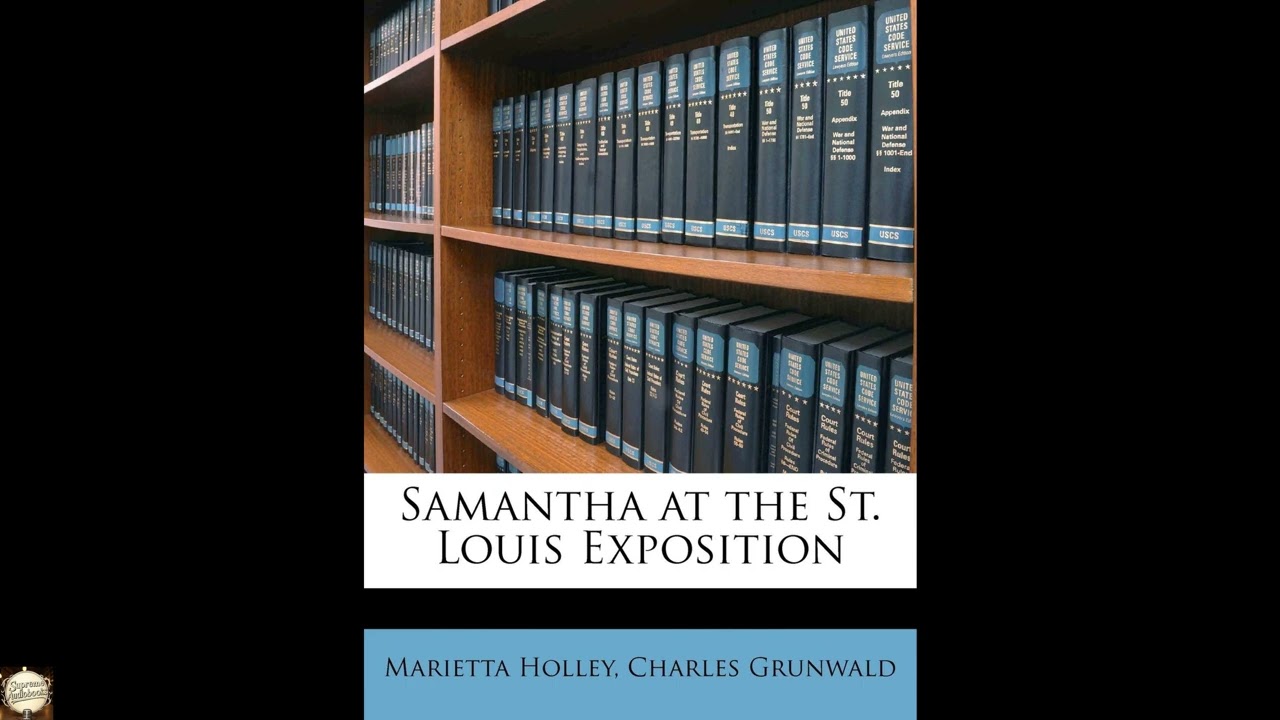
Samantha at the St. Louis Exposition
Step into a bygone era of marvel and mirth with "Samantha at the St. Louis Exposition," Marietta Holley's enduring comic novel that brings the grandeur and occasional absurdity of the 1904 World's Fair vividly to life. This isn't just a quaint historical record; it is a sharp, often hilarious social commentary delivered through the inimitable voice of Samantha Allen, a character whose plain-spoken wisdom cuts through the pomp and pretense of her age with surprising relevance even today. As Samantha navigates the colossal displays of innovation and culture, listeners are invited to laugh at the follies of human ambition and to reflect on the true meaning of progress, all while encountering a uniquely American perspective on a pivotal moment in history. The story drops us directly into the bustling heart of the Louisiana Purchase Exposition, a colossal celebration of American ingenuity and global cultural exchange held in St. Louis, Missouri. Our guide, the redoubtable Samantha Allen, travels to the fair from her rural home in upstate New York, accompanied by her ever-patient, if sometimes bewildered, husband, Josiah. Samantha, a woman of firm opinions and an unshakeable belief in common sense, finds herself utterly immersed in a world of wonders: colossal palaces of industry, exotic foreign villages, technological marvels like the automobile and moving pictures, and an endless parade of humanity from every corner of the globe. Her central conflict is not one of external drama, but an internal, observational one. Samantha must reconcile her deeply held rural values and practical outlook with the overwhelming spectacle of modernity, consumerism, and globalism presented at the fair. Each new exhibit, every encounter with a new invention or a curious custom, becomes an opportunity for Samantha to voice her (often humorous) opinions on everything from women's fashion and suffrage to the perceived superiority of American progress, always maintaining a skeptical eye for anything she deems "highfalutin" or impractical. She attempts to make sense of the new world unfolding before her, often comparing its grandiosity to the simpler, more honest life she knows, leading to a series of delightful misunderstandings and trenchant observations that form the arc of her grand adventure. Marietta Holley, the brilliant mind behind Samantha Allen, was born in Ellisburg, Jefferson County, New York, in 1836. Her life, largely spent in the quiet rural landscape of her birth, stood in stark contrast to the bustling, progressive worlds her characters so often visited. A prolific writer, Holley began publishing her works in the 1870s, quickly rising to national fame as one of America's most beloved humorists. She was often referred to as "the female Mark Twain," a testament to her keen wit and her ability to weave social commentary into genuinely funny narratives. Though she never married and lived a relatively secluded life, Holley maintained a passionate interest in the social and political questions of her day, particularly women's rights and temperance, often weaving these concerns into Samantha's opinions. Her literary output was vast, comprising over twenty books featuring the Samantha character, including "My Opinions and Betsy Bobbet's" and "Samantha on the Woman Question," making Samantha Allen one of the most widely read and recognized figures in American literature during the late 19th and early 20th centuries. Holley's place in the canon, while sometimes understated in modern academic circles, is undeniable for her immense popularity and her unique contribution to American humor and local color writing, offering a distinctly female perspective on the rapidly changing nation until her death in 1926. "Samantha at the St. Louis Exposition" deftly brings several significant themes to the forefront, filtered through Samantha’s unique lens. One prominent theme is the clash between rural common sense and urban spectacle. For instance, Samantha often expresses her bewilderment at elaborate displays like the "Pike"—the fair's entertainment zone—seeing it as an expensive indulgence rather than true progress. She applies a pragmatic yardstick to everything, often finding the grandest exhibits lacking in practical utility, as when she questions the necessity of electric lights if a good kerosene lamp serves just as well. This highlights a broader societal tension between traditional values and the accelerating pace of modernization. Another core theme is social commentary and the evolving role of women. Though Holley addresses serious topics with humor, Samantha consistently advocates for women's suffrage and equal rights in her own understated way. When she encounters women participating in professional exhibits or discussions, she praises their intellect and capability, often contrasting it with Josiah’s more conventional, sometimes dismissive, views. Through Samantha’s candid observations, Holley critiques societal norms, promoting independence and a more equitable standing for women, a subtle yet powerful message delivered with a smile and a wry observation. This novel emerged from a specific cultural and historical moment: the turn of the 20th century, a period often characterized by rapid industrialization, technological innovation, and a burgeoning sense of American global identity. The 1904 St. Louis Exposition itself was a monumental event, designed to showcase the marvels of progress and celebrate the centennial of the Louisiana Purchase. It was a time when the world was shrinking due to advances in communication and transportation, yet also when cultural anxieties about the loss of traditional ways of life were rising. Holley's work, especially this particular volume, tapped directly into the national conversation about what "progress" truly meant. Her humorous take offered a comforting counterpoint to the often overwhelming changes. By framing the grand spectacle of the fair through the eyes of a down-to-earth rural woman, Holley provided a digestible, often reassuring, perspective on a world transforming at an unprecedented pace. Her humor allowed readers to confront the complexities of the era with a smile, while still considering the underlying social questions. Listening to "Samantha at the St. Louis Exposition" as an audiobook offers a unique opportunity to appreciate the nuances of Holley's writing. The narration is crucial for bringing Samantha's distinctive voice to life—her particular dialect, her specific cadences, and the subtle inflections that convey her humor and good sense. The multi-hour run length makes it an ideal companion for commutes, household chores, or a leisurely afternoon, allowing listeners to fully immerse themselves in the bustling atmosphere of the fair and Samantha's unfolding experiences. Pay attention to the pacing, which can mirror the episodic nature of exploring a grand exposition, moving from one detailed observation to the next. The dialogue, particularly Samantha's internal monologues and her exchanges with Josiah, forms the core of the humor and insight, allowing the atmosphere of a bygone American triumph to truly resonate.
Enjoyed Samantha at the St. Louis Exposition? A few ways to support us
Audible & Amazon links are affiliate; we may earn a small commission at no extra cost.
About this production
Human narration by a volunteer reader from LibriVox.org, the public-domain audiobook project. LibriVox volunteers record literary works whose copyright has expired in the United States, releasing the resulting recordings into the public domain.
Samantha at the St. Louis Exposition by Marietta Holley. The underlying text is in the U.S. public domain. We do not republish any modern copyrighted edition, translation, or commentary.
The 4K cinematic visuals accompanying this audiobook are generated by an AI image model from prompts derived from the source text. No copyrighted photos, paintings, or stock footage are used. AI generation is disclosed on every video on our YouTube channel as required by YouTube's altered/synthetic content policy.
English subtitles are transcribed from the LibriVox recording with OpenAI Whisper. Translations into the 11 other supported languages are produced by Meta's NLLB-200 neural translation model. No human translator's copyrighted translation is used.
Questions about sourcing or rights? See our DMCA & Sourcing policy or contact us.
Enjoyed this audiobook?
If you'd like to own a copy of Samantha at the St. Louis Exposition or hear a professionally produced edition, the links below help support free audiobook production at no extra cost to you.
As an Amazon Associate we earn from qualifying purchases. Audible / print links are affiliate.