Helen in the Editor's Chair
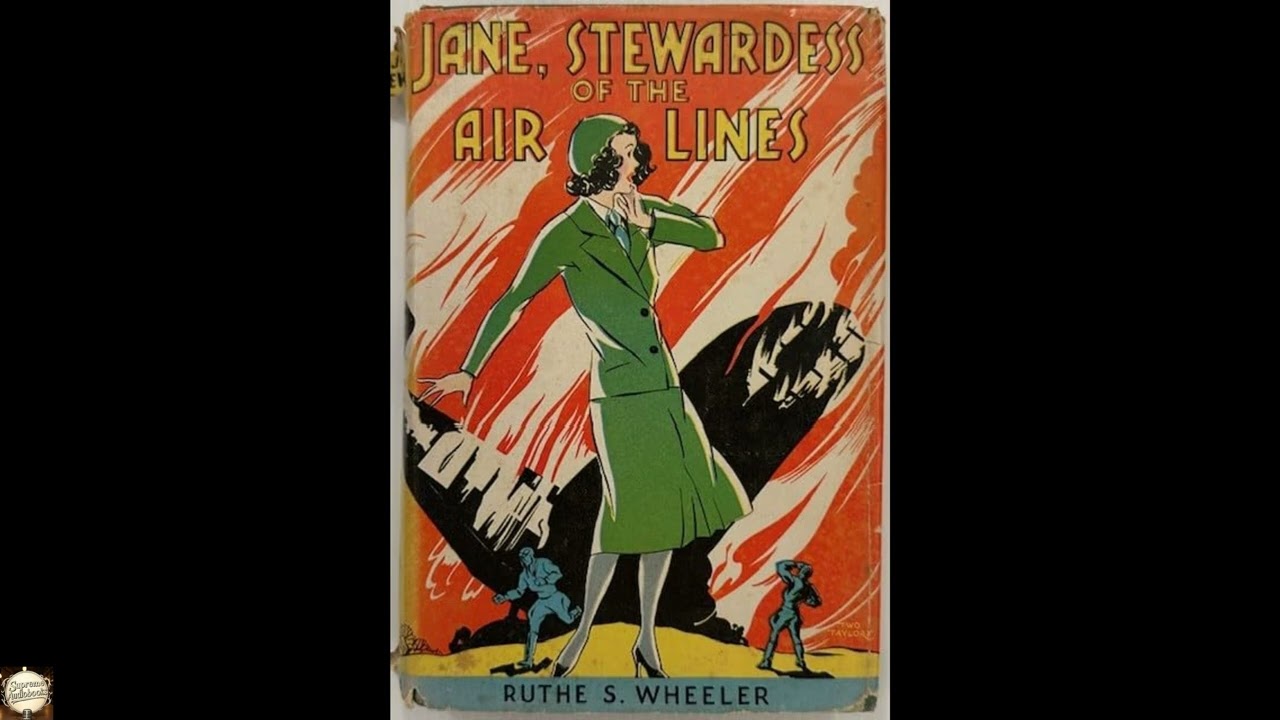
In a world still grappling with the evolving roles of women in professional life, Ruthe S. Wheeler's "Helen in the Editor's Chair" emerges as a powerful, resonant voice from the past, inviting listeners to consider the enduring questions of ambition, gender, and personal integrity. This compelling narrative centers on a woman who dares to step into a position of influence and power at a time when such a move was revolutionary, often met with skepticism and quiet resistance. Wheeler’s thoughtful prose not only provides a vivid snapshot of an earlier era but also holds a mirror to our contemporary struggles, revealing that the challenges of breaking barriers and commanding respect are, in many ways, an ongoing human saga. It is a story not just about one woman's career, but about the slow, persistent turning of societal tides and the quiet strength required to be a pioneer. The story introduces us to Helen, a woman of sharp intellect and unwavering determination, who, against the conventional wisdom of her era, finds herself at the helm of a prominent metropolitan publication. Set amidst the bustling energy of a burgeoning city at the turn of the 20th century, the publishing house is a microcosm of society itself – a place of innovation and tradition, of progressive thought and entrenched biases. Helen's appointment is not merely a professional ascent; it is a statement, both to her colleagues and to the wider world, about a woman’s capacity for leadership in a field previously dominated by men. The central conflict arises almost immediately as Helen must navigate the skepticism of her male subordinates, the critical eye of the public, and the intricate web of professional demands that threaten to overwhelm her. As Helen settles into her new role, the narrative follows her through a series of editorial challenges that test her resolve and sharpen her leadership skills. From making difficult decisions about controversial articles to managing a roster of temperamental authors and demanding advertisers, Helen’s days are a constant balancing act. The arc of the story sees her striving to maintain her vision for the publication while contending with deeply ingrained societal expectations for women, which often manifest as gentle but persistent pressures to prioritize personal life over professional ambition. Wheeler masterfully portrays Helen’s quiet struggle to assert her authority and define her identity within a world that would prefer to keep her confined to a more traditional sphere, all without spoiling the ultimate outcome of her pioneering efforts. Ruthe S. Wheeler, though not a name often widely celebrated in mainstream literary discussions today, represents a significant voice from a transitional period in American letters. Born in the late nineteenth century, a time of immense social and industrial upheaval, Wheeler was part of a generation of writers who chronicled the quiet revolutions taking place within everyday lives. While precise biographical details about her life and career are not extensively documented, her body of work consistently demonstrates a keen sensitivity to the evolving landscape of women’s roles and aspirations. She likely drew inspiration from the increasing, albeit still limited, opportunities for women in education and professional fields during her lifetime, subtly weaving these observations into her fiction. Wheeler's literary style often featured clear, unvarnished prose, focusing on character-driven narratives that gently critiqued societal norms without resorting to overt polemics. Her approach allowed readers to witness, through the eyes of her characters, the profound societal shifts occurring around issues of gender, class, and individual agency. "Helen in the Editor's Chair" stands as a testament to her particular talent for portraying women who, despite facing formidable social barriers, exhibited remarkable resilience and intellectual prowess. Wheeler’s contributions, though perhaps less formally categorized than those of her more canonized contemporaries, belong to the important literary tradition that lent authenticity and voice to the experiences of ordinary people navigating extraordinary times. The narrative of "Helen in the Editor's Chair" speaks eloquently to several enduring themes, most notably the evolving discussion around gender and professionalism. Helen’s experience in the editor’s chair serves as a powerful illustration of the larger societal struggle for women seeking to define themselves beyond traditional roles. For instance, early in her tenure, she likely encounters thinly veiled condescension from male counterparts who question her capacity for "serious" decision-making, perhaps suggesting her insights are too emotional or her judgment too delicate for the cutthroat world of publishing. Her persistent pushback, demonstrated through her rigorous work ethic and the successful execution of her editorial vision, provides a compelling illustration of overcoming entrenched biases. Beyond gender dynamics, the narrative also thoughtfully examines the profound responsibilities inherent in shaping public discourse. As Helen navigates the intricate machinery of a publishing house, she is confronted with ethical dilemmas that force her to weigh integrity against commercial pressures or personal loyalties. Imagine a scene where a powerful advertiser threatens to pull support unless a critical story is softened, or a beloved author insists on a piece filled with factual inaccuracies. Helen’s principled stands in these moments highlight the moral fortitude required to uphold journalistic standards and the very real consequences of editorial choices on public perception. The novel becomes a quiet testament to the enduring importance of a conscientious media, a theme that resonates with particular urgency in our own era of information overload. The period in which "Helen in the Editor's Chair" would have emerged was one of profound societal transformation, particularly regarding women’s roles. The late 19th and early 20th centuries witnessed the first significant waves of women entering the public sphere, spurred by increased access to education and the burgeoning industrial economy. While many professional avenues remained largely closed, fields like journalism, literature, and social reform offered nascent opportunities for women to exercise their intellect and influence. The concept of the "New Woman"—educated, independent, and often career-minded—was both celebrated and feared, challenging long-held domestic ideals. This era also saw an explosion in print culture, with magazines and newspapers becoming central to public life and opinion formation, creating new editorial positions that, though predominantly held by men, were slowly opening up. "Helen in the Editor's Chair" thus speaks directly to the anxieties and aspirations of this transitional moment, reflecting the nascent feminist consciousness that sought both personal fulfillment and public impact, even as it navigated deeply ingrained social barriers. Listening to "Helen in the Editor's Chair" as an audiobook brings an added dimension to Ruthe S. Wheeler's astute observations and meticulously crafted world. The several hours of narration allow the listener to fully immerse themselves in Helen's professional world, feeling the pressure of deadlines, the tension of editorial meetings, and the subtle nuances of societal judgment that are often best conveyed through vocal performance. A skilled narrator can amplify the quiet determination in Helen’s voice, the exasperation of her colleagues, and the specific cadences of a period in which formality often cloaked deeper emotions. The measured pacing of the prose, characteristic of its era, truly comes alive when read aloud, allowing for a thoughtful consideration of the societal questions the story raises. The spoken word can underscore the atmospheric details of a bustling city publishing house – the rustle of papers, the clack of typewriters, the hushed urgency of important decisions – creating an intimate and evocative experience of a woman forging her path against formidable odds.
Enjoyed Helen in the Editor's Chair? A few ways to support us
Audible & Amazon links are affiliate; we may earn a small commission at no extra cost.
About this production
Human narration by a volunteer reader from LibriVox.org, the public-domain audiobook project. LibriVox volunteers record literary works whose copyright has expired in the United States, releasing the resulting recordings into the public domain.
Helen in the Editor's Chair by Ruthe S. Wheeler. The underlying text is in the U.S. public domain. We do not republish any modern copyrighted edition, translation, or commentary.
The 4K cinematic visuals accompanying this audiobook are generated by an AI image model from prompts derived from the source text. No copyrighted photos, paintings, or stock footage are used. AI generation is disclosed on every video on our YouTube channel as required by YouTube's altered/synthetic content policy.
English subtitles are transcribed from the LibriVox recording with OpenAI Whisper. Translations into the 11 other supported languages are produced by Meta's NLLB-200 neural translation model. No human translator's copyrighted translation is used.
Questions about sourcing or rights? See our DMCA & Sourcing policy or contact us.
Enjoyed this audiobook?
If you'd like to own a copy of Helen in the Editor's Chair or hear a professionally produced edition, the links below help support free audiobook production at no extra cost to you.
As an Amazon Associate we earn from qualifying purchases. Audible / print links are affiliate.