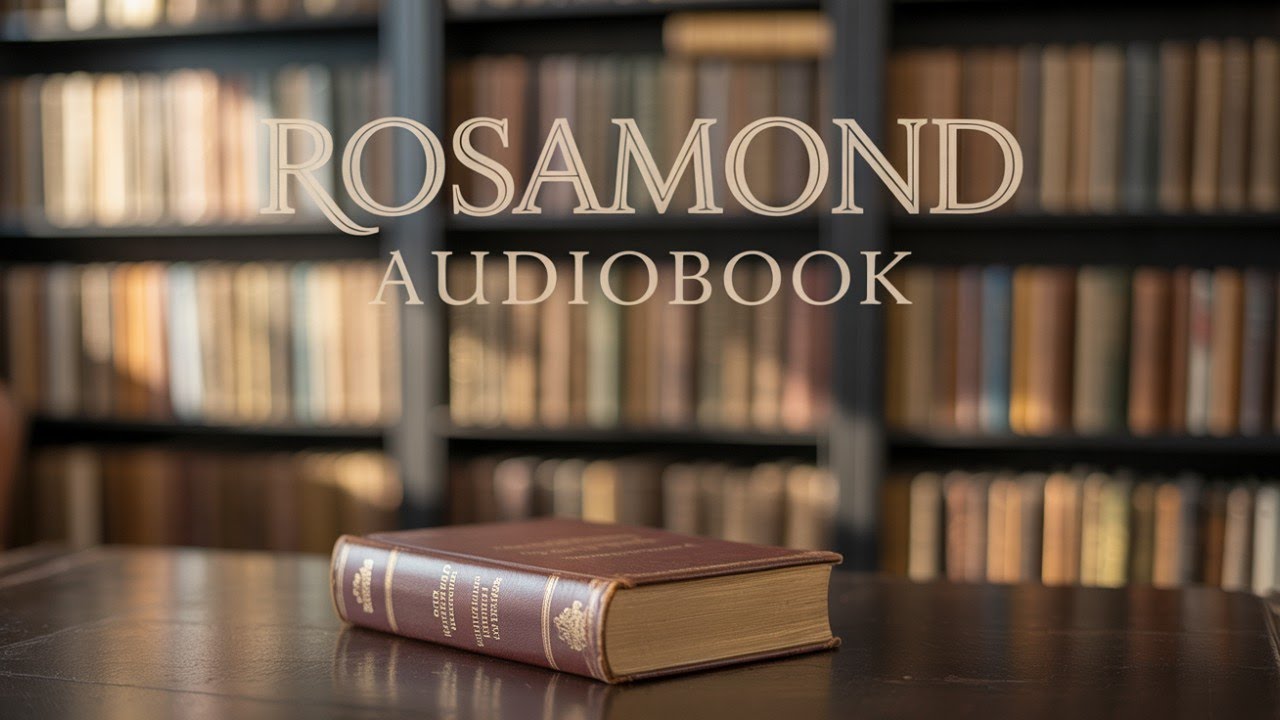
Rosamond, or, the Youthful Error: A Tale of Riverside; And Other Stories
Step back into an age where moral clarity and the lessons of experience shaped the very fabric of storytelling. Rosamond, or, the Youthful Error: A Tale of Riverside; And Other Stories invites listeners to uncover a quiet yet profound corner of classic literature, a work whose anonymity only deepens its allure as a voice from the past, speaking directly to enduring human struggles. This collection, led by its titular novella, offers not just a glimpse into the sensibilities of a bygone era, but a mirror reflecting universal truths about judgment, redemption, and the often-painful process of self-discovery. Why listen today? Because the challenges of navigating a judgmental world, the yearning for a second chance, and the quiet dignity of personal growth remain as relevant now as they were when these pages first took form. It’s a chance to connect with a foundational type of narrative that shaped generations, a story whose power endures irrespective of its author's name. The central narrative unfolds in the seemingly idyllic, yet subtly watchful, community of Riverside. Here, we meet Rosamond, a young woman whose vivacious spirit and inherent goodness are tragically overshadowed by a single, ill-advised misstep. This "youthful error," though perhaps minor in intent, carries weighty social ramifications within the close-knit, morally stringent world of her town. The story meticulously charts the immediate aftermath of her mistake, detailing the swift erosion of her standing, the whispers that follow her, and the palpable shift in how those who once admired her now perceive her. Rosamond finds herself isolated, grappling with a profound sense of shame and regret that threatens to consume her. As the narrative progresses, Rosamond’s struggle becomes one not just against societal judgment, but against her own despair. The tale follows her as she attempts to navigate this altered landscape, seeking a path towards understanding and, perhaps, some form of societal acceptance or personal peace. The details of her daily life, her interactions with former friends and stoic town elders, paint a vivid picture of a world where reputation held immense currency. The collection also includes "Other Stories," shorter pieces that often echo similar themes of moral choice, consequence, and the nuanced complexities of human character, broadening the scope of the unknown author’s concerns beyond Rosamond's specific predicament. These accompanying narratives serve as fascinating counterpoints, providing further meditations on virtue and vice, love and loss, each with its own distinct flavor of thoughtful introspection. The authorship of Rosamond, or, the Youthful Error remains a captivating mystery, a common thread in the history of printed works, particularly during periods when publishing was less formalized or when social conventions dictated anonymity. Many writers, especially women, chose or were compelled to publish without their names attached to their creations, either to avoid societal scrutiny, protect personal privacy, or to allow their work to be judged solely on its merit rather than on their identity. This practice was especially prevalent in the 19th century, a fertile ground for moralistic tales and domestic dramas intended to instruct as much as entertain. These works often circulated widely, leaving an indelible mark on the cultural consciousness even as their creators remained hidden. To encounter such a book today is to participate in a literary archaeology, piecing together the influences and intentions behind a voice that deliberately—or perhaps necessarily—chose the shadows. It represents a significant tradition of storytelling that focused on universal human experiences over individual authorial celebrity. At its core, Rosamond enacts several profound themes that resonate across generations. Central among them is the concept of consequence and redemption. Rosamond's initial error, whatever its precise nature, triggers a cascade of social ostracization and personal anguish. We see this acutely when Rosamond attends a local gathering, once a source of comfort and camaraderie, now an arena of averted gazes and hushed remarks. Her very presence becomes a discomfort to others, showcasing the swift and often unforgiving nature of social judgment. Yet, the story subtly champions personal growth and resilience, as Rosamond does not wholly succumb to her sorrow. There are quiet scenes, such as Rosamond tending a small garden by the river, where her solitary efforts hint at a burgeoning inner strength and a determination to cultivate beauty and purpose despite the surrounding gloom. Another key theme lies in the nuances of social morality and forgiveness. The inhabitants of Riverside are not monolithic; while some are quick to condemn, others exhibit a hesitant compassion, illustrating the varied responses within a community facing perceived transgression. An elder, initially stern and unyielding in her pronouncements about Rosamond’s character, eventually offers a small, unexpected gesture of kindness—perhaps a hand reaching out in the village market, or a moment of shared silence that speaks volumes—suggesting the slow, arduous path toward understanding and, potentially, absolution, both from others and from oneself. The other stories in the collection often echo these concerns, presenting different dilemmas where characters must confront the expectations of their society and the dictates of their own consciences. This collection likely emerged during a period of significant cultural and social evolution, perhaps the late 19th or early 20th century. This was an era grappling with the shifting landscape of industrialization, the subtle but impactful changes in societal norms, and the persistent question of individual virtue within an increasingly complex world. As communities transitioned from strictly agrarian to more diverse economies, anxieties about moral decay, the upholding of tradition, and the proper conduct of young people became prominent concerns. Fiction, particularly the kind of didactic and moralistic tales exemplified by Rosamond, served as a powerful vehicle for addressing these anxieties. Such stories provided not only entertainment but also guidance, offering readers a framework for understanding right and wrong, and the consequences of deviating from established paths. They often reflected the prevailing social codes, emphasizing the importance of reputation, the domestic sphere, and the virtues of patience and perseverance in the face of adversity. The very notion of a "youthful error" speaks to a time when youthful indiscretions could cast long shadows, shaping a person’s entire future. Listening to Rosamond, or, the Youthful Error: A Tale of Riverside; And Other Stories as an audiobook transforms it from a historical artifact into a living experience. The several hours of narration allow for an unhurried immersion into its world, where the carefully chosen pacing can emphasize the weight of Rosamond’s isolation or the quiet hope of her burgeoning resolve. A skilled narrator breathes life into the characters, giving distinct vocal textures to the cautious whispers of the townspeople, the earnest internal monologues of Rosamond, and the varied voices of the supporting players in the "Other Stories." Listen for the subtle inflections in dialogue that reveal unspoken judgments or nascent sympathies, and for the atmospheric touches that transport you directly to the riverbanks, the village streets, or the quiet domestic spaces where these dramas unfold. The audiobook format deepens the intimacy of this encounter with an unknown voice from the past, inviting a personal reflection on the human capacity for error, the power of community, and the enduring quest for redemption.
Enjoyed Rosamond, or, the Youthful Error: A Tale of Riverside; And Other Stories? A few ways to support us
Audible & Amazon links are affiliate; we may earn a small commission at no extra cost.
About this production
Human narration by a volunteer reader from LibriVox.org, the public-domain audiobook project. LibriVox volunteers record literary works whose copyright has expired in the United States, releasing the resulting recordings into the public domain.
Rosamond, or, the Youthful Error: A Tale of Riverside; And Other Stories. The underlying text is in the U.S. public domain. We do not republish any modern copyrighted edition, translation, or commentary.
The 4K cinematic visuals accompanying this audiobook are generated by an AI image model from prompts derived from the source text. No copyrighted photos, paintings, or stock footage are used. AI generation is disclosed on every video on our YouTube channel as required by YouTube's altered/synthetic content policy.
English subtitles are transcribed from the LibriVox recording with OpenAI Whisper. Translations into the 11 other supported languages are produced by Meta's NLLB-200 neural translation model. No human translator's copyrighted translation is used.
Questions about sourcing or rights? See our DMCA & Sourcing policy or contact us.
Enjoyed this audiobook?
If you'd like to own a copy of Rosamond, or, the Youthful Error: A Tale of Riverside; And Other Stories or hear a professionally produced edition, the links below help support free audiobook production at no extra cost to you.
As an Amazon Associate we earn from qualifying purchases. Audible / print links are affiliate.
More by Unknown
Cattle and Their Diseases Embracing Their History and Breeds, Crossing and Breeding,- Full Audiobook
My Lady of the Chimney Corner: A Story of Love and Poverty in Irish Peasant Lif- Full Audiobook
Ebrietatis Encomium: Or, the Praise of Drunkenness. Wherein is Authentically, and M