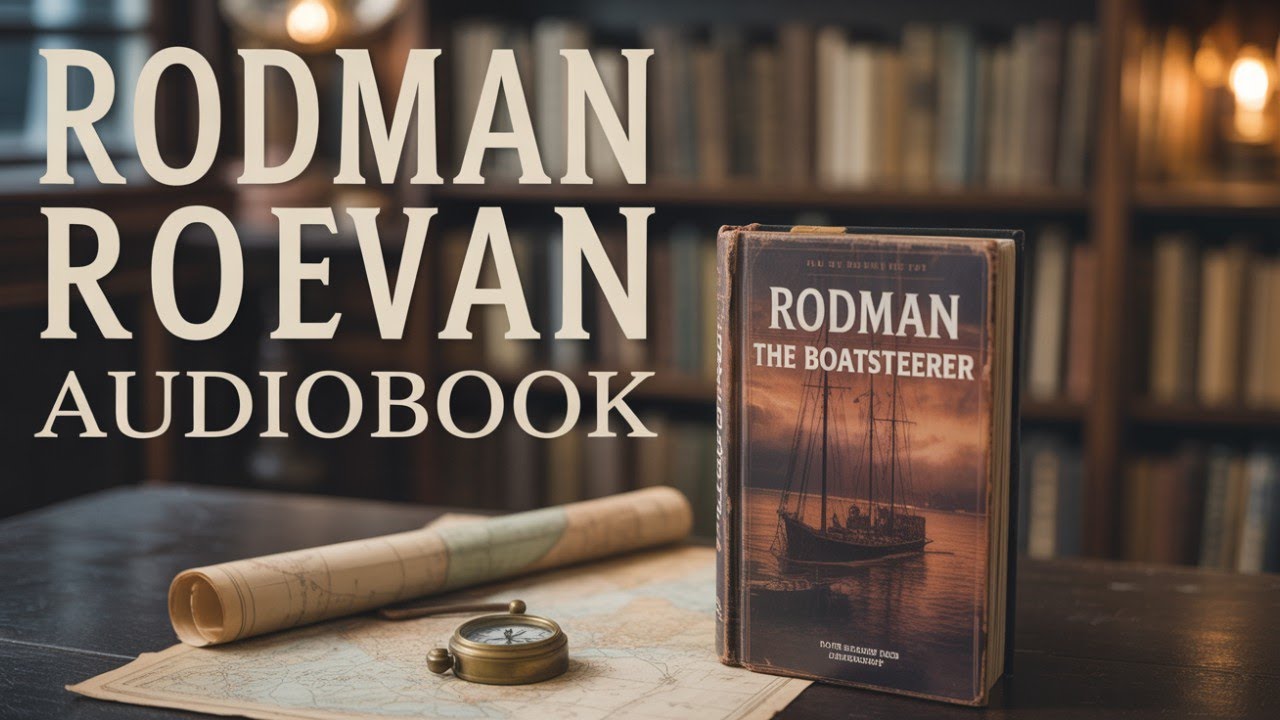
Rodman The Boatsteerer And Other Stories - 1898
"Rodman The Boatsteerer And Other Stories," published in 1898, is more than just a collection of tales from a bygone era; it is a direct, unfiltered dispatch from the heart of the South Pacific at the tail end of the nineteenth century. Penned by Louis Becke, a man who lived the very adventures he chronicled, this volume offers a gritty, authentic glimpse into a world that was rapidly changing, a frontier where the wild ocean met isolated islands, and where the forces of human nature played out with startling clarity. For listeners today, these stories provide not only thrilling narratives of daring and survival but also a crucial historical lens through which to understand the complex interactions between indigenous cultures and encroaching Western influence, the brutal realities of trade and exploitation, and the enduring allure of distant horizons that still resonates within the human spirit. The collection transports listeners to the sun-drenched, perilous world of the late 19th-century South Pacific. Each story offers a self-contained window into the lives of those who called these remote islands and vast ocean expanses home – a diverse cast ranging from weather-beaten sailors and astute boatsteerers to shrewd traders, stoic islanders, and the occasional missionary or government agent. The titular figure, Rodman, exemplifies the seasoned seafarer, a man of skill and experience whose life is inextricably linked to the rhythm of the waves and the demands of the ship. Across these narratives, the central conflict often arises from the precarious balance between man and nature, the clash of cultures, and the moral ambiguities inherent in a lawless frontier. We witness the struggles for survival against fierce storms, the hunt for precious pearls or bêche-de-mer, and the often-fraught interactions between Westerners seeking profit and the indigenous peoples defending their traditions and lands. Characters navigate treacherous reefs, negotiate with cunning rivals, and confront their own inner demons of greed, fear, and loyalty. Though each story has its own trajectory, the overarching arc of the collection traces the impact of colonial expansion on these islands, depicting a world caught between ancient customs and the relentless advance of foreign commerce, where personal fortunes could be made or lost in the blink of an eye, and where life and death often hung by a thread. The narratives unfold with a directness that reflects the harsh realities of this environment, inviting the listener to consider the choices made under extreme duress and the indelible mark left by this era on both the land and its people. The author, Louis Becke, was no armchair adventurer; he was a man who truly lived the life he depicted. Born George Louis Becke in Port Macquarie, New South Wales, in 1855, his childhood yearnings for the sea quickly led him to run away from home at the tender age of twelve. This pivotal decision set him on a course that would define his literary output. For nearly two decades, Becke immersed himself in the South Pacific, experiencing firsthand the very situations and locales that populate his stories. He served as a supercargo on various trading schooners, engaged in pearl-fishing, traded copra, and acted as an island agent, navigating the complex and often dangerous waters of inter-island commerce and labor recruitment. These were years of raw experience, of rubbing shoulders with all manner of humanity—sailors, whalers, traders, beachcombers, and island chiefs—and witnessing both the beauty and brutality of life in a remote, unregulated world. It was not until the early 1890s, when he was in his late thirties, that Becke began to commit his experiences to paper, encouraged by friends in Sydney. His first collection, "By Reef and Palm," published in 1894, immediately caught the attention of readers hungry for authentic tales from distant lands. Becke’s unvarnished prose and deep understanding of the region quickly established him as a significant voice in what became known as South Seas fiction, placing him alongside contemporaries like Robert Louis Stevenson and Joseph Conrad, though with a distinct perspective forged in the crucible of direct participation rather than observation. He continued to write prolifically until his death in Sydney in 1913, leaving behind a substantial body of work that includes titles such as "The Ebbing of the Tide" and "Helen Adair," all characterized by his unique blend of adventure, ethnographic detail, and profound human insight. The stories in "Rodman The Boatsteerer" vividly enact several enduring themes, chief among them the precariousness of life in the natural world. Whether through the sudden fury of a hurricane that can shatter a ship and end lives in an instant, or the relentless heat and isolation of a tiny atoll, Becke consistently illustrates how fragile human existence is when confronted by the overwhelming power of the ocean and its elements. Another prominent theme is the clash of cultures, specifically between the indigenous ways of life in the Pacific islands and the influx of European and American traders, missionaries, and colonial administrators. We often see this through the misunderstandings that arise when a Western concept of law or property meets ancient customs, sometimes leading to tragic consequences, or through the exploitation of islanders by unscrupulous foreign agents eager to profit from natural resources like sandalwood or pearl shell. Furthermore, the collection frequently examines the theme of moral compromise and the erosion of conventional ethics in isolated environments. Far from the strictures of civilization, characters are often pushed to their limits, forced to make decisions that blur the lines between right and wrong. A desperate trader might engage in unsavory dealings to secure a cargo, or a shipwrecked sailor might resort to extreme measures to survive. These narratives reveal the darker facets of human nature—greed, cruelty, and opportunism—but also moments of surprising loyalty, courage, and cross-cultural camaraderie. Finally, there is the powerful theme of the allure and danger of the exotic, a persistent fascination with the wildness and beauty of these islands, which simultaneously promises freedom and adventure while threatening peril and oblivion. Becke's plainspoken narrative style, drawn from his own experiences, ensures that these themes are presented not as abstract concepts but as lived realities. "Rodman The Boatsteerer And Other Stories" emerged at a fascinating juncture in history, the late 1890s. This period marked the zenith of European imperialism, a time when colonial powers were actively expanding their reach into the farthest corners of the globe, including the South Pacific. The public appetite for adventure stories set in "exotic" locales was immense, fueled by popular writers like Rudyard Kipling and H. Rider Haggard. However, Becke’s contribution was distinct. While many writers romanticized or generalized the experiences of the colonial frontier, Becke offered a much more grounded, often brutal, perspective based on his own twenty years of immersion. He wrote at a time when anthropology was gaining traction, and his detailed observations of island life, though filtered through a late-Victorian lens, offered a degree of realism that was unusual for the genre. Culturally, there was a widespread fascination with the "other," and literature served as a primary means for the European and American public to encounter these distant worlds. Becke’s stories, with their authentic dialogue and vivid descriptions of maritime life, trading practices, and inter-island politics, provided readers with a sense of genuine access to the Pacific frontier, warts and all. His work stands as a vital literary document of an era defined by global expansion, cultural collision, and the forging of new identities in the crucible of distant lands. He chronicled a world that was rapidly fading, capturing the spirit of rough-and-tumble pioneers, resilient islanders, and the vast, indifferent ocean that shaped their destinies. Listening to "Rodman The Boatsteerer And Other Stories" as an audiobook offers a singular opportunity to connect with these narratives in a profoundly immersive way. The collection's episodic nature makes it ideal for audio, allowing listeners to pick up a new adventure whenever they have a spare moment or to settle in for several hours of continuous storytelling. A skilled narrator brings Becke's straightforward, unadorned prose to life, allowing the listener to truly inhabit the atmosphere of a creaking schooner deck, the rustle of palm leaves on a remote beach, or the tension of a standoff between rival traders. The pacing of these stories, often brisk and direct, mirrors the urgency of the situations they describe, and a good narration highlights the distinct voices and accents that would have populated these Pacific outposts—from the measured tones of an island elder to the rough speech of a boatswain. It is through the ear that one can best appreciate the raw authenticity of Becke’s voice, allowing the tales of storms, sharks, pearls, and human grit to unfold with a vividness that printed text can sometimes only hint at.
Enjoyed Rodman The Boatsteerer And Other Stories - 1898? A few ways to support us
Audible & Amazon links are affiliate; we may earn a small commission at no extra cost.
About this production
Human narration by a volunteer reader from LibriVox.org, the public-domain audiobook project. LibriVox volunteers record literary works whose copyright has expired in the United States, releasing the resulting recordings into the public domain.
Rodman The Boatsteerer And Other Stories - 1898 by Louis Becke. The underlying text is in the U.S. public domain. We do not republish any modern copyrighted edition, translation, or commentary.
The 4K cinematic visuals accompanying this audiobook are generated by an AI image model from prompts derived from the source text. No copyrighted photos, paintings, or stock footage are used. AI generation is disclosed on every video on our YouTube channel as required by YouTube's altered/synthetic content policy.
English subtitles are transcribed from the LibriVox recording with OpenAI Whisper. Translations into the 11 other supported languages are produced by Meta's NLLB-200 neural translation model. No human translator's copyrighted translation is used.
Questions about sourcing or rights? See our DMCA & Sourcing policy or contact us.
View 10 famous quotes from this book →
Enjoyed this audiobook?
If you'd like to own a copy of Rodman The Boatsteerer And Other Stories - 1898 or hear a professionally produced edition, the links below help support free audiobook production at no extra cost to you.
As an Amazon Associate we earn from qualifying purchases. Audible / print links are affiliate.