Rob of the Bowl: A Legend of St. Inigoe's. Vol. 1
"Rob of the Bowl: A Legend of St. Inigoe's, Vol. 1" invites listeners into a vivid historical world, presenting a saga of mystery, identity, and daring that continues to resonate today. This American novel, first appearing in 1838, peels back the layers of colonial Maryland, offering a stirring narrative centered on a character whose audacious spirit challenges the confines of his birthright. It speaks to the perennial human desire for belonging and recognition, wrapped in the guise of a historical romance filled with intrigue and the untamed beauty of the Chesapeake Bay. Listeners will find themselves drawn into a richly imagined past, encountering questions of justice, social standing, and individual freedom that remain relevant in any age. The narrative unfolds in the enchanting yet rigid world of colonial Maryland, specifically around the picturesque shores of St. Inigoe's on the Chesapeake Bay. This is a land where gentlemen planters preside over vast estates and naval traditions hold sway. Central to this setting is Rob, a young man of enigmatic origins who has grown up under the protection of the benevolent but strict Colonel Custis. Rob is not one to fit neatly into any predefined social slot; his lineage is a secret, his past a shadow, and his present a series of audacious acts that both endear him to some and mark him as a rogue. He possesses an innate charm, quick wit, and an uncanny ability to navigate complex situations, despite his uncertain background. Rob's life is far from simple. His very existence poses a quiet challenge to the ordered society around him. He is called "Rob of the Bowl" due to a peculiar, identifying mark, a detail that hints at a forgotten past even as it anchors him firmly in his current station. The story details his interactions with the inhabitants of St. Inigoe's: the aristocratic gentry like Colonel Custis and his beautiful ward, Blanche; the sturdy sailors like Captain Daunt; and the broader community, which regards Rob with a mix of suspicion, admiration, and curiosity. His relationship with Blanche is particularly significant, developing against the backdrop of societal expectations and personal yearnings, presenting a conflict between duty and affection that defines much of the book’s early emotional landscape. As Rob comes of age, a deeper conflict emerges—one that involves not just his personal identity but also broader issues of land, legacy, and obscured truths. Whispers of old feuds, hidden inheritances, and mistaken identities begin to surface, slowly unraveling the mystery of Rob’s parentage and setting him on a course that will force him to confront powerful figures and challenge long-held assumptions. His adventures take him from the stately drawing rooms to the open waters of the Bay, testing his courage, loyalty, and ingenuity. The story builds toward revelations that promise to reshape his understanding of himself and his place in the world, all while keeping the ultimate secrets of his birth and destiny tantalizingly out of reach. The author behind this compelling tale is John Pendleton Kennedy, a distinguished figure in early American letters and a man of considerable public service. Born in Baltimore, Maryland, in 1795, Kennedy was a true product of his time—a lawyer, politician, and writer whose life mirrored the growth of the young United States. His education prepared him for a career in law, but his patriotic spirit led him to serve in the War of 1812, including active duty at the Battle of North Point. These formative experiences undoubtedly infused his later fiction with a keen understanding of historical forces shaping the nation. Kennedy's literary career unfolded alongside his political one. After multiple terms in the U.S. House of Representatives from Maryland, he was appointed Secretary of the Navy by President Millard Fillmore, a significant role during which he oversaw important initiatives, notably Commodore Matthew Perry's expedition to Japan. This blend of practical statesmanship and artistic sensibility allowed him a unique perspective on American society, which he often infused into his writing. Kennedy was not only a novelist but also a prominent essayist and editor, playing a vital role in the burgeoning literary scene of the pre-Civil War era. Beyond "Rob of the Bowl," Kennedy authored other significant works. His first novel, "Swallow Barn" (1832), offered an idealized depiction of Virginia plantation life, often considered a precursor to the "local color" tradition. This was followed by "Horse-Shoe Robinson" (1835), a popular historical romance set during the American Revolution. Kennedy’s writing, often categorized as Southern romance or historical fiction, established him as a significant voice among a generation of American authors striving to create narratives that reflected the unique landscapes and histories of their country. He holds a firm place in the canon as a writer who depicted antebellum Southern life with detail and insight, contributing to a distinctly American literary identity. "Rob of the Bowl" addresses several profound themes. One central idea is the question of identity and social class. Rob's uncertain parentage places him in a liminal space, constantly confronting the rigid social hierarchies of colonial Maryland. His inherent nobility of character often clashes with assumptions made based on his perceived low status. For instance, the townspeople's mixed reactions to his clever schemes and daring rescues illustrate the societal tension between inherent worth and inherited standing. This struggle for recognition and self-definition provides a powerful undercurrent throughout the narrative, making Rob a figure who defies fixed categories. Another significant theme is regionalism and the formation of American character. Kennedy meticulously renders the physical and cultural landscape of the Chesapeake Bay area, making the locale a character in itself. Descriptions of the Maryland coastline, sailing vessels, and local dialects paint a vivid picture of a specific place and time, establishing a sense of distinct American identity. Furthermore, the book subtly explores the idea of justice versus rigid adherence to law. Rob often acts outside the established legal framework, yet his actions frequently serve a higher, more equitable form of justice. His quick thinking and ability to outmaneuver corrupt officials suggest a critique of institutional inflexibility and an appreciation for individual moral compasses. The romantic adventure also speaks to the enduring appeal of chivalry and valor. When "Rob of the Bowl" was published in 1838, America was in a period of dynamic transformation, often called the Jacksonian Era. This was a time marked by fervent debates over democracy, expansion, and the role of the common man, alongside growing sectional tensions. The nation was still finding its voice, both politically and culturally, with a widespread yearning for literature that reflected uniquely American experiences rather than simply mimicking European models. Authors like Washington Irving and James Fenimore Cooper had begun to establish distinct American narratives, and Kennedy built upon this foundation by turning his gaze to the Southern states and their particular histories and social structures. The literary landscape of the 1830s saw a growing appetite for historical romances, a genre influenced by Sir Walter Scott. American writers adapted Scott's model to local settings, using historical events and figures from their own past to craft compelling stories. Kennedy’s work fits squarely into this tradition, using the rich backdrop of colonial Maryland to tell a tale that felt both deeply historical and distinctly American. The novel emerged from a desire to celebrate regional histories and to contribute to a collective national mythology, offering readers a window into the colonial past that shaped the realities of the young republic. It also reflects a period when Southern literature began to carve out its own distinct identity, often characterized by its focus on landed gentry, social order, and regional beauty. Experiencing "Rob of the Bowl" as an audiobook offers an unparalleled entry into Kennedy’s finely detailed world. The narration breathes life into the diverse cast of characters, from Rob's roguish charm to Colonel Custis's dignified gravitas. A skilled narrator makes the period dialogue feel natural and immediate, immersing listeners in witty exchanges and dramatic confrontations. With a runtime of several hours, it's an ideal companion for commutes, walks, or quiet evenings, allowing the narrative to unfold at a comfortable pace. Listen for the subtle shifts in voice, the pacing that builds suspense, and the evocative descriptions that conjure 18th-century Maryland, making the experience a vivid encounter with American literary heritage.
Enjoyed Rob of the Bowl: A Legend of St. Inigoe's. Vol. 1? A few ways to support us
Audible & Amazon links are affiliate; we may earn a small commission at no extra cost.
About this production
Human narration by a volunteer reader from LibriVox.org, the public-domain audiobook project. LibriVox volunteers record literary works whose copyright has expired in the United States, releasing the resulting recordings into the public domain.
Rob of the Bowl: A Legend of St. Inigoe's. Vol. 1 by John Pendleton Kennedy. The underlying text is in the U.S. public domain. We do not republish any modern copyrighted edition, translation, or commentary.
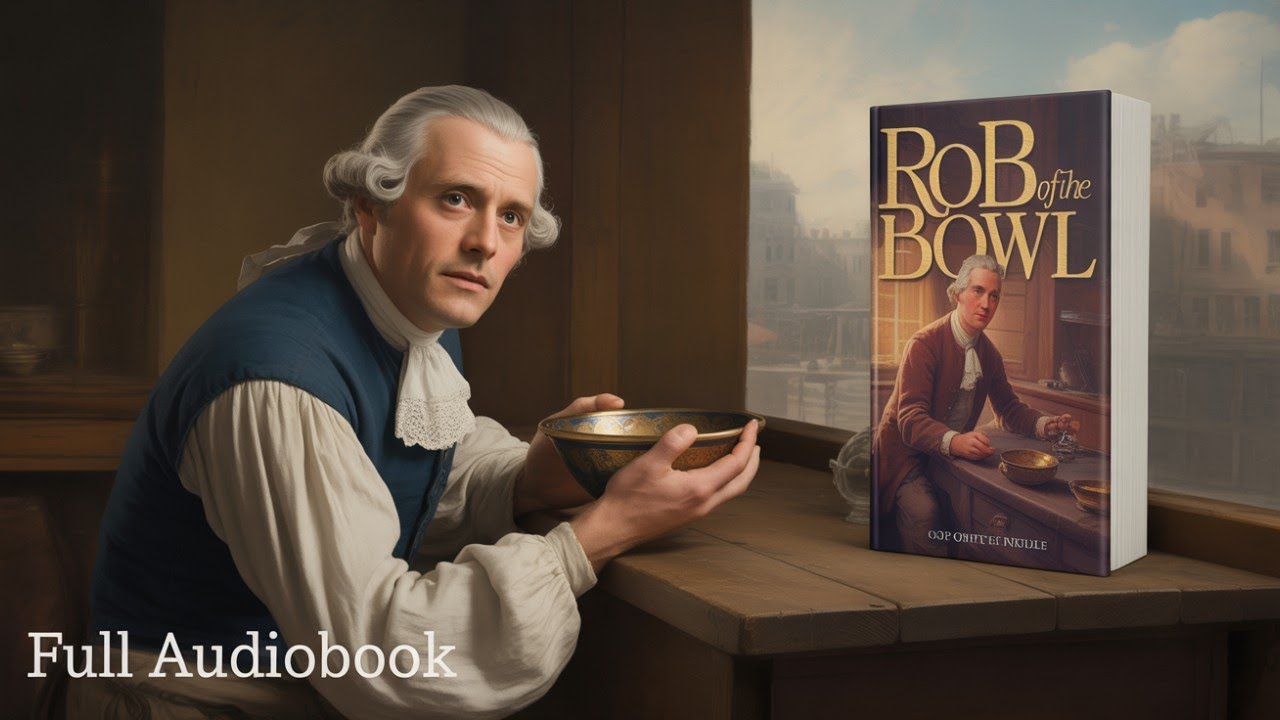
The 4K cinematic visuals accompanying this audiobook are generated by an AI image model from prompts derived from the source text. No copyrighted photos, paintings, or stock footage are used. AI generation is disclosed on every video on our YouTube channel as required by YouTube's altered/synthetic content policy.
English subtitles are transcribed from the LibriVox recording with OpenAI Whisper. Translations into the 11 other supported languages are produced by Meta's NLLB-200 neural translation model. No human translator's copyrighted translation is used.
Questions about sourcing or rights? See our DMCA & Sourcing policy or contact us.
Enjoyed this audiobook?
If you'd like to own a copy of Rob of the Bowl: A Legend of St. Inigoe's. Vol. 1 or hear a professionally produced edition, the links below help support free audiobook production at no extra cost to you.
As an Amazon Associate we earn from qualifying purchases. Audible / print links are affiliate.