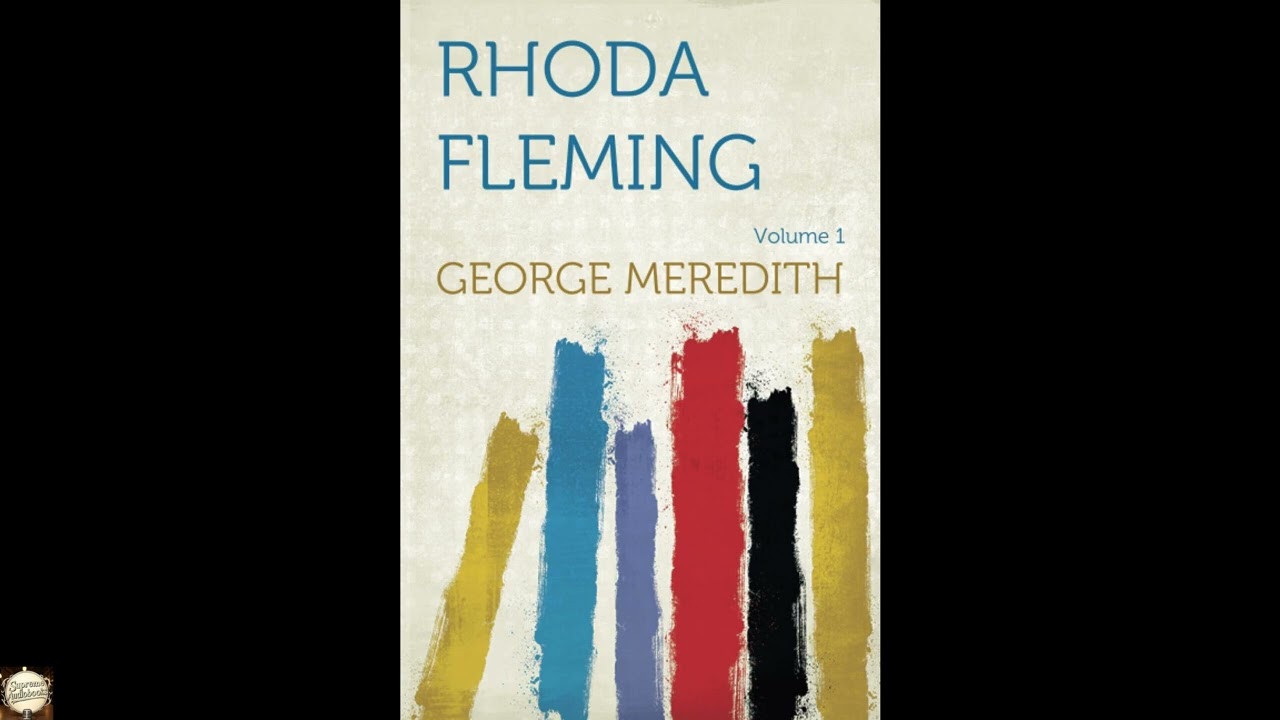
Rhoda Fleming
George Meredith’s Rhoda Fleming, first published in 1865, stands as a stark and compelling examination of social hierarchy, reputation, and the raw power of familial duty in Victorian England. This is a story that strips away the romantic veneer often associated with rural life to reveal the harsh realities faced by women caught in a web of societal expectations and male privilege. It asks listeners to consider the true cost of "honor," the crushing weight of public judgment, and the fierce, unyielding love that can drive someone to defy convention for a loved one. Its themes of consent, consequences, and the double standards applied to different genders resonate with enduring power, making it a powerful listen for anyone grappling with issues of justice and personal agency in any era. The story unfolds amidst the rolling fields and quiet lanes of rural Kent, where the Fleming family, prosperous farmers, lives a life rooted in honest labor and traditional values. Anthony Fleming, a man of simple integrity, is fiercely proud of his two daughters, Rhoda and Dahlia. Rhoda, the elder, is practical, strong-willed, and clear-sighted, embodying the sturdy resilience of the land itself. Her younger sister, Dahlia, possesses a delicate beauty and a more innocent, perhaps naive, nature. The central conflict ignites when Dahlia falls under the spell of Edward Blancove, a charming but irresponsible young man from a higher social standing. Blancove, under false promises of marriage, seduces Dahlia, leaving her pregnant and abandoned. This catastrophic event shatters the Fleming family’s peace and threatens to destroy Dahlia’s future and the family’s good name. Driven by a profound sense of injustice and an unshakeable devotion to her sister, Rhoda takes on the seemingly impossible task of forcing Blancove to acknowledge his responsibilities. She leaves the security of her home, navigating the treacherous social landscape of Victorian London, confronting Blancove and his powerful, disdainful aunt, Mrs. Lovell. Her quest for justice is fraught with social peril, personal sacrifice, and moral compromises. The narrative follows Rhoda’s desperate efforts to restore Dahlia’s honor, protect her from further ruin, and secure a measure of dignity for her family, all while struggling with her own affections and the rigid social codes that seem designed to crush vulnerable women. The story builds with mounting tension as Rhoda’s resolve is tested against the apathy of society and the entrenched power of the upper classes, making for a dramatic and often heart-wrenching account of one woman's fight against overwhelming odds. George Meredith, born in Portsmouth, England, in 1828, was a novelist and poet whose life experiences profoundly shaped his literary output. His childhood was marked by tragedy and instability; his mother died when he was young, and his father, a tailor, abandoned him. Meredith was educated for a time in Germany, an experience that broadened his perspectives beyond conventional English schooling. His early struggles as a journalist and writer were coupled with a tumultuous personal life. His first marriage, to Mary Ellen Nicolls, daughter of the poet Thomas Love Peacock, ended unhappily when she eloped, leaving Meredith to raise their son. This painful experience, often believed to be reflected in his early novel The Ordeal of Richard Feverel, gave him a unique insight into the complexities of marriage, social judgment, and the vulnerabilities of women. Despite these hardships, Meredith persevered, forging a distinctive literary path. He married Marie Vulliamy in 1864, a union that proved far happier. He went on to produce a body of work recognized for its psychological depth, poetic prose, and intellectual wit. His other notable novels include Evan Harrington, a comedic exploration of social climbing, The Egoist, a brilliant satire of male vanity, and Diana of the Crossways, which offered a perceptive portrayal of an intelligent woman navigating Victorian society. Meredith is often categorized as a Victorian novelist, yet his experimental style and philosophical bent also positioned him as a precursor to modernism. He was celebrated for his ability to portray strong, independent female characters and to dissect the hypocrisies of his age with keen precision, securing his place as a significant, if sometimes challenging, voice in English literature until his death in 1909. Rhoda Fleming addresses several powerful themes. One significant concern is social reputation and hypocrisy, particularly as it applies to women. Dahlia’s seduction immediately places an indelible stain on her, threatening not only her own future but also the standing of her entire family. Meredith vividly illustrates the cruel double standard of the era: Blancove, despite his culpability, faces little lasting consequence, while Dahlia's life is irrevocably damaged. Rhoda's tireless efforts to secure a promise of marriage, even after her sister has been compromised, underscore the desperate importance placed on the outward appearance of virtue. Another prominent theme is class and social mobility. The Fleming family, though respectable and hardworking, exists in a precarious position relative to the gentry. Blancove's wealth and connections provide him with an immunity that the Flemings lack, highlighting the vast power imbalance that dictates justice and opportunity. The stark contrast between their rural integrity and the decadent indifference of the aristocratic circles in London reveals the corrupting influence of privilege. Meredith also deeply examines female agency and sacrifice. Rhoda emerges as a powerful character, embodying a fierce, unyielding determination. She refuses to accept Dahlia’s ruin as an inevitability, instead taking matters into her own hands, even when it means personal humiliation and great risk. Her decision to confront Blancove directly and advocate for her sister—a role traditionally reserved for male protectors—showcases her exceptional resolve and courage. Her selfless actions, often involving profound personal cost, underscore the difficult choices women faced when attempting to assert control over their lives or the lives of their loved ones within a restrictive social framework. Finally, the novel scrutinizes the complex interplay of love, lust, and duty. Blancove's actions stem from a superficial attraction and a lack of moral responsibility, illustrating the destructive potential of unchecked self-interest. In contrast, Rhoda's motivations are entirely rooted in duty and a profound sisterly love, which inspires her to undertake extraordinary measures, sometimes blurring the lines between what is personally right and what is socially expedient. Published in 1865, Rhoda Fleming emerged during the mid-Victorian period, a time characterized by strict moral codes, particularly concerning women's sexuality and social conduct. The novel reflects a society grappling with the aftershocks of rapid industrialization and urbanization, though its setting is largely rural. The Victorian era saw a strong emphasis on public decorum, family honor, and the distinct roles assigned to men and women. For women, their reputation was paramount, often determining their entire future and social standing. A "fallen woman," like Dahlia, faced severe ostracism, with few avenues for redemption. Meredith's decision to focus on such a challenging predicament allowed him to critique these societal rigidities and the hypocrisy that often underlay the era’s moral pronouncements. Literary trends of the time, including realism and the novel of social purpose, provided a backdrop for Meredith's work, yet his distinctive voice—more poetic, psychologically complex, and less didactic than many of his contemporaries—set him apart. He was part of a movement of writers who, while working within the Victorian framework, began to push its boundaries towards greater psychological exploration and a more nuanced portrayal of human behavior and social critique. Listening to Rhoda Fleming as an audiobook offers a unique opportunity to immerse oneself in Meredith's distinctive prose. The narrator's performance brings clarity and emotional resonance to the author’s sometimes dense, poetic language and incisive dialogue. The novel’s run length, spanning several hours, makes it an ideal companion for extended periods of focused listening—perhaps during long walks or quiet afternoons. A skilled narrator can illuminate the nuances of Meredith’s characterizations, giving voice to Rhoda’s unwavering resolve, Dahlia’s fragile despair, and Blancove’s slippery charm. Pay close attention to the pacing, which can convey the mounting tension of Rhoda’s quest and the philosophical reflections woven into the narrative. The distinct accents and tones used for different social strata further enrich the experience, drawing the listener deep into the social landscape of Victorian England, allowing the powerful human drama to unfold with captivating immediacy.
Enjoyed Rhoda Fleming? A few ways to support us
Audible & Amazon links are affiliate; we may earn a small commission at no extra cost.
About this production
Human narration by a volunteer reader from LibriVox.org, the public-domain audiobook project. LibriVox volunteers record literary works whose copyright has expired in the United States, releasing the resulting recordings into the public domain.
Rhoda Fleming by George Meredith. The underlying text is in the U.S. public domain. We do not republish any modern copyrighted edition, translation, or commentary.
The 4K cinematic visuals accompanying this audiobook are generated by an AI image model from prompts derived from the source text. No copyrighted photos, paintings, or stock footage are used. AI generation is disclosed on every video on our YouTube channel as required by YouTube's altered/synthetic content policy.
English subtitles are transcribed from the LibriVox recording with OpenAI Whisper. Translations into the 11 other supported languages are produced by Meta's NLLB-200 neural translation model. No human translator's copyrighted translation is used.
Questions about sourcing or rights? See our DMCA & Sourcing policy or contact us.
Enjoyed this audiobook?
If you'd like to own a copy of Rhoda Fleming or hear a professionally produced edition, the links below help support free audiobook production at no extra cost to you.
As an Amazon Associate we earn from qualifying purchases. Audible / print links are affiliate.