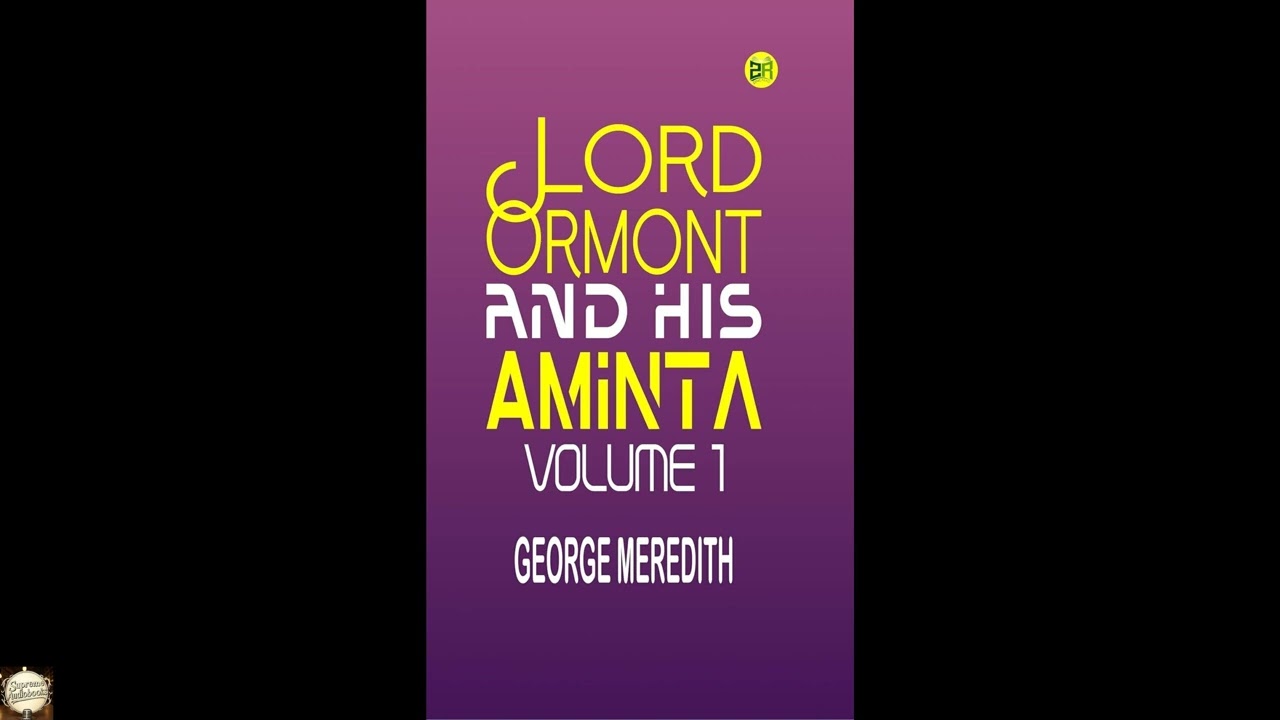
Lord Ormont and His Aminta Volume 1
Step into the final years of the nineteenth century with George Meredith's Lord Ormont and His Aminta Volume 1, a novel that crackles with intellectual wit and sharp social observation, posing questions about marriage, reputation, and personal freedom that resonate powerfully even now. Meredith, a novelist often praised for his psychological depth and stylistic ingenuity, presents a drama where societal dictates collide with individual desire, forcing a young woman to navigate a labyrinth of aristocratic pride and secret agreements. This is not merely a historical curiosity; it is a profound examination of the human spirit chafing against the constraints of a rigid world, a reminder that the struggle for authenticity in love and life remains a perpetual challenge. The story introduces us to Aminta, a young woman of uncommon spirit and beauty, who finds herself in a highly unconventional, clandestine marriage to Lord Ormont. Ormont is a man considerably her senior, steeped in the rigid codes of aristocratic honor and a pride so immense it borders on the self-destructive. His past includes a career in the military and a public slight that has left him intensely sensitive to matters of reputation, influencing his every decision. He insists on keeping their union secret, largely due to a long-held grudge against the family of his former betrothed and a refusal to acknowledge their marriage publicly until certain obscure conditions, dictated by his own stubborn pride, are met. This secrecy places immense pressure on Aminta, who, despite her genuine affection for Ormont, yearns for the public acknowledgment and respect traditionally afforded to a wife. She finds herself in an untenable position, living a life of ambiguous status, admired for her grace but shadowed by whispers and suspicion. The novel meticulously details her struggle to maintain her dignity and identity within this bewildering arrangement, depicting the emotional isolation and the subtle, insidious damage wrought by such a clandestine existence. As the narrative progresses through this initial volume, we see Aminta's growing unease, her inner strength tested by the societal expectations she cannot meet and the love she cannot openly claim, setting the stage for crucial decisions and further complications. George Meredith, born in 1828 in Portsmouth, England, lived a life marked by early hardship and later literary acclaim. His mother died when he was five, and his father, a tailor, eventually declared bankruptcy, leaving young George to be raised by an aunt. These formative experiences undoubtedly shaped his keen understanding of social status and the vulnerabilities it imposed. After attending school in Germany, Meredith pursued law but ultimately gravitated towards journalism and literature. His first major novel, The Ordeal of Richard Feverel (1859), garnered controversy for its frank depiction of a young man's education in love and life, marking him as a writer unafraid to tackle challenging subjects. Meredith's private life was also complex; his first marriage to Mary Ellen Nicolls, daughter of Thomas Love Peacock, was unhappy and ended in separation, providing him with a profound understanding of marital discord that informed works like Modern Love, a sequence of poems, and The Egoist (1879), a brilliant psychological comedy. He worked for many years as a reader for Chapman & Hall, a prominent publisher, a role that kept him closely connected to the literary world. By the time of his death in 1909, Meredith was recognized as a significant figure in Victorian literature, a bridge between its more sentimental traditions and the emerging psychological realism of the twentieth century, influencing authors with his intellectual prose and satirical edge. Lord Ormont and His Aminta enacts several core themes, most notably the destructive nature of excessive pride and ego. Lord Ormont’s refusal to acknowledge his marriage publicly stems from a perceived slight from his past, an antiquated sense of honor that blinds him to the very real pain and injustice he inflicts upon Aminta. His rigid adherence to his personal code, however absurd it appears to outsiders, becomes a central engine of the plot, illustrating how unyielding self-regard can undermine love and happiness. Aminta, for instance, finds herself repeatedly dismissed or misunderstood because Ormont’s pride prioritizes his own wounded vanity over her emotional needs and desire for societal standing. Another prominent theme is the struggle for individual freedom against societal convention, particularly for women in the late Victorian era. Aminta's predicament perfectly illustrates the limited options available to women, even those married to powerful men, if their unions did not conform to public expectation. She is caught between her affections and her fundamental right to a recognized identity. The novel scrutinizes the hypocrisies of a society that prized outward appearances above genuine character, showing how reputation could be both a shield and a prison, particularly for a woman whose marital status was a public secret. Published in 1894, Lord Ormont and His Aminta emerged in the final years of the Victorian era, a period often referred to as the fin de siècle, characterized by anxieties and questioning of traditional values. This was a time when the roles of women in society were undergoing significant re-evaluation, fueled by the "New Woman" movement which championed greater independence and intellectual pursuits for women. Meredith, though an older writer at this point, consistently featured intelligent and complex female characters, often depicting their struggles against patriarchal limitations. The novel thus reflects the contemporary societal debates concerning marriage, divorce, and female autonomy, presenting a subtle critique of the aristocratic class's stubborn clinging to outdated codes of honor and the stifling effect these had on individual lives. It stands as a testament to Meredith's enduring relevance, engaging with the social ferment of his time while crafting a narrative that speaks to perennial human dilemmas. Listening to Lord Ormont and His Aminta Volume 1 as an audiobook transforms Meredith's distinctive prose into an immediately engaging experience. His sentences can be layered, rich with metaphor and satirical insight, and a skilled narrator acts as an invaluable guide, articulating the nuances of his often-witty dialogue and the depths of his psychological observations. The several hours of runtime allow for a slow immersion into Aminta's world, letting the listener fully absorb the intricate social dynamics and the mounting tension of her secret marriage. A talented narrator will bring each character to life, differentiating Ormont's proud, sometimes pompous pronouncements from Aminta's more nuanced and yearning voice, truly capturing the atmosphere of late Victorian society and the emotional currents beneath its polished surface.
Enjoyed Lord Ormont and His Aminta Volume 1? A few ways to support us
Audible & Amazon links are affiliate; we may earn a small commission at no extra cost.
About this production
Human narration by a volunteer reader from LibriVox.org, the public-domain audiobook project. LibriVox volunteers record literary works whose copyright has expired in the United States, releasing the resulting recordings into the public domain.
Lord Ormont and His Aminta Volume 1 by George Meredith. The underlying text is in the U.S. public domain. We do not republish any modern copyrighted edition, translation, or commentary.
The 4K cinematic visuals accompanying this audiobook are generated by an AI image model from prompts derived from the source text. No copyrighted photos, paintings, or stock footage are used. AI generation is disclosed on every video on our YouTube channel as required by YouTube's altered/synthetic content policy.
English subtitles are transcribed from the LibriVox recording with OpenAI Whisper. Translations into the 11 other supported languages are produced by Meta's NLLB-200 neural translation model. No human translator's copyrighted translation is used.
Questions about sourcing or rights? See our DMCA & Sourcing policy or contact us.
Enjoyed this audiobook?
If you'd like to own a copy of Lord Ormont and His Aminta Volume 1 or hear a professionally produced edition, the links below help support free audiobook production at no extra cost to you.
As an Amazon Associate we earn from qualifying purchases. Audible / print links are affiliate.
![Bylow Hill. [1902] by George Washington Cable — free full audiobook](https://img.youtube.com/vi/1D_sMd4QpZE/maxresdefault.jpg)