Ranson's Folly
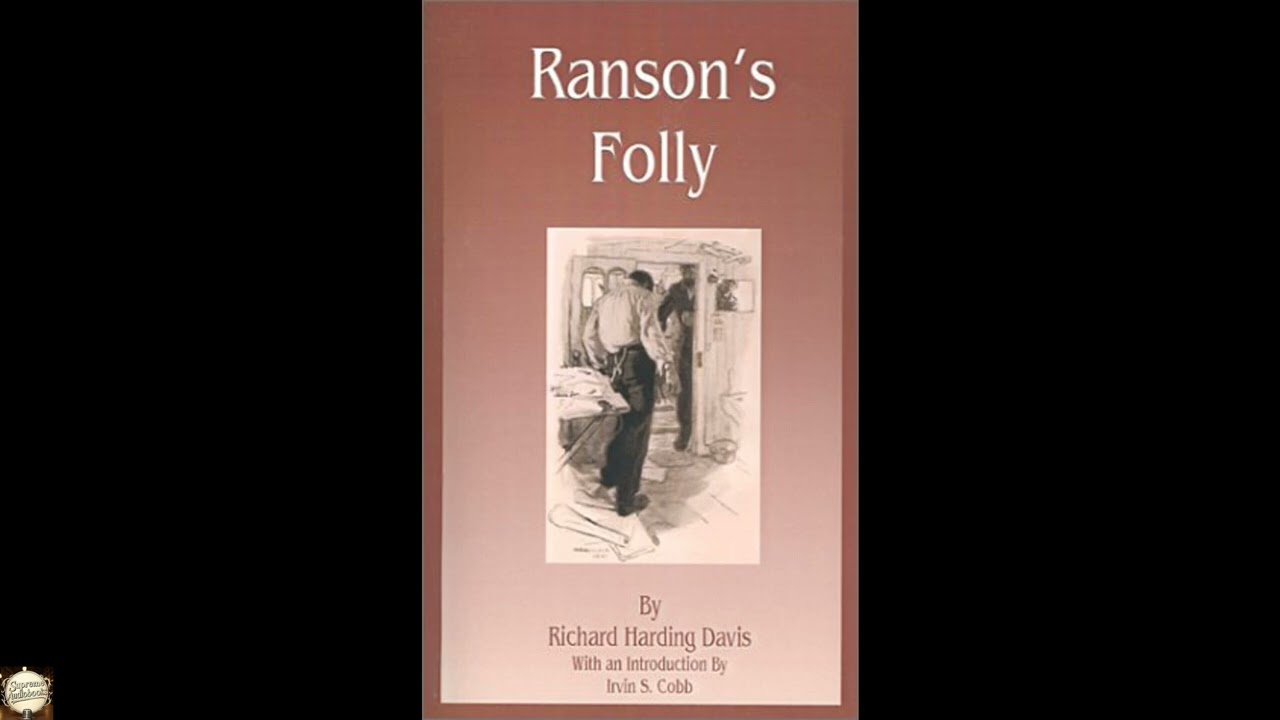
Richard Harding Davis was a name synonymous with adventure, wit, and a keen eye for the human drama at the turn of the twentieth century. His collection Ranson's Folly, published in 1902, offers a brilliant window into that era, presenting stories that sparkle with romance, intrigue, and quiet heroism. More than a century later, this book continues to resonate, not merely as a historical artifact, but as a lively testament to clever plots, memorable characters, and the enduring dilemmas of honor, love, and self-discovery. Listeners will find narratives both distinctly of their time and universally applicable, inviting reflection on courage, social expectation, and life's thrilling unpredictability. The title story, "Ranson's Folly," opens at Fort Crockett, a remote army outpost. Here, Captain Ranson, a distinguished officer known for both bravery and a certain devil-may-care attitude, faces a predicament threatening his career and reputation. On the verge of marrying the spirited Miss Elizabeth Harding, Ranson conceives of a bold, perhaps reckless, scheme to inject excitement into monotonous garrison life: staging a fake bandit attack and robbery, an elaborate charade meant as a harmless prank on his fellow officers. However, as Ranson's meticulously planned deception unfolds, the lines between play-acting and reality blur with dangerous consequences. A real band of outlaws, observing the staged event, misunderstands the situation and capitalizes on the confusion. Suddenly, Miss Harding and others face genuine peril. Ranson must contend with the fallout of his ill-advised prank and the very real threat posed by these criminals. The narrative expertly builds suspense, forcing Ranson to confront the unforeseen repercussions and prove his courage under harrowing circumstances. Richard Harding Davis, born in Philadelphia in 1864, was an icon of his age, embodying the adventurous spirit and journalistic zeal of the late nineteenth and early twentieth centuries. Son of editor L. Clarke Davis and acclaimed novelist Rebecca Harding Davis, he combined literary sensibility with a reporter's innate curiosity. After college, Davis quickly made a name in journalism for the Philadelphia Record and New York Sun. His vivid reporting, focusing on colorful characters and dramatic events, captivated readers and laid the groundwork for his prolific fiction. Davis’s career was defined by insatiable wanderlust and a knack for being present at pivotal historical moments. He served as a war correspondent during the Spanish-American War, the Second Boer War, and early World War I, with dispatches legendary for their clarity. This firsthand experience deeply informed his fiction. Beyond "Ranson's Folly," Davis authored popular works like Soldiers of Fortune and helped popularize the "Gibson Girl" ideal. He passed away in 1916, leaving behind a body of work that captures the dynamism and optimism of America during a period of rapid growth and international engagement. "Ranson's Folly" enacts several compelling themes. One prominent thread is the delicate balance between honor and deception. Captain Ranson's elaborate fake robbery, intended as harmless, directly challenges the military code of truth and integrity. His meticulous planning highlights his cleverness, but also his disregard for misleading his fellow soldiers and fiancée. The story forces Ranson, and the listener, to consider when a playful ruse crosses into genuine dishonor, especially when real lives become unexpectedly jeopardized. Another central theme is the nature of courage and heroism. Initially, Ranson’s "folly" is misguided bravery, a theatrical display. However, when actual bandits arrive, Ranson must demonstrate authentic courage, not just in facing the outlaws, but also in owning up to the disastrous effects of his deception. His transformation from playful instigator to true protector illustrates that heroism is not merely about daring acts, but about responsibility and rectifying mistakes. The story also subtly comments on social expectations and appearances. The publication of Ranson's Folly in 1902 placed it squarely in America's burgeoning Progressive Era. This period saw rapid industrialization, social reform, and a growing national identity. America, having recently emerged from the Spanish-American War in 1898 as a new global power, developed a fascination with military life and colonial adventures. The era also saw expanded mass media, with magazines and newspapers becoming primary information sources. Writers like Davis, with journalistic backgrounds, were perfectly positioned to cater to a public eager for stories reflecting this changing world. Literarily, the turn of the century was a crossroads. While realism and naturalism gained traction, strong popular demand existed for adventure stories and romances, often serialized in magazines. Richard Harding Davis expertly straddled these worlds. His journalistic precision lent a believable, grounded quality to his adventurous plots, allowing his fiction to feel both thrillingly escapist and authentically reflective of contemporary concerns. Ranson's Folly thus emerges from a cultural moment valuing individual enterprise and social responsibility, reflecting a nation grappling with its identity. Listening to Ranson's Folly as an audiobook offers a uniquely immersive experience. The crisp, often witty dialogue comes alive through skilled narration, bringing out the distinct personalities of Captain Ranson and Miss Harding. The pacing, carefully managed by the narrator, allows the gradual build of suspense as Ranson's prank spins out of control, making shifts from lighthearted amusement to genuine peril more effective. This several-hour audiobook is an ideal companion for a long drive or a quiet evening, ensuring Davis's tales unfold with all their drama and charm.
Enjoyed Ranson's Folly? A few ways to support us
Audible & Amazon links are affiliate; we may earn a small commission at no extra cost.
About this production
Human narration by a volunteer reader from LibriVox.org, the public-domain audiobook project. LibriVox volunteers record literary works whose copyright has expired in the United States, releasing the resulting recordings into the public domain.
Ranson's Folly by Richard Harding Davis. The underlying text is in the U.S. public domain. We do not republish any modern copyrighted edition, translation, or commentary.
The 4K cinematic visuals accompanying this audiobook are generated by an AI image model from prompts derived from the source text. No copyrighted photos, paintings, or stock footage are used. AI generation is disclosed on every video on our YouTube channel as required by YouTube's altered/synthetic content policy.
English subtitles are transcribed from the LibriVox recording with OpenAI Whisper. Translations into the 11 other supported languages are produced by Meta's NLLB-200 neural translation model. No human translator's copyrighted translation is used.
Questions about sourcing or rights? See our DMCA & Sourcing policy or contact us.
Enjoyed this audiobook?
If you'd like to own a copy of Ranson's Folly or hear a professionally produced edition, the links below help support free audiobook production at no extra cost to you.
As an Amazon Associate we earn from qualifying purchases. Audible / print links are affiliate.