Cuba in War Time
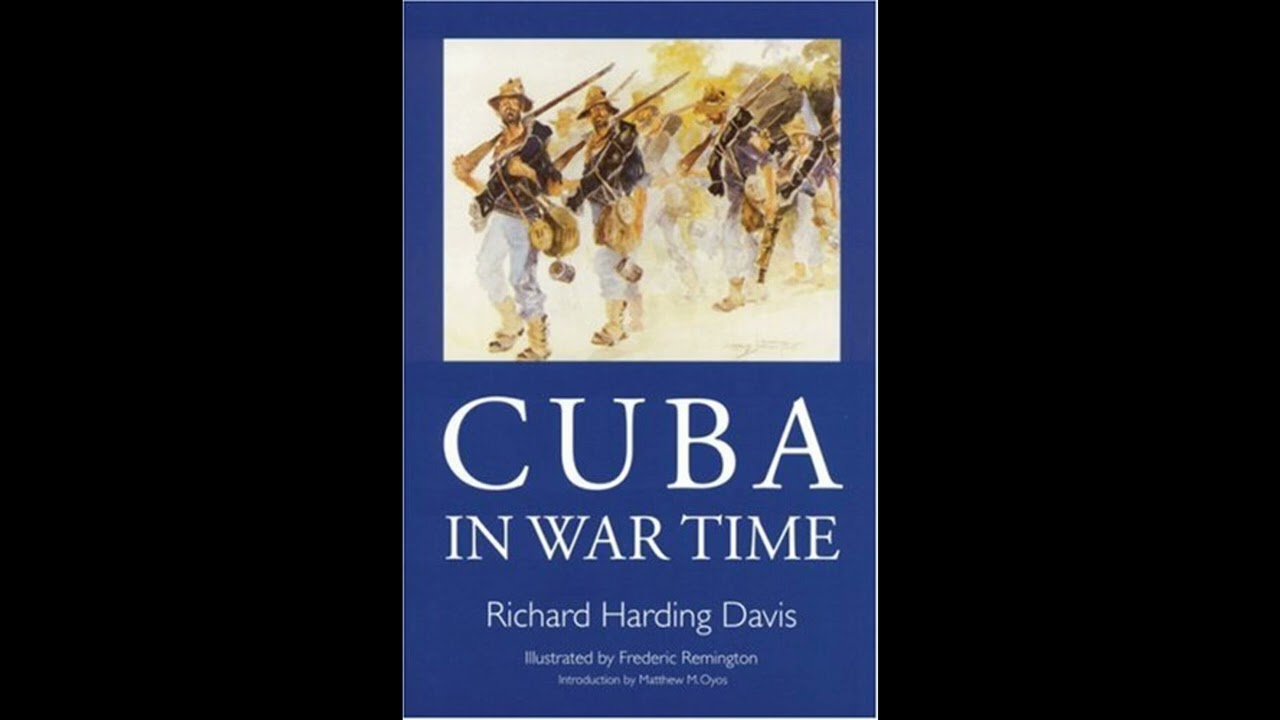
Imagine yourself transported back to the late nineteenth century, not to a quiet parlor, but to the sun-baked, insurgency-torn island of Cuba. Richard Harding Davis’s Cuba in War Time throws open a window onto a pivotal moment in history, a period bristling with tension that would ultimately ignite a global conflict. This isn't just a historical document; it's the raw, immediate reportage of a world-famous correspondent, offering a ground-level view of a people struggling for freedom and the machinations of colonial power. It speaks to the enduring questions of media influence, human suffering during conflict, and the complex path to independence, making it strikingly relevant for any listener seeking to understand the roots of modern international relations and the ethics of journalism. Davis brings us directly into the heart of Cuba’s struggle against Spanish colonial rule. As an intrepid reporter, he travels across the island, observing the brutal realities of a conflict largely unseen by the outside world. The narrative unfolds through his eyes, presenting a series of vignettes and observations rather than a linear plot in the fictional sense. We meet Spanish officers attempting to maintain control with dwindling resources, and Cuban insurgents, often ill-equipped but fiercely determined, fighting a guerrilla war from the rugged countryside. Davis paints vivid pictures of the scorched earth tactics, the reconcentrado camps where civilians were herded into squalid conditions, and the pervasive atmosphere of fear and deprivation that gripped the island’s inhabitants. His account focuses on the human element amidst the political turmoil. We witness the resilience of the Cuban people, their quiet acts of defiance, and the immense suffering inflicted by the Spanish policies designed to crush the rebellion. Davis doesn't merely chronicle events; he actively seeks out the stories of individuals – the desperate civilians, the exhausted soldiers on both sides, and the clandestine networks supporting the insurgents. His dispatches convey the grinding daily reality of life in a war zone, the constant tension, the rumors, and the struggle to discern truth from propaganda, all while navigating the dangerous landscape and the watchful eyes of the authorities. The story arc follows Davis's increasing understanding and empathy for the Cuban cause, shaped by the undeniable evidence of hardship and injustice he encounters. Richard Harding Davis, born in Philadelphia in 1864, quickly rose to prominence as one of America's most celebrated journalists and fiction writers of his era. The son of authors Rebecca Harding Davis and L. Clarke Davis, he inherited a passion for storytelling and an eye for detail. After a brief stint at Lehigh University and Johns Hopkins, he began his career in journalism, making a name for himself with his colorful and engaging reports for the Philadelphia Record and the New York Evening Sun. His dashing persona, keen observational skills, and knack for crafting compelling narratives earned him a reputation as the quintessential "gentleman adventurer" of American letters. Throughout his career, Davis covered nearly every major conflict from the Greco-Turkish War to the First World War, establishing himself as a pioneer of modern war correspondence. Beyond his non-fiction reportage, he was a prolific writer of short stories and novels, including popular works like Gallagher and Other Stories and Soldiers of Fortune, which often featured heroic, idealized American characters. His writing style, a blend of realism and romanticism, captured the imagination of a generation, placing him among the most popular literary figures of the Gilded Age and the Progressive Era, alongside contemporaries who often romanticized conflict even while documenting its brutality. He passed away in 1916, leaving behind a legacy as a journalist who shaped public opinion and a writer who defined an adventurous spirit. The observations within Cuba in War Time illuminate several profound themes. One prominent idea is the ethics and impact of war reporting itself. Davis constantly grapples with the tension between objective reporting and the undeniable human empathy evoked by the scenes he witnesses. His descriptions of starving Cuban villagers and the harsh conditions of the reconcentrado camps, for instance, demonstrate how a correspondent's choice of detail can sway public sentiment, pushing readers towards a specific viewpoint on the conflict. Another critical theme is imperialism and resistance, vividly portraying the struggle of a colonized people against an entrenched imperial power. The text showcases the sheer determination of the Cuban insurgents, who, despite being outmatched in resources, maintained their fight for sovereignty against Spain’s waning but still brutal colonial administration. Additionally, the book starkly reveals the human cost of conflict, cutting through political rhetoric to focus on the suffering of ordinary individuals. Davis’s encounters with families displaced and broken by the war, or with soldiers on both sides weary from endless fighting, serve as a poignant reminder that wars are fought by people and impact lives far beyond the battlefield. Finally, the work reflects the burgeoning American interventionism and jingoism of the late 19th century. Although Davis strives for journalistic integrity, his reports, published in influential American newspapers, undeniably contributed to a growing public outcry against Spanish atrocities and fueled the calls for American intervention, foreshadowing the eventual Spanish-American War. This work emerged during a highly charged period in American history. The late 1890s saw the rise of "Yellow Journalism," where newspapers like those owned by William Randolph Hearst and Joseph Pulitzer competed fiercely for readership through sensational headlines and often exaggerated stories. This era was characterized by a burgeoning American nationalism and an increasing desire for international influence, often termed "manifest destiny" extended abroad. Cuba, just ninety miles off the coast of Florida, represented an immediate crisis point where humanitarian concerns intersected with strategic interests. Davis’s eyewitness accounts provided crucial fodder for this media frenzy, shaping the public discourse and priming the American populace for intervention in a conflict that would ultimately mark America’s emergence as a global power. Listening to Cuba in War Time as an audiobook provides an intimate and immediate connection to Davis's original dispatches. The narration brings to life the immediacy of his observations, transforming what might otherwise feel like historical text into a direct report from the front lines of a simmering conflict. A skilled narrator can perfectly convey Davis’s observant yet empathetic tone, allowing listeners to experience the tension of the Cuban landscape, the hushed conversations with rebels, and the emotional weight of witnessing widespread suffering. The run length, several hours, is ideal for extended periods of focused listening, whether during commutes, walks, or while engaging in daily tasks, allowing the details of the setting, the plight of the characters, and the atmosphere of a nation at war to truly sink in. Listen for the distinct voices given to different groups, the subtle shifts in pacing that mirror the narrative’s varying intensity, and the clarity with which Davis’s original, direct prose is presented, making this pivotal historical account accessible and compelling.
Enjoyed Cuba in War Time? A few ways to support us
Audible & Amazon links are affiliate; we may earn a small commission at no extra cost.
About this production
Human narration by a volunteer reader from LibriVox.org, the public-domain audiobook project. LibriVox volunteers record literary works whose copyright has expired in the United States, releasing the resulting recordings into the public domain.
Cuba in War Time by Richard Harding Davis. The underlying text is in the U.S. public domain. We do not republish any modern copyrighted edition, translation, or commentary.
The 4K cinematic visuals accompanying this audiobook are generated by an AI image model from prompts derived from the source text. No copyrighted photos, paintings, or stock footage are used. AI generation is disclosed on every video on our YouTube channel as required by YouTube's altered/synthetic content policy.
English subtitles are transcribed from the LibriVox recording with OpenAI Whisper. Translations into the 11 other supported languages are produced by Meta's NLLB-200 neural translation model. No human translator's copyrighted translation is used.
Questions about sourcing or rights? See our DMCA & Sourcing policy or contact us.
Enjoyed this audiobook?
If you'd like to own a copy of Cuba in War Time or hear a professionally produced edition, the links below help support free audiobook production at no extra cost to you.
As an Amazon Associate we earn from qualifying purchases. Audible / print links are affiliate.