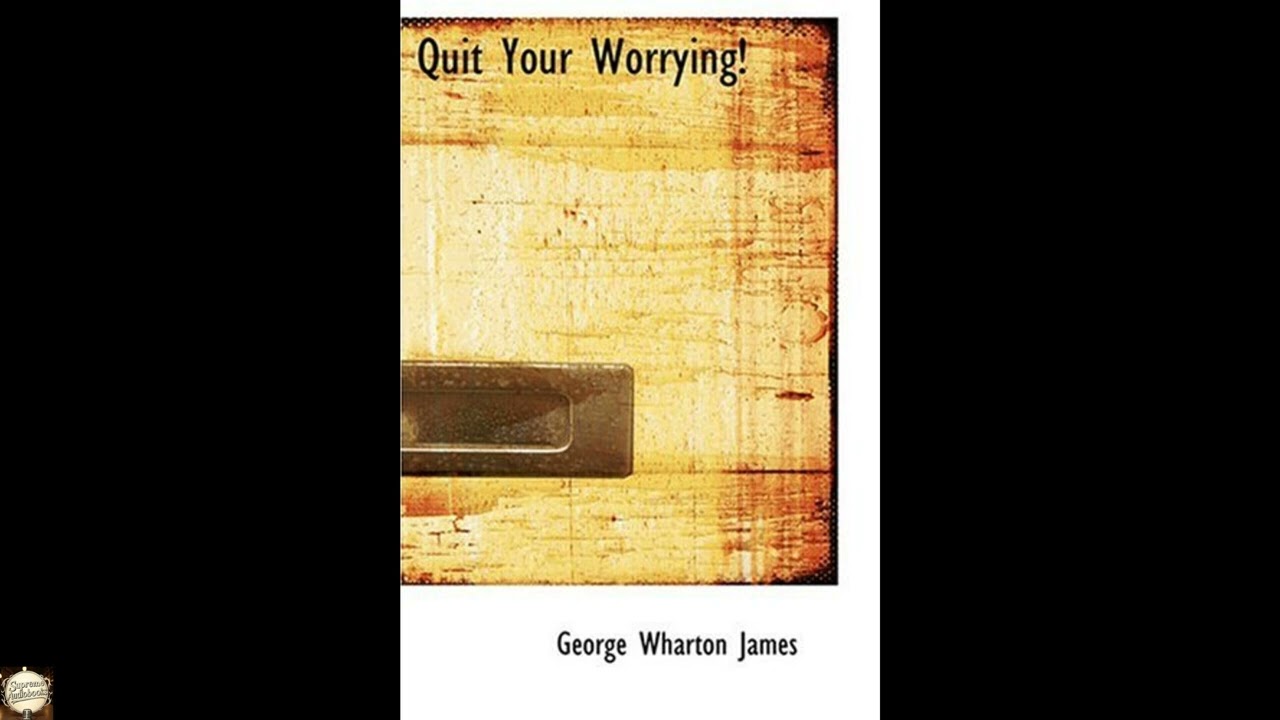
Quit Your Worrying!
"Quit Your Worrying!" stands as a surprisingly relevant beacon from a bygone era, a classic guide addressing anxieties as common today as they were over a century ago. George Wharton James offers not just comfort, but a practical philosophy for dismantling the pervasive habit of worry—a mental burden that saps energy, diminishes joy, and clouds perspective. In an age of constant connectivity and information overload, where the future feels perpetually uncertain, this text provides a clear, steady voice, reminding us that many fears are born not of present realities, but of imagined misfortunes. It’s a book for anyone overwhelmed by tomorrow, seeking to reclaim the peace and efficiency of a mind focused squarely on the present. James structures his advice as a thoughtful, step-by-step argument against the futility and destructiveness of worry. He begins by dissecting its very nature, illustrating how it often stems from anticipating problems that never materialize, or from dwelling on past regrets that cannot be undone. He draws a vivid portrait of the "worrier"—not as a weak individual, but as someone trapped in a cycle of unproductive mental activity, their potential stifled by an internal monologue of fear. The author uses anecdotes to show how this state of mind corrodes physical health, clouds judgment, and strains relationships, setting the stage for the listener to recognize their own patterns of anxiety. The subsequent chapters move from diagnosis to remedy, presenting a series of mental disciplines and practical exercises designed to reorient the mind. James encourages a focus on what he calls "the immediate task," advocating for concentrated effort in the present rather than scattered attention on a distant, uncertain future. He champions the cultivation of mental serenity through acceptance of the uncontrollable, suggesting methods for building resilience against life's inevitable setbacks. The book's progression is one of empowerment, guiding the listener from passive anxiety to active self-management, fostering a mindset where problems are confronted with calm resolve rather than debilitating dread. It promises no magic cure, but rather a robust framework for personal transformation through sustained mental effort. George Wharton James (1858-1923) was a truly remarkable figure: an American author, photographer, and ethnographer whose prolific output profoundly shaped perceptions of the American West at the turn of the twentieth century. Born in Gainsborough, Lincolnshire, England, he immigrated to the United States as a young man, initially pursuing a career as an ordained minister. His life took a significant turn when he moved to Southern California in the late 1880s for health reasons, sparking his lifelong fascination with the region's natural beauty, its indigenous cultures, and its unique history. James quickly became an authority on California's Spanish missions, Native American art and customs—particularly the Hopi and Havasupai peoples—and the desert landscapes of the Southwest. Despite personal controversies, including a publicized accusation of bigamy that led to his defrocking, he maintained an unwavering commitment to his literary and scientific pursuits. He published more than 40 books, including "In and Out of the Old Missions of California," a pioneering work in its field, and "Indian Basketry," which became a standard reference. "Quit Your Worrying!" represents a different facet of his broad intellectual curiosity, showcasing his concern for human well-being alongside his more celebrated works on natural history and ethnography. "Quit Your Worrying!" enacts several core themes, foremost among them the power of present moment awareness. James consistently urges the reader to "live in day-tight compartments," a vivid metaphor for focusing solely on immediate tasks and challenges, rather than allowing the mind to wander into hypothetical future troubles. He illustrates this by describing the sensation of fretting about next week's bills while neglecting the work that could be done today to address them, showing how this mental dispersion paralyzes action and compounds stress. Another key theme is resilience through proactive mental discipline. The author doesn't suggest ignoring problems, but rather confronting them with a prepared and disciplined mind. He illustrates this by detailing how one might systematically address a difficult situation by breaking it into manageable parts. This approach cultivates inner strength, teaching the listener to become an active participant in their own mental peace. A third theme is the liberating aspect of acceptance, particularly regarding those elements of life that lie beyond one's control, with examples of individuals finding serenity not by fighting against immutable facts, but by embracing them, thereby freeing mental energy that would otherwise be wasted in futile resistance. George Wharton James penned "Quit Your Worrying!" in an era of profound transformation—the late nineteenth and early twentieth centuries in America. This period saw rapid industrialization, urbanization, and technological advancement, alongside immense social upheaval. Cities grew at unprecedented rates, and the pace of life accelerated, bringing with it new forms of stress and anxiety. The traditional certainties of rural living and established social hierarchies were dissolving, leaving many individuals searching for stability and meaning in a rapidly changing world. Culturally, this was also the nascent stage of the popular self-help movement, influenced by philosophies like New Thought and various forms of practical idealism. People sought wisdom to navigate personal challenges, distinct from purely religious guidance. Authors like James offered a blend of practical advice, philosophical reflection, and psychological insight, addressing the "nervous ailments" and mental strain that were increasingly recognized as societal problems. "Quit Your Worrying!" therefore emerged as a direct response to the psychological toll of modernity, offering a thoughtful framework for mental tranquility. Listening to "Quit Your Worrying!" as an audiobook elevates its practical wisdom into a truly immersive and calming experience. The narrator's voice becomes a steady, reassuring presence, delivering James's insights with a pacing that allows for deep reflection rather than rushed consumption. Imagine absorbing the author's arguments for present-moment focus during your daily commute or while taking a contemplative walk, the gentle cadence reinforcing the very message of mental stillness. The spoken word brings a directness to James's conversational style, making his arguments feel like advice from a trusted mentor, providing an ideal medium for internalizing techniques for peace and resilience.
Enjoyed Quit Your Worrying!? A few ways to support us
Audible & Amazon links are affiliate; we may earn a small commission at no extra cost.
About this production
Human narration by a volunteer reader from LibriVox.org, the public-domain audiobook project. LibriVox volunteers record literary works whose copyright has expired in the United States, releasing the resulting recordings into the public domain.
Quit Your Worrying! by George Wharton James. The underlying text is in the U.S. public domain. We do not republish any modern copyrighted edition, translation, or commentary.
The 4K cinematic visuals accompanying this audiobook are generated by an AI image model from prompts derived from the source text. No copyrighted photos, paintings, or stock footage are used. AI generation is disclosed on every video on our YouTube channel as required by YouTube's altered/synthetic content policy.
English subtitles are transcribed from the LibriVox recording with OpenAI Whisper. Translations into the 11 other supported languages are produced by Meta's NLLB-200 neural translation model. No human translator's copyrighted translation is used.
Questions about sourcing or rights? See our DMCA & Sourcing policy or contact us.
Enjoyed this audiobook?
If you'd like to own a copy of Quit Your Worrying! or hear a professionally produced edition, the links below help support free audiobook production at no extra cost to you.
As an Amazon Associate we earn from qualifying purchases. Audible / print links are affiliate.