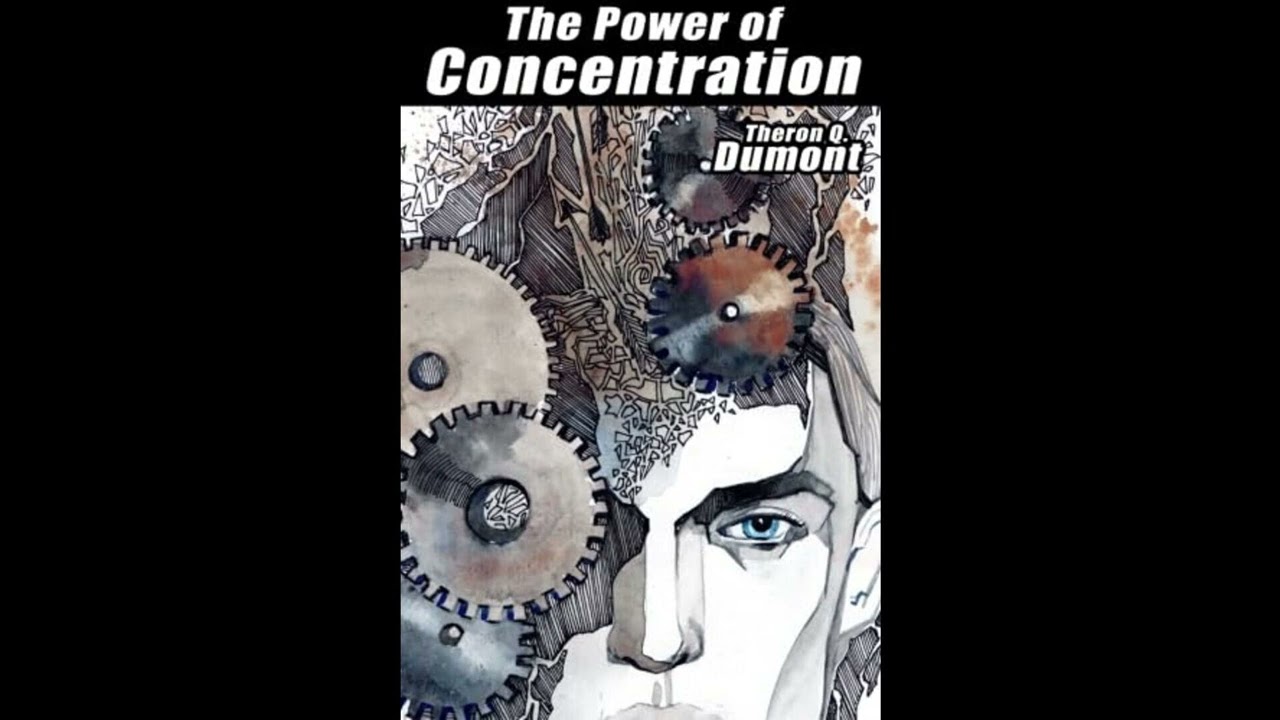
The Power of Concentration
The world today bombards us with constant notifications, endless feeds, and an ever-present hum of digital noise, making genuine focus feel like a lost art. Against this backdrop of pervasive distraction, Theron Q. Dumont’s The Power of Concentration emerges not merely as a historical curiosity but as an essential guide, offering a practical pathway back to mental clarity and purpose. This seminal text, a cornerstone of personal development literature, distills ancient wisdom and nascent psychological insights into an accessible framework for cultivating unwavering attention. It promises listeners a tangible method to harness their mental faculties, improve memory, sharpen thought, and achieve a profound sense of control over their inner world – a skill more valuable now than perhaps at any other point in history. Dumont's approach in The Power of Concentration functions less as a conventional narrative and more as a systematic curriculum for mental training. The listener is invited to step into the role of a diligent student, guided through a carefully structured program designed to build mental muscle. The initial chapters lay the groundwork, identifying common pitfalls that scatter attention—wandering thoughts, external interruptions, and a general lack of mental discipline. Dumont establishes that the primary internal conflict for every individual is the struggle against a chaotic, undisciplined mind, preventing the attainment of personal and professional goals. From this foundation, the book progresses methodically, offering a sequence of concepts and exercises aimed at strengthening the will and directing thought. The "plot arc," if you will, follows the listener's intellectual progression through these stages. Dumont doesn't merely theorize; he provides concrete steps, moving from basic exercises in focused observation—like intensely studying a simple object—to more advanced techniques for sustained mental effort, such as concentrating on abstract ideas or planning complex actions. The unfolding argument demonstrates how this cultivated focus is not just about avoiding distraction, but about actively directing mental energy towards desired outcomes, creating a more effective and purposeful life without revealing the specific final techniques that culminate this intellectual progression. Theron Q. Dumont was a well-known pseudonym for William Walker Atkinson (1862-1932), a prolific American author, lawyer, merchant, and pioneer of the New Thought movement. Born in Baltimore, Maryland, Atkinson initially pursued a successful legal career. However, the stresses of his profession led to a physical and mental breakdown, prompting him to seek answers in the burgeoning spiritual and philosophical movements of his era. This personal crisis became a turning point, leading him to abandon law and dedicate his life to the study and dissemination of mental science, New Thought principles, and Eastern mysticism. Atkinson authored hundreds of books and pamphlets over his lifetime, often under various pseudonyms such as Yogi Ramacharaka, Magus Incognito, and, most famously, Theron Q. Dumont. His vast body of work covered an impressive range of subjects, including practical psychology, occultism, self-improvement, and the interpretation of Hindu philosophy for Western audiences. He was not merely a writer but also a fervent educator, founding several organizations and magazines dedicated to promoting mental development and spiritual understanding. Atkinson's contributions played a significant role in shaping the early self-help landscape, establishing many of the core ideas that would later be popularized by subsequent generations of authors. The core themes woven throughout The Power of Concentration center on mental discipline and self-mastery. Dumont vividly illustrates how a scattered mind is an inefficient one, drawing a parallel to a magnifying glass that can only ignite a fire when its rays are precisely focused. He offers tangible examples, such as the focused observation of a single object – a flower, a flame, or a simple picture – encouraging the listener to note every detail, every shade, every subtle feature, shutting out all competing thoughts. This seemingly simple exercise underscores the book's central tenet: that true power resides in the ability to direct one's mental energies consciously and consistently. Another powerful theme is the practical application of mental effort to everyday life, elevating it beyond mere theory. Dumont emphasizes that concentration is not an esoteric skill for mystics, but a vital tool for anyone striving for success in business, relationships, or personal growth. He describes scenarios where a student might struggle to retain information for study, or a salesperson might fail to grasp the nuances of a client's needs. In each instance, the text provides guidance on how specific, targeted mental focus – a deliberate act of bringing one's entire attention to bear on the task at hand – can transform these challenges into opportunities for greater understanding and achievement. The period when The Power of Concentration likely emerged—the late nineteenth and early twentieth centuries—was a time of profound societal change and intellectual ferment. The industrial revolution had reshaped economies and urban landscapes, creating new demands for efficiency, organization, and individual initiative. Alongside this, the New Thought movement gained significant traction in America, emphasizing the power of mind over matter, positive thinking, and the individual's capacity to shape their own reality through mental effort. This was also an era of burgeoning interest in psychology, albeit distinct from the scientific methodologies that would dominate later in the century. Authors like Atkinson, writing under the persona of Dumont, tapped into a widespread public hunger for practical advice on personal improvement, mental efficacy, and spiritual understanding. The work offered a compelling alternative to more traditional religious or medical doctrines, suggesting that control over one's mental processes was within reach of any earnest individual. It provided a framework for self-empowerment at a time when traditional social structures were shifting and individuals sought new means of navigating an increasingly complex world. Listening to The Power of Concentration as an audiobook offers a particularly resonant experience. The steady, guiding voice of the narrator provides an immediate, immersive connection to Dumont’s instruction, transforming what might otherwise be a theoretical read into a direct dialogue with a wise mentor. The "several hours" run length is perfectly paced for gradual absorption, allowing listeners to integrate the concepts into their daily routine, perhaps during a commute or while engaged in other mindful activities. One can listen for the deliberate pacing of the exposition, the clear enunciation of key principles, and the overall atmosphere of calm authority that such a text demands. This auditory format inherently reinforces the very discipline it teaches, encouraging a sustained, focused attention that deepens understanding and facilitates the practical application of its enduring lessons.
Enjoyed The Power of Concentration? A few ways to support us
Audible & Amazon links are affiliate; we may earn a small commission at no extra cost.
About this production
Human narration by a volunteer reader from LibriVox.org, the public-domain audiobook project. LibriVox volunteers record literary works whose copyright has expired in the United States, releasing the resulting recordings into the public domain.
The Power of Concentration by Theron Q. Dumont. The underlying text is in the U.S. public domain. We do not republish any modern copyrighted edition, translation, or commentary.
The 4K cinematic visuals accompanying this audiobook are generated by an AI image model from prompts derived from the source text. No copyrighted photos, paintings, or stock footage are used. AI generation is disclosed on every video on our YouTube channel as required by YouTube's altered/synthetic content policy.
English subtitles are transcribed from the LibriVox recording with OpenAI Whisper. Translations into the 11 other supported languages are produced by Meta's NLLB-200 neural translation model. No human translator's copyrighted translation is used.
Questions about sourcing or rights? See our DMCA & Sourcing policy or contact us.
Enjoyed this audiobook?
If you'd like to own a copy of The Power of Concentration or hear a professionally produced edition, the links below help support free audiobook production at no extra cost to you.
As an Amazon Associate we earn from qualifying purchases. Audible / print links are affiliate.