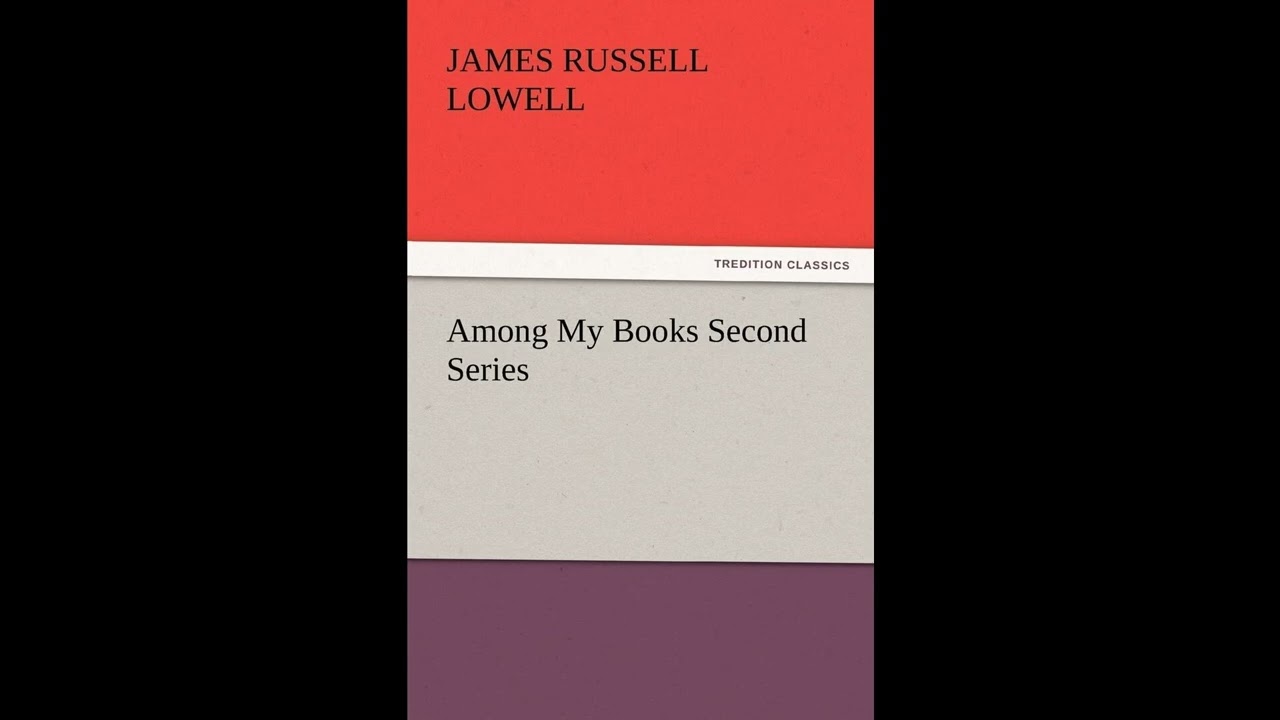
Among My Books Second Series
Step into the private world of a discerning mind, a place where books are not mere objects but living entities, ready to yield their secrets under the careful gaze of a true literary companion. Among My Books Second Series offers just such an invitation, a collection of James Russell Lowell's most considered and insightful literary essays that continue to speak with remarkable clarity and relevance. This isn't a dusty historical artifact; it is a lively conversation across centuries, a testament to the enduring power of literature to shape thought and character. For anyone who cherishes the act of reading, who seeks to deepen their understanding of the works that form the bedrock of Western culture, and who appreciates the intellectual rigor of a seasoned critic, this collection remains an indispensable guide, proving that the questions great books pose are truly perennial. Imagine, then, entering a sunlit study, surrounded by worn volumes, the scent of old paper filling the air. This is the metaphorical setting for Among My Books Second Series. Lowell assumes the role of a learned, gracious, and often playfully sharp host, guiding us through his personal library, stopping at volumes that have captured his attention and provoked his intellect. Rather than following a conventional narrative with a protagonist facing external obstacles, the listener is drawn into the internal landscape of a critic's mind as he grapples with the legacies of literary giants. Each essay acts as a focused exploration, a deep dive into the work and world of figures such as John Dryden, Jean-Jacques Rousseau, and Gotthold Lessing, among others. The "main characters" are the authors themselves, brought vividly to life through Lowell's incisive analysis and biographical sketches. The "central conflict" is the critic's quest for understanding—the challenge of interpreting texts penned in different historical epochs, discerning their original intent, and measuring their lasting impact. Lowell does not merely summarize; he evaluates, contextualizes, and occasionally critiques with affectionate wit. The arc of this intellectual engagement unfolds through his patient unraveling of complex ideas, tracing the evolution of literary forms and philosophical currents. From the grandeur of classical English verse to the revolutionary fervor of Enlightenment thought, Lowell meticulously dissects the mechanisms of genius, revealing the intricate gears of creativity and influence that propel literary history forward. It's a progression of intellectual revelations, each essay a stepping stone in a broader appreciation of the humanistic tradition. James Russell Lowell, born in Cambridge, Massachusetts, in 1819, was a central figure in nineteenth-century American letters, a polymath whose career spanned poetry, criticism, editing, and diplomacy. Educated at Harvard, he initially pursued law but quickly gravitated towards a literary life, influenced significantly by his first wife, the poet Maria White. Lowell became a fervent abolitionist, contributing to the anti-slavery movement through powerful verse in works like The Biglow Papers, which cleverly employed Yankee dialect to satirize political figures and events. His early association with the New England Transcendentalists matured into a more nuanced, critical perspective as his career progressed. He held influential editorial positions, notably as the first editor of The Atlantic Monthly and later as co-editor of The North American Review, shaping the literary discourse of his era. Beyond his written contributions, Lowell also served his country as the United States Minister to Spain and later to Great Britain, roles that demonstrated his keen intellect and diplomatic skill on an international stage. His critical prose, as found in Among My Books and My Study Windows, established him as a premier literary commentator, bridging the gap between romantic appreciation and more rigorous academic analysis. He passed away in 1891, leaving behind a legacy as one of America's most versatile and respected literary figures. One of the prominent themes woven throughout these essays is the essential role of literature in shaping national character and individual thought. Lowell consistently highlights how literary works are not isolated creations but products of their time, and in turn, how they influence the cultural and intellectual currents that follow. For example, in his examination of John Dryden, Lowell doesn't merely praise his poetry; he positions Dryden as a critical figure in the development of English prose and verse, demonstrating how his precise language and satirical wit mirrored and shaped the sensibilities of the Restoration period. Through such analysis, Lowell enacts the theme that understanding a nation's literature is key to understanding its soul. Another significant thread is the function of literary criticism itself—not as mere judgment, but as an act of profound engagement and illumination. Lowell embodies the ideal critic as a knowledgeable, empathetic, and yet unflinchingly honest reader. His essays often reveal the complex interplay between an author's personal life and their creative output, as seen in his thoughtful, though sometimes pointed, discussion of Jean-Jacques Rousseau. Here, Lowell dissects Rousseau's revolutionary ideas and his often contradictory personality, showing how a writer's internal landscape can ignite monumental shifts in political and social thought, even while acknowledging human flaws. These examples illustrate how Lowell believed criticism could deepen appreciation and reveal underlying truths, bridging the gap between reader and text, past and present. When Lowell published Among My Books Second Series in 1876, America was still grappling with the aftermath of the Civil War and rapidly advancing into the Gilded Age, characterized by industrial expansion and significant social change. Culturally, there was a growing sense of national identity, but also a continued reliance on European literary traditions as benchmarks for excellence. Lowell himself had returned from his diplomatic posts abroad, bringing a cosmopolitan perspective to his American audience. In the literary world, the mid to late nineteenth century saw a gradual shift from the Romantic sensibilities that had earlier dominated to a more realistic and analytical approach to literature. This period was ripe for the kind of sustained, informed literary criticism that Lowell provided. As the nation matured, so too did its intellectual appetite for understanding its own cultural heritage, as well as its place within the broader Western canon. Lowell's essays emerged from this specific nexus, offering readers a bridge between the literary giants of the past and the burgeoning intellectual currents of the present. His work helped define what it meant to engage with literature thoughtfully and critically in an era that was seeking both to consolidate its past and define its future. Listening to Among My Books Second Series as an audiobook offers a unique and deeply satisfying experience. Lowell's prose, with its carefully constructed arguments and elegant turns of phrase, truly comes to life when delivered by a skilled narrator. The length of several hours means it's perfect for sustained listening—during commutes, while engaged in contemplative tasks, or simply as a dedicated intellectual immersion. Pay attention to the narrator's pacing, which can emphasize the subtle humor or the profound insights embedded in Lowell's writing, allowing you to absorb the nuances of his scholarly voice. The atmosphere of reflective study, the patient unfolding of complex ideas, and the richness of Lowell's language are all amplified, inviting you to slow down and truly savor the intellectual feast prepared within these pages.
Enjoyed Among My Books Second Series? A few ways to support us
Audible & Amazon links are affiliate; we may earn a small commission at no extra cost.
About this production
Human narration by a volunteer reader from LibriVox.org, the public-domain audiobook project. LibriVox volunteers record literary works whose copyright has expired in the United States, releasing the resulting recordings into the public domain.
Among My Books Second Series by James Russell Lowell. The underlying text is in the U.S. public domain. We do not republish any modern copyrighted edition, translation, or commentary.
The 4K cinematic visuals accompanying this audiobook are generated by an AI image model from prompts derived from the source text. No copyrighted photos, paintings, or stock footage are used. AI generation is disclosed on every video on our YouTube channel as required by YouTube's altered/synthetic content policy.
English subtitles are transcribed from the LibriVox recording with OpenAI Whisper. Translations into the 11 other supported languages are produced by Meta's NLLB-200 neural translation model. No human translator's copyrighted translation is used.
Questions about sourcing or rights? See our DMCA & Sourcing policy or contact us.
Enjoyed this audiobook?
If you'd like to own a copy of Among My Books Second Series or hear a professionally produced edition, the links below help support free audiobook production at no extra cost to you.
As an Amazon Associate we earn from qualifying purchases. Audible / print links are affiliate.