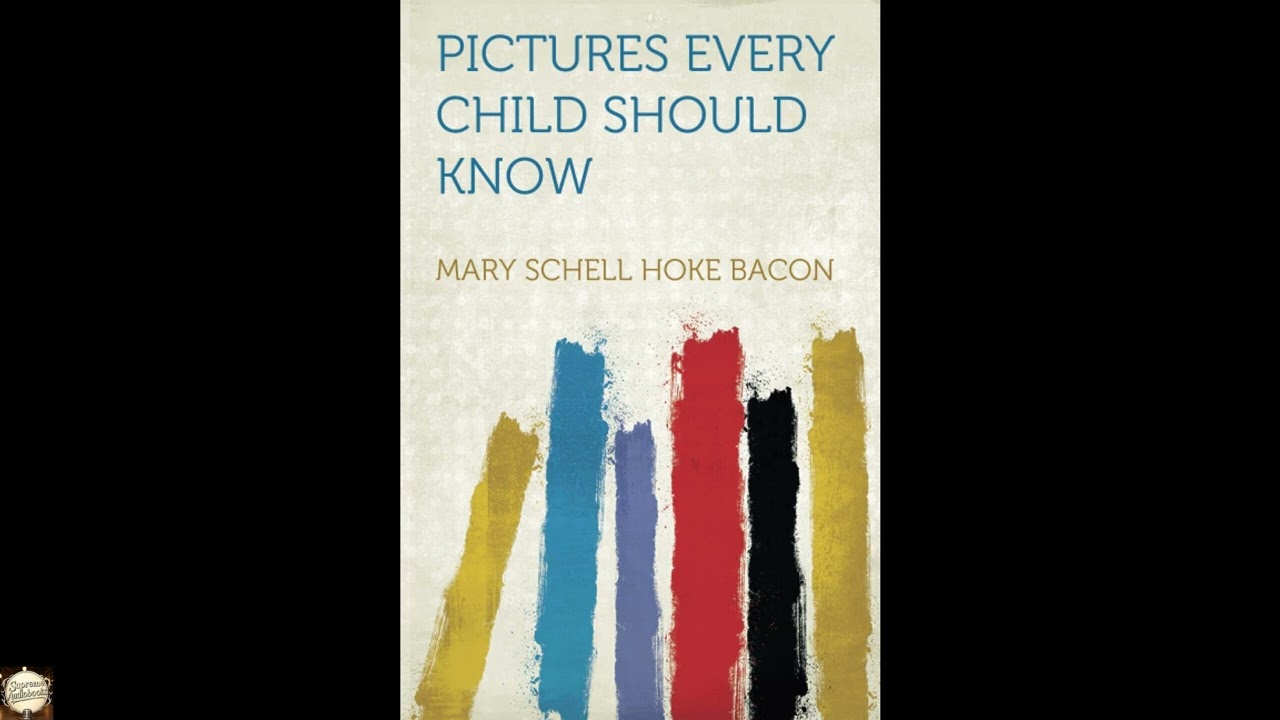
Pictures Every Child Should Know
In an age where visual stimuli barrage us from every screen, where images flicker by at lightning speed, the gentle, guiding hand of a book like "Pictures Every Child Should Know" offers a necessary counterpoint. This classic compilation, originally conceived as a cornerstone of early 20th-century cultural education, stands today as a compelling invitation to slow down, truly see, and genuinely appreciate the foundational works of Western art. Far from a dusty historical artifact, this book presents a carefully curated gallery of paintings, sculptures, and architectural wonders, each chosen for its enduring beauty, its narrative power, and its capacity to speak to the human spirit across generations. It argues for the timeless importance of aesthetic discernment, reminding us that understanding the visual language of the past enriches our present and equips us to navigate our future with greater insight. Mary Schell Hoke Bacon structured her selections with a clear pedagogical intent: to introduce young minds to a shared heritage of visual genius, fostering both recognition and appreciation. The book does not simply list images; it thoughtfully presents a journey through various schools and periods of art, from the early Renaissance masters like Giotto and Fra Angelico, whose works illuminated sacred narratives with nascent humanism, through the grandeur of the High Renaissance embodied by Leonardo da Vinci and Raphael, all the way to the Dutch Golden Age painters such as Rembrandt and Vermeer, capturing the quiet dignity of everyday life. Each image is accompanied by concise, accessible commentary designed to highlight key features, explain context, or simply prompt observation. The text acts as a docent, guiding the reader's eye to the graceful lines of a Botticelli, the dramatic chiaroscuro of a Caravaggio, or the serene landscapes of a Constable. Beyond individual works, the book subtly constructs an overarching narrative of art's evolution, demonstrating how artists built upon—or reacted against—the traditions that preceded them. We witness the shift from idealized religious figures to more naturalistic depictions of humanity, the emergence of portraiture that revealed individual character, and the development of genre painting that celebrated domestic scenes. The story unfolds not as a chronological lecture, but as an unfolding gallery, encouraging connection between disparate pieces through recurring themes or stylistic innovations. While it avoids overwhelming academic detail, it nonetheless instills a foundational understanding of art history's grand sweep, preparing the burgeoning art lover for deeper study without ever feeling prescriptive or dull. Mary Schell Hoke Bacon, born in 1860, carved out a distinctive place as a compiler and educator during a period of significant social and intellectual change in America. Her life's work, which included the equally popular "Songs Every Child Should Know," reflected a broader cultural movement dedicated to enriching the lives of children through exposure to canonical works in art, literature, and music. Bacon understood the transformative power of cultural literacy, recognizing that a foundational understanding of these disciplines was not merely an embellishment, but an essential component of a well-rounded education. She believed that children, regardless of their background, deserved access to the very best that human creativity had produced. Throughout her career, which spanned into the early 1930s, Bacon consistently championed accessible learning. She was not an artist or a high-theory critic, but a dedicated facilitator, translating complex cultural achievements into digestible and engaging formats for a young audience. Her work reflects the progressive educational ideals of her time, emphasizing observation, discovery, and a direct engagement with primary sources. Her method was to present the art itself, allowing its inherent beauty and power to speak, augmented by just enough contextual detail to unlock its meaning without intellectualizing it out of reach. Bacon's contributions positioned her as a key figure in the popularization of cultural education for the masses, laying groundwork for future generations of art educators and enthusiasts. The book champions several core themes, foremost among them being the democratizing power of art. Bacon implicitly argues that great art is not exclusive to museums or elite circles; it belongs to everyone, especially children. By bringing these images into the home, she breaks down barriers, making visual literacy an attainable goal. A compelling example appears when the book presents a serene Madonna by Raphael. Bacon's commentary doesn't dwell on the theological intricacies but rather on the tenderness of the mother's gaze and the innocence of the child, making the universal human emotions accessible to a young mind, regardless of their religious background. This fosters empathy and a connection to shared human experience through visual representation. Another central theme is the development of aesthetic appreciation and critical observation. The book subtly trains the eye, showing how to discern beauty, form, and emotional resonance. When discussing a landscape by Turner, for instance, the text might prompt the listener to consider the play of light, the dynamic movement of the brushstrokes, or the way the artist conveys a specific mood through color. This is not about memorizing facts, but about cultivating a personal relationship with the artwork, encouraging an active rather than passive engagement. The underlying message is that looking at art is not a passive act, but a skill to be honed, one that opens up new dimensions of perception in the world around us. "Pictures Every Child Should Know" emerged during a particularly fertile period for educational reform and cultural outreach in the United States, roughly spanning the late 19th and early 20th centuries. This era saw a significant expansion of public education and a burgeoning interest in making cultural enrichment—once the exclusive domain of the privileged—available to a wider populace. Movements like the Chautauqua Assembly brought lectures, music, and art to rural communities, reflecting a national desire for self-improvement and a shared cultural identity. Publications like Bacon's book served a vital role in this landscape, acting as portable educators in homes where visits to art museums might have been impractical or impossible. The emphasis was on building a common foundation of knowledge and taste, fostering a sense of national pride in European artistic heritage, and preparing children for informed citizenship in a rapidly industrializing nation. Listening to "Pictures Every Child Should Know" as an audiobook transforms the experience of this visual treasury. The narrator's voice becomes that of a personal guide, inviting contemplation and setting a measured pace for absorbing each description. Instead of flipping pages, one can close their eyes and conjure the vivid images described, allowing the language to paint mental canvases. The narrator’s cadence, the subtle shifts in tone when discussing a vibrant landscape versus a solemn portrait, adds an interpretive layer that enhances the appreciation for the art’s nuances. This sonic presentation allows for a different kind of engagement—perhaps while looking up the images on a screen, or simply while relaxing, letting the descriptive prose wash over you, building a sensory bridge between word and image that enriches the understanding and emotional impact of these iconic works.
Enjoyed Pictures Every Child Should Know? A few ways to support us
Audible & Amazon links are affiliate; we may earn a small commission at no extra cost.
About this production
Human narration by a volunteer reader from LibriVox.org, the public-domain audiobook project. LibriVox volunteers record literary works whose copyright has expired in the United States, releasing the resulting recordings into the public domain.
Pictures Every Child Should Know by Mary Schell Hoke Bacon. The underlying text is in the U.S. public domain. We do not republish any modern copyrighted edition, translation, or commentary.
The 4K cinematic visuals accompanying this audiobook are generated by an AI image model from prompts derived from the source text. No copyrighted photos, paintings, or stock footage are used. AI generation is disclosed on every video on our YouTube channel as required by YouTube's altered/synthetic content policy.
English subtitles are transcribed from the LibriVox recording with OpenAI Whisper. Translations into the 11 other supported languages are produced by Meta's NLLB-200 neural translation model. No human translator's copyrighted translation is used.
Questions about sourcing or rights? See our DMCA & Sourcing policy or contact us.
Enjoyed this audiobook?
If you'd like to own a copy of Pictures Every Child Should Know or hear a professionally produced edition, the links below help support free audiobook production at no extra cost to you.
As an Amazon Associate we earn from qualifying purchases. Audible / print links are affiliate.
![Children's Classics in Dramatic Form, Book Two. [1909] by Augusta Stevenson — free full audiobook](https://img.youtube.com/vi/h4bTKUeuO7U/maxresdefault.jpg)