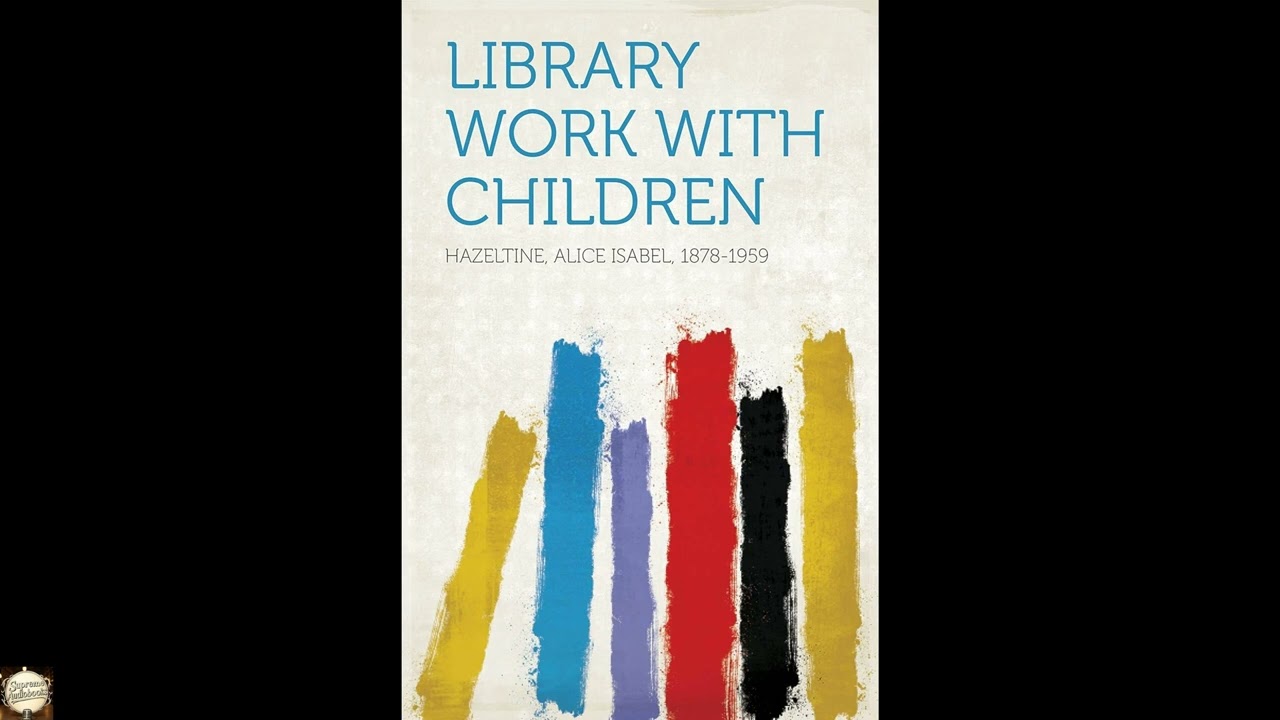
Library Work With Children
Long before screens dominated attention, before digital literacy became a watchword, a profound question animated educators and social reformers: how best to nurture the minds of children, to spark their imaginations, and to equip them for a rapidly changing world? Library Work With Children, a foundational compilation edited by the visionary Alice Isabel Hazeltine, addresses this very question with a prescience that continues to resonate today. This isn't a fictional tale, but a vital historical document and a guide, assembling the collective wisdom of early twentieth-century librarians and educators dedicated to making libraries not just repositories of books, but vibrant centers of childhood development. Its insights offer a window into the origins of modern children's services, revealing principles of engagement and intellectual growth that remain surprisingly pertinent for anyone interested in education, child psychology, or the enduring power of literacy. Instead of a traditional narrative plot, Library Work With Children unfolds as a carefully curated intellectual progression, charting the evolving philosophy and practice of serving young patrons within public libraries. The "setting" is not a particular town or institution but rather the dynamic, formative landscape of early twentieth-century America, where public libraries were rapidly expanding their reach and grappling with their pedagogical responsibilities. Through a collection of essays penned by leading voices of the era, the book articulates the urgent need for specialized services for children, moving beyond mere book provision to a holistic approach to fostering young readers. The central "characters" of this collective work are not individuals in a story, but rather archetypes and ideals: the dedicated, empathetic children's librarian, conceived as both an educator and a guide; and the child reader, viewed with an unprecedented understanding of their unique developmental stages, interests, and capacity for wonder. The "conflict" isn't a clash of personalities, but rather the persistent challenge of establishing the necessity and distinctiveness of services for young patrons. It grapples with overcoming prevailing attitudes that undervalued children's intellectual lives, the struggle to secure adequate resources, and the continuous effort to refine best practices for collection development, reading guidance, and program design in a society undergoing rapid social and technological change. The book's "arc" traces this progression of understanding, beginning with the philosophical underpinnings of why children's libraries matter, moving through practical considerations of materials selection and storytelling techniques, and culminating in a vision for how these specialized services can profoundly shape the next generation of citizens and thinkers. Alice Isabel Hazeltine, born in 1878, was a prominent figure in American librarianship, a pivotal educator and administrator whose career spanned the critical decades of the early to mid-20th century. A graduate of Syracuse University and the New York State Library School, she brought a rigorous intellectual approach to the nascent field of children's library work. Hazeltine spent significant portions of her career at various institutions, including the Buffalo Public Library, the St. Louis Public Library, and later as a faculty member at the University of Wisconsin Library School and Columbia University's School of Library Service. Her practical experience at the front lines of library service, combined with her academic contributions, positioned her uniquely to synthesize and lead discussions about the future of the profession. While Library Work With Children, published in 1917, stands as her most well-known editorial achievement, Hazeltine also authored "Fundamentals of Reference Service" and contributed widely to library journals. Her efforts were not confined to writing and editing; she was instrumental in shaping curricula for library schools, influencing generations of librarians with her commitment to excellence and innovation. Hazeltine’s contributions helped cement the legitimacy of children's librarianship as a specialized and essential branch of the profession, distinguishing it from general adult services and advocating for a deeper understanding of child psychology and educational theory within library practice. She passed away in 1959, leaving behind a legacy of dedicated service and intellectual leadership. The themes woven throughout Library Work With Children reflect the progressive ideals of its era and retain their power today. Foremost among them is child-centered education, a revolutionary concept at the time. The book consistently champions the idea that library services should adapt to the child, rather than demanding the child adapt to the library. For instance, discussions around collection development emphasize choosing books based on children's genuine interests and developmental stages, rather than simply what adults deem "appropriate" or morally uplifting. A concrete example appears in essays advocating for story hours, detailing how carefully chosen narratives, presented with engaging techniques, can not only entertain but also subtly impart values, broaden perspectives, and foster language skills, directly addressing the child's innate curiosity and need for imaginative play. Another prominent theme is the democratization of knowledge. This compilation asserts the public library's crucial role in providing equitable access to books and information for all children, regardless of socioeconomic status, background, or ability. Arguments for establishing branch libraries in diverse neighborhoods or for extending library services to schools and homes highlight this commitment. The book posits that access to a diverse array of books is a fundamental right, empowering children from all walks of life to pursue education, develop critical thinking, and envision broader possibilities for themselves. This vision of universal access echoes through the establishment of specialized children's rooms, designed to be welcoming, accessible, and stimulating spaces for every child. This groundbreaking collection emerged during a period of significant social and educational reform in the United States, roughly coinciding with the Progressive Era. The early decades of the 20th century witnessed burgeoning public library systems across the nation, alongside a growing awareness of child welfare, the professionalization of education, and the impact of urbanization and immigration. Figures like John Dewey were advocating for hands-on, experience-based learning, moving away from rote memorization. There was a societal push to improve civic life and integrate new immigrant populations, and libraries were seen as key institutions in this effort. Library Work With Children directly responded to these trends, providing a vital framework for how libraries could meaningfully contribute to child development and community uplift, articulating a new professional identity for those who served the youngest members of society. Listening to Library Work With Children as an audiobook offers a unique way to engage with its historical insights and enduring principles. The narration brings a clarity and measured pace to these important essays, allowing listeners to fully absorb the nuanced arguments and practical advice from a bygone era. You can appreciate the careful articulation of ideas, the thoughtful reasoning behind early library practices, and the passion evident in the voices of these pioneering educators. The length of several hours provides ample opportunity to truly immerse yourself in the evolving philosophies of children's librarianship, making it an ideal companion for commutes, thoughtful reflection, or anyone seeking to understand the foundational ideas that continue to shape how we connect children with the world of books.
Enjoyed Library Work With Children? A few ways to support us
Audible & Amazon links are affiliate; we may earn a small commission at no extra cost.
About this production
Human narration by a volunteer reader from LibriVox.org, the public-domain audiobook project. LibriVox volunteers record literary works whose copyright has expired in the United States, releasing the resulting recordings into the public domain.
Library Work With Children by Alice Isabel Hazeltine. The underlying text is in the U.S. public domain. We do not republish any modern copyrighted edition, translation, or commentary.
The 4K cinematic visuals accompanying this audiobook are generated by an AI image model from prompts derived from the source text. No copyrighted photos, paintings, or stock footage are used. AI generation is disclosed on every video on our YouTube channel as required by YouTube's altered/synthetic content policy.
English subtitles are transcribed from the LibriVox recording with OpenAI Whisper. Translations into the 11 other supported languages are produced by Meta's NLLB-200 neural translation model. No human translator's copyrighted translation is used.
Questions about sourcing or rights? See our DMCA & Sourcing policy or contact us.
Enjoyed this audiobook?
If you'd like to own a copy of Library Work With Children or hear a professionally produced edition, the links below help support free audiobook production at no extra cost to you.
As an Amazon Associate we earn from qualifying purchases. Audible / print links are affiliate.

![Children's Classics in Dramatic Form, Book Two. [1909] by Augusta Stevenson — free full audiobook](https://img.youtube.com/vi/h4bTKUeuO7U/maxresdefault.jpg)