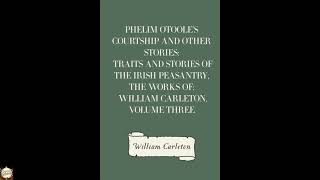
Phil Purcel, The Pig-Driver; The Geography of an Irish Oath; The Lianhan Shee
Imagine stepping back into the verdant, often challenging, landscape of rural Ireland during the early 19th century. This collection of stories—"Phil Purcel, The Pig-Driver," "The Geography of an Irish Oath," and "The Lianhan Shee"—opens a lively, sometimes somber, and always authentic window into a world teeming with unforgettable characters, ancient superstitions, and the everyday struggles of life. These narratives offer more than just historical snapshots; they are a profound engagement with human nature, a testament to the resilience of spirit, and a deep understanding of the unique blend of humor and pathos that defines the Irish experience. For listeners today, these tales resonate with the universal quest for meaning, the power of community, and the enduring presence of myth in the mundane. The collection begins with "Phil Purcel, The Pig-Driver," introducing us to the titular character, a man whose profession—driving pigs to market across the countryside—is as much about cunning and improvisation as it is about animal husbandry. Phil is a figure of considerable local notoriety, known for his quick wit, his ability to navigate tricky situations, and perhaps a certain roguish charm that often sees him bending the rules, if not outright breaking them. The story follows Phil through various escapades, painting a vivid picture of the fairs, roads, and villages of provincial Ireland, and the colourful assortment of individuals he encounters, from sharp-tongued market vendors to the local gentry. His adventures reveal the intricate social fabric of the time, where reputation and resourcefulness often mattered more than formal status. Next, "The Geography of an Irish Oath" shifts our focus to the weight and meaning of words within a tightly-knit community. This story centres on a dispute where the precise location and context of an oath taken by one character become paramount to resolving a conflict. It's a tale that masterfully dissects the nuances of local justice, the power of spoken promises, and the sometimes-absurd lengths people will go to uphold—or contest—their honour and claims. The narrative skillfully brings to life the intricacies of rural law and custom, illustrating how communal understanding and personal integrity often clash with legalistic interpretations, creating both humorous and poignant situations that reveal deep truths about human nature and societal expectations. Finally, "The Lianhan Shee" transports us to the more mystical side of Irish folklore. This story introduces listeners to the legendary creature of the same name, a beautiful female spirit who seeks human lovers. Her embrace, while alluring, often comes with a terrible price, leading her chosen mortal into a spiraling obsession that can consume their health, sanity, and even their very life force. The narrative delves into the psychological and emotional impact of such an encounter, exploring themes of artistic inspiration, longing, and the dangerous appeal of the otherworldly. It is a haunting tale that captures the pervasive belief in the supernatural and the profound influence of ancient myths on the lives and imaginations of rural communities. These evocative stories come from the pen of William Carleton, a towering figure in Irish literature whose life spanned much of the 19th century, from 1794 to 1869. Born into a large, humble farming family in County Tyrone, Carleton's early life immersed him in the very culture and traditions he would later so meticulously document. His education, typical for many Irish Catholics of his time, included attendance at hedge schools—informal, outdoor schools that provided basic literacy and often a deep grounding in local lore. This unique upbringing granted him an unparalleled understanding of rural life, its dialects, customs, and superstitions, which he later rendered with astonishing authenticity. Carleton's path to literary prominence was not straightforward. He initially trained for the priesthood but abandoned this calling, moving to Dublin in 1820. Here, he struggled to make a living, working various odd jobs before finding his true vocation as a writer. His big break came with the publication of Traits and Stories of the Irish Peasantry, a collection that, like the present volume, offered an unvarnished yet sympathetic portrayal of Irish country folk. Carleton's work is notable for its groundbreaking realism, capturing the nuances of regional speech and the harsh realities of poverty, oppression, and sectarian division that defined Ireland before the Great Famine. Though he later converted from Catholicism to Protestantism, a move that alienated some within his community, his body of work remained deeply committed to representing the Irish people from the inside, often with a critical yet ultimately compassionate eye. His contribution to Irish letters is immeasurable. Carleton is often considered the first great realist writer of Ireland, moving beyond the romanticized or stereotypical depictions prevalent at the time. Other notable works, such as Fardorougha the Miser and The Black Prophet, cemented his reputation as a keen observer of human character and social conditions. He stands as a crucial link between the oral tradition of storytelling and the burgeoning Anglo-Irish literary movement, ensuring that the voices, humour, and struggles of the common people would be preserved and understood by a wider audience. At their core, these stories illuminate the profound resilience of the human spirit in the face of relentless hardship. Characters like Phil Purcel, the pig-driver, embody a tenacious will to survive and even thrive through wit and ingenuity, navigating a world where systemic poverty and social stratification were constant companions. His readiness to adapt, to charm, or to scheme for a living offers a stark yet often humorous commentary on the practical ethics of survival when formal opportunities are scarce. This collection showcases how individuals craft meaning and maintain dignity in challenging circumstances, often relying on their intelligence and their community bonds. Another central theme is the enduring power of folklore and superstition, acting as a vivid counterpoint to the harsh realities of daily life. "The Lianhan Shee" directly confronts this, drawing listeners into the seductive yet dangerous world of ancient Celtic myth. Carleton masterfully portrays how these beliefs were not mere quaint customs but deeply woven into the fabric of rural existence, shaping fears, hopes, and even moral choices. The presence of the supernatural in these narratives reflects a worldview where the veil between the ordinary and the extraordinary was thin, offering explanations for the inexplicable and adding a layer of mystery and dread to the landscape. These stories emerged from a critical period in Irish history, roughly the first half of the 19th century, preceding the devastating Great Famine. This was an era marked by immense social and political upheaval. Ireland was under British rule, having been incorporated into the United Kingdom by the Act of Union in 1801, leading to widespread political disenfranchisement for the majority Catholic population. Land ownership was largely concentrated in the hands of a Protestant Anglo-Irish ascendancy, creating a system of tenant farming that left many families in precarious poverty. The legal system was often seen as foreign and unjust by the native Irish, who frequently relied on their own unwritten codes of conduct and communal justice. Culturally, this period saw the burgeoning of a distinctive Irish literary voice in English. While some writers idealized or caricatured Irish peasants, Carleton committed himself to a form of unflinching realism, seeking to represent their lives with accuracy and respect, though often not without critical commentary. His work serves as an invaluable ethnographic record of pre-Famine Ireland, capturing the nuances of its dialects, the specificities of its customs—like the significance of an oath in "The Geography of an Irish Oath"—and the deep-seated impact of its oral traditions. He wrote to document a way of life that was already undergoing significant change and would soon be irrevocably altered by the Famine, making his insights into this vanishing world all the more poignant and vital. Listening to this collection as an audiobook is perhaps the most authentic way to experience William Carleton's storytelling, a writer whose genius lay in capturing the very sound and rhythm of Irish speech. The narrator's performance becomes a crucial bridge, bringing to life the distinctive dialects, the witty repartee, and the deep emotional currents that run through these narratives. You will hear the bluster of Phil Purcel, the earnestness of those caught in a dispute over an oath, and the haunting, ethereal whispers surrounding the Lianhan Shee. The careful pacing allows moments of boisterous humor to breathe before transitioning to scenes of poignant reflection or folkloric dread, creating an immersive atmosphere that transports you directly into the heart of 19th-century Ireland. The vivid character voices and the skilled delivery of Carleton's rich dialogue make these tales feel less like words on a page and more like stories told by a masterful seanchaí, a traditional Irish storyteller, right there with you.
Enjoyed Phil Purcel, The Pig-Driver; The Geography of an Irish Oath; The Lianhan Shee? A few ways to support us
Audible & Amazon links are affiliate; we may earn a small commission at no extra cost.
About this production
Human narration by a volunteer reader from LibriVox.org, the public-domain audiobook project. LibriVox volunteers record literary works whose copyright has expired in the United States, releasing the resulting recordings into the public domain.
Phil Purcel, The Pig-Driver; The Geography of an Irish Oath; The Lianhan Shee by Wi. The underlying text is in the U.S. public domain. We do not republish any modern copyrighted edition, translation, or commentary.
The 4K cinematic visuals accompanying this audiobook are generated by an AI image model from prompts derived from the source text. No copyrighted photos, paintings, or stock footage are used. AI generation is disclosed on every video on our YouTube channel as required by YouTube's altered/synthetic content policy.
English subtitles are transcribed from the LibriVox recording with OpenAI Whisper. Translations into the 11 other supported languages are produced by Meta's NLLB-200 neural translation model. No human translator's copyrighted translation is used.
Questions about sourcing or rights? See our DMCA & Sourcing policy or contact us.
View 10 famous quotes from this book →
Enjoyed this audiobook?
If you'd like to own a copy of Phil Purcel, The Pig-Driver; The Geography of an Irish Oath; The Lianhan Shee or hear a professionally produced edition, the links below help support free audiobook production at no extra cost to you.
As an Amazon Associate we earn from qualifying purchases. Audible / print links are affiliate.