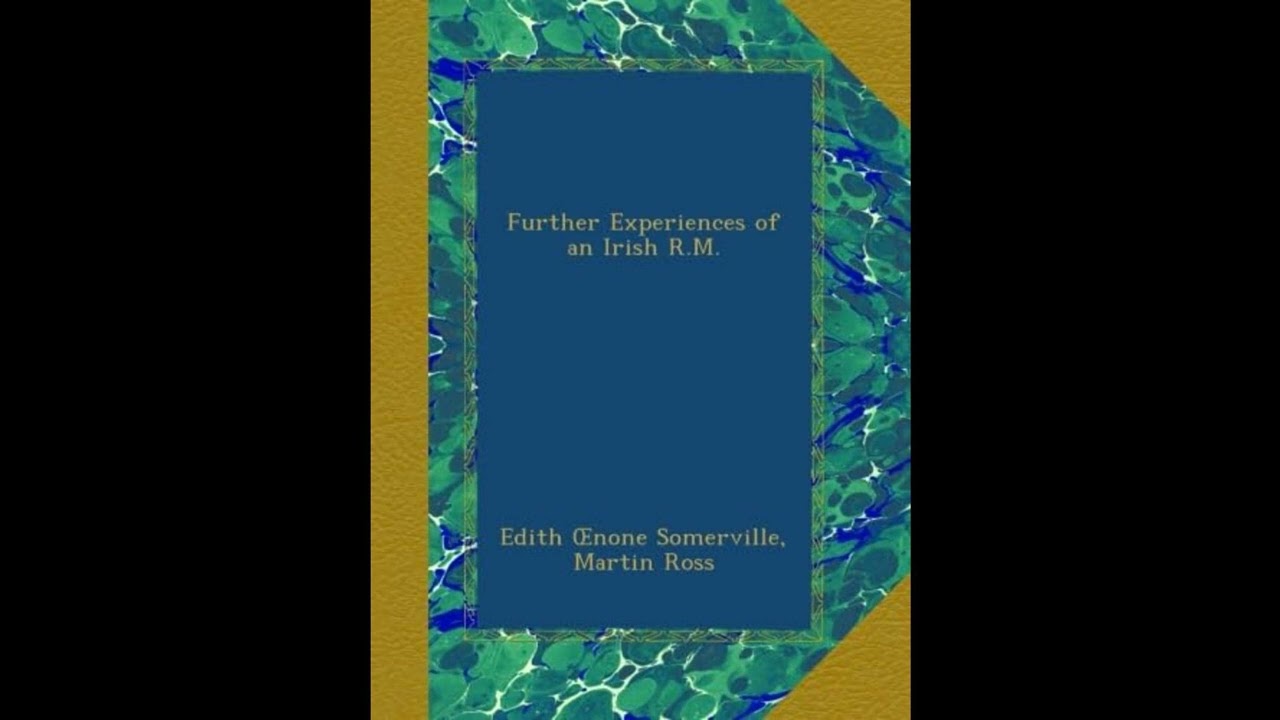
Further Experiences of an Irish R.M
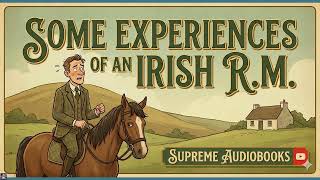
Step into a world where the old ways stubbornly clash with new regulations, where horses are more reliable than legal precedent, and where the most sensible plans often end in delightful chaos. Further Experiences of an Irish R.M. offers just such an escape, transporting listeners to the sun-drenched, bog-scented byways of West Cork at the turn of the last century. This collection of linked stories, brimming with sharp humor and a deep affection for its characters, invites us to witness the often-baffling, always-entertaining life of an English Resident Magistrate attempting to administer justice in a land that operates on its own unique logic. Its observations on human nature, the quirks of community life, and the comical friction between cultures remain as pertinent and amusing today as they were over a hundred years ago, providing a humorous lens through which to view societal differences and the enduring charm of a place fiercely proud of its eccentricities. The central figure in these vignettes is Major Sinclair Yeates, the earnest and perpetually bewildered Resident Magistrate of Skebawn, a fictional district nestled in the wild beauty of rural Ireland. Yeates, a man of English upbringing and Victorian sensibilities, strives to bring order and equity to his post, a task made continually difficult by the independent spirit and ingenious schemes of the local populace. His closest, yet most exasperating, acquaintance is Flurry Knox, a young Irish gentleman of dubious morals but undeniable charm, whose primary interests lie in hunting, horse-trading, and cleverly circumventing any rule that might impede his enjoyment or profit. Supporting players include the formidable housekeeper Mrs. Cadogan, whose pronouncements are often delivered with the weight of ancient wisdom and a complete disregard for facts, and a host of grooms, stable-boys, and local characters who populate Yeates’s daily life with unexpected incidents. The narratives unfold as a series of episodic adventures, each typically revolving around a local event—a horse race, a hunt, a village fair, or a minor legal dispute that escalates in absurd ways. Yeates finds himself repeatedly drawn into Flurry’s convoluted plans, often to his own detriment, whether it's attempting to judge a livestock show, navigating the treacherous world of Irish steeplechasing, or simply trying to enjoy a quiet day of fishing. The stories maintain a gentle arc, with Yeates gradually, if reluctantly, becoming more enmeshed in and perhaps even fond of the delightful chaos that defines his adopted home. He never quite grasps the full nuances of Irish custom, but he learns to anticipate, with a growing sense of resignation, that his English common sense will almost certainly be overturned by a local twist of fate or an ingenious turn of phrase. The author behind these memorable tales was Edith Œnone Somerville, born in Corfu in 1860 while her father was stationed there, though she spent the vast majority of her life at Drishane House, her family home in Castletownshend, County Cork, Ireland. Somerville was a remarkably talented artist, having studied at the Alexandra College in Dublin and later at the Westminster School of Art in London. Her artistic skill is evident in the charming illustrations she provided for many of her books. She is perhaps best known for her unique and highly successful literary partnership with her cousin, Violet Florence Martin, who wrote under the pen name Martin Ross. Together, they forged a distinct voice in Anglo-Irish literature, creating a body of work that captured the essence of their particular corner of Ireland with humor, precision, and an often-satirical eye. Their collaboration, producing stories like Some Experiences of an Irish R.M. (1899), Further Experiences (1908), and In Mr. Knox's Country (1915), was one of the most remarkable in literary history. Somerville and Ross were considered masters of characterization and dialect, renowned for their ability to transcribe the rhythms and wit of Irish speech onto the page. While Martin Ross passed away in 1915, Somerville continued to write, often claiming to receive guidance from her deceased cousin through automatic writing, a testament to the profound bond and shared creative spirit that defined their work. Somerville lived until 1949, a long and productive life dedicated to both writing and painting, leaving behind a legacy that includes other significant novels such as The Real Charlotte (1894), a more somber and piercing examination of Irish social life. At its core, Further Experiences of an Irish R.M. enacts the persistent clash between two distinct cultures—the English colonial mindset and the deeply rooted, idiosyncratic customs of rural Ireland. Major Yeates, with his legalistic approach and expectation of logical behavior, frequently finds himself bewildered by situations where local tradition or a convoluted personal history trumps all official statutes. For example, a court case involving a stray donkey might become a convoluted discussion of a generations-old feud over turf rights, baffling the R.M. but making perfect sense to everyone in the gallery. Another central idea is the vibrant, often chaotic, spirit of rural community and sport. The pages burst with descriptions of fox hunts that descend into utter pandemonium, horse races where the rules are fluid, and lively fairs where deals are struck with a handshake and a wink. These scenes showcase the interconnectedness of local life, the importance of communal events, and the often-comical lengths to which characters will go for a bit of sport or to settle a score. Humor and satire also course through every story, often arising from the gap between Yeates's earnest attempts at civility and the unvarnished honesty or cunning of the Irish characters. The dry wit of Mrs. Cadogan, the housekeeper, provides a running commentary on Yeates's foibles and the peculiarities of the English, while Flurry Knox's elaborate schemes, though often leading to trouble, are always executed with a roguish charm that makes them impossible to fully condemn. The text also gently considers the nuances of Irish identity and a profound sense of place. While the stories are told from the perspective of an Anglo-Irish Ascendancy author, observing the “native” Irish, there is an underlying affection and recognition of their resilience, wit, and deep connection to their land, which frequently outmaneuvers Yeates’s attempts at imposing external order. These tales emerged from a specific moment in Irish history, roughly spanning the late nineteenth and early twentieth centuries, a period marked by significant social and political tension. Ireland was under British rule, and the Home Rule movement, advocating for greater Irish self-governance, was a powerful force. Somerville and Ross belonged to the Anglo-Irish Ascendancy, a Protestant landowning class whose position was becoming increasingly precarious. Their writings offer an inside view of this unique social stratum, often depicting the Anglo-Irish as eccentric, horsy, and deeply embedded in the rural landscape, yet distinct from both the English ruling class and the Catholic native Irish population. Their work stands apart from the more overtly political or mythical narratives emerging from the concurrent Irish Literary Revival, providing instead a grounded, often humorous, and remarkably detailed record of everyday life, social customs, and the linguistic richness of a countryside on the cusp of significant change. Listening to Further Experiences of an Irish R.M. as an audiobook is the ideal way to savor the unique charm of these stories. The success of the R.M. tales hinges on the authentic rendering of the diverse Irish dialects, the nuanced wit, and the distinct vocal personalities of characters like the long-suffering Major Yeates, the scheming Flurry Knox, and the indomitable Mrs. Cadogan. A skilled narrator can bring these voices to life, allowing the listener to fully appreciate the rhythms of the dialogue and the often-hilarious misunderstandings that drive the plots. The relatively long running length provides ample opportunity to immerse oneself in this bygone world, letting the gentle pacing and episodic structure unfold naturally. The sound of these words, delivered with appropriate brogue and inflection, transforms the written humor into an audible delight, making the listener feel as if they are right there in Skebawn, privy to every comical escapade and insightful observation.
Enjoyed Further Experiences of an Irish R.M? A few ways to support us
Audible & Amazon links are affiliate; we may earn a small commission at no extra cost.
About this production
Human narration by a volunteer reader from LibriVox.org, the public-domain audiobook project. LibriVox volunteers record literary works whose copyright has expired in the United States, releasing the resulting recordings into the public domain.
Further Experiences of an Irish R.M by Edith Œnone Somerville. The underlying text is in the U.S. public domain. We do not republish any modern copyrighted edition, translation, or commentary.
The 4K cinematic visuals accompanying this audiobook are generated by an AI image model from prompts derived from the source text. No copyrighted photos, paintings, or stock footage are used. AI generation is disclosed on every video on our YouTube channel as required by YouTube's altered/synthetic content policy.
English subtitles are transcribed from the LibriVox recording with OpenAI Whisper. Translations into the 11 other supported languages are produced by Meta's NLLB-200 neural translation model. No human translator's copyrighted translation is used.
Questions about sourcing or rights? See our DMCA & Sourcing policy or contact us.
Enjoyed this audiobook?
If you'd like to own a copy of Further Experiences of an Irish R.M or hear a professionally produced edition, the links below help support free audiobook production at no extra cost to you.
As an Amazon Associate we earn from qualifying purchases. Audible / print links are affiliate.