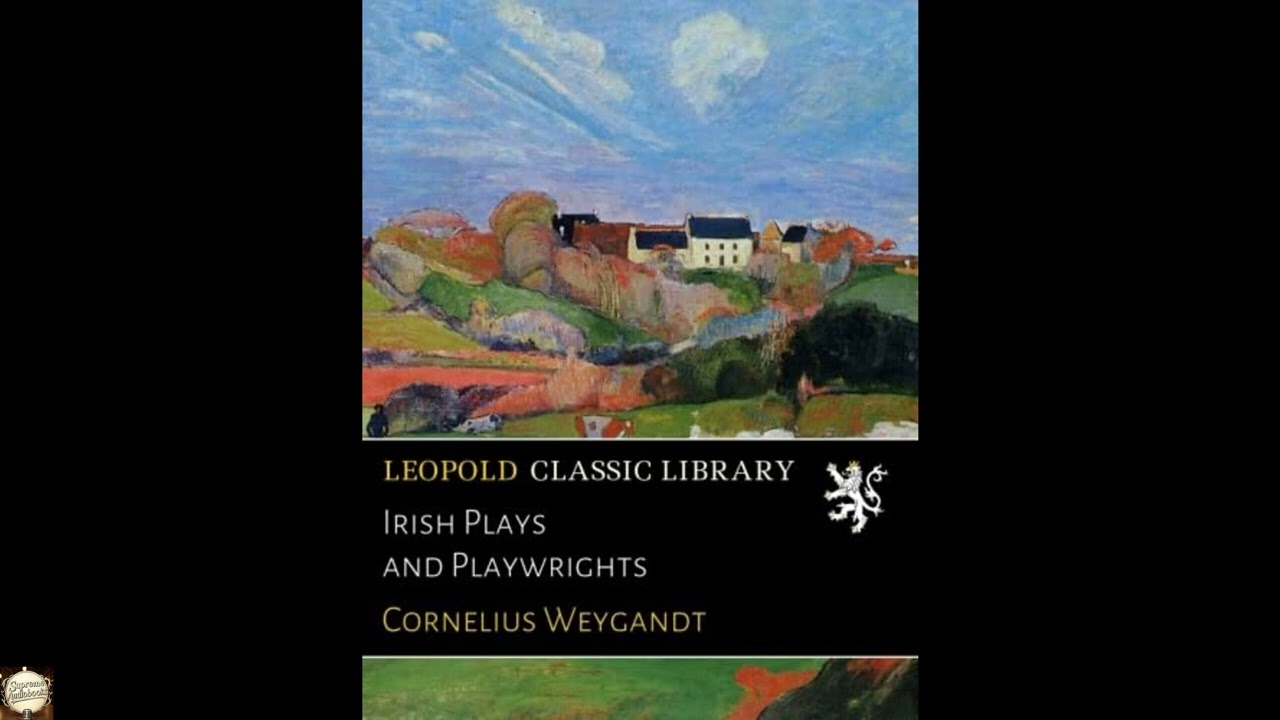
Irish Plays and Playwrights
To understand a nation, one must often look to its stories, and for Ireland at the turn of the 20th century, those stories found their most dynamic and public voice on the stage. Cornelius Weygandt's "Irish Plays and Playwrights" stands as a foundational examination of this pivotal moment, offering a critical lens into how a subjugated people rediscovered and articulated its identity, hopes, and grievances through the potent medium of drama. Listeners today will find in Weygandt's prose not just an appreciation for the artistic achievements of the Irish Literary Revival, but a compelling case study in cultural nationalism, a testament to the power of art to shape and reflect a nation's soul, and a vivid account of the figures who, with words and performance, helped to define modern Ireland. Weygandt’s comprehensive study, published in 1913, charts the emergence of modern Irish drama as a distinct and powerful cultural force, moving beyond the caricatures and colonial lens that had previously dominated perceptions of Irish stagecraft. His analysis sets the scene in a period marked by burgeoning national consciousness, where a hunger for authentic Irish expression coincided with a renewed interest in Gaelic language, folklore, and history. He introduces the visionary figures who galvanized this movement, chief among them William Butler Yeats, whose poetic dramas sought to connect Ireland's present with its ancient, mystical past, and Lady Augusta Gregory, whose practical genius helped establish and nurture the Abbey Theatre. Weygandt meticulously reviews their early collaborative efforts, showing how they laid the groundwork for a truly indigenous dramatic tradition. The critical arc of Weygandt's narrative then shifts to the contributions of other seminal figures, perhaps most notably John Millington Synge. Through Synge, Weygandt illuminates the raw, unsentimental portrayal of rural Irish life, examining how Synge’s distinctive use of Anglo-Irish dialect—a language often disparaged—was elevated to high art, capable of expressing both profound beauty and stark tragedy. Weygandt carefully dissects plays like "Riders to the Sea," highlighting its universal themes of loss and fate rooted in the harsh realities of Aran Island existence, and "The Playboy of the Western World," demonstrating how its scandalous premiere underscored the complex and sometimes volatile relationship between art and a society striving to define itself. Weygandt’s method is not simply to summarize plots, but to analyze the dramatic innovations, the linguistic particularities, and the philosophical underpinnings that made each playwright’s contribution unique and essential to the broader movement, all while building a cohesive picture of the Revival's momentum leading up to his time of writing. Cornelius Weygandt, born in Germantown, Pennsylvania, in 1871, emerged as a prominent American literary critic and scholar in the early 20th century. Educated at the University of Pennsylvania, where he would later become a long-serving and beloved professor of English literature, Weygandt dedicated his career to fostering a deeper understanding and appreciation for the written word. He was known for his wide-ranging interests, his clear, accessible prose, and his keen critical insight, making complex literary movements understandable to both academic and general audiences. His work often bridged the divide between the scholarly and the popular, bringing intellectual rigor to subjects he clearly adored. Weygandt’s academic passion extended across British, American, and, crucially, Irish literature. "Irish Plays and Playwrights," first published in 1913, stands as one of his most significant contributions, solidifying his reputation as an early and enthusiastic champion of the Irish Literary Revival on American shores. He was not merely an observer but an interpreter, helping to introduce the genius of Yeats, Synge, Lady Gregory, and others to a new generation of readers and scholars outside of Ireland. Beyond his pivotal work on Irish drama, Weygandt published numerous other volumes, including "A Century of the English Novel," "The Red Hills: A Record of Good Days Outside of Town," and "The Time of Tennyson," each demonstrating his command of literary history and his distinctive voice. His thoughtful criticism earned him a revered place in American letters, particularly for his role in contextualizing and celebrating the literary energies of his era. Weygandt’s study illuminates several recurring themes that define the Irish dramatic renaissance. Foremost among these is the powerful assertion of national identity, often achieved through a purposeful re-engagement with Ireland’s ancient myths and folklore. He shows how playwrights like Yeats, particularly in plays such as "Cathleen ni Houlihan," transformed legendary figures and historical events into potent allegories for Ireland’s struggle for sovereignty and cultural distinctiveness. The use of the aged woman as a symbol for Ireland, transforming into a young girl upon the ultimate sacrifice, is a prime example of how the abstract notion of nationhood was made tangible and emotionally resonant on stage, stirring audiences to a deeper sense of patriotic connection. Another central concern Weygandt highlights is the detailed and often lyrical portrayal of rural life and folk culture. Playwrights like Lady Gregory, with her one-act comedies such as "Spreading the News," and Synge, captured the distinctive rhythms of peasant speech and the unique customs of the Irish countryside. Weygandt demonstrates how these works brought to the stage a genuine, unromanticized depiction of ordinary Irish people, endowing their daily struggles, their humor, and their profound wisdom with universal human dignity. Furthermore, Weygandt underscores the profound significance of language and dialect as both a theme and a structural element. The elevation of Anglo-Irish dialect, often dismissed as mere patois, into a poetic and powerful dramatic instrument, particularly by Synge, is a point of close analysis. Weygandt reveals how this linguistic innovation allowed for an authentic voice, one that reflected the soul of a people whose speech patterns carried the echoes of an ancient tongue, yet adapted to a modern reality, thereby creating a truly original dramatic idiom. Weygandt’s critical examination emerged during a period of immense cultural and political ferment both in Ireland and abroad. The turn of the 20th century saw the Irish Literary Revival in full bloom, a self-conscious and fervent movement dedicated to creating a distinctively Irish literature free from English cultural dominance. The founding of the Irish Literary Theatre in 1899, which soon evolved into the Abbey Theatre in 1904, provided a vital institutional home for this new drama, attracting visionary talents and passionate audiences. Weygandt’s book, published less than a decade after the Abbey’s opening, captures the energy of this burgeoning scene, chronicling the plays and players who were, in real-time, shaping a national art form. Politically, Ireland was grappling with the increasingly urgent question of Home Rule, a movement for greater autonomy from British rule. The stage, therefore, became more than mere entertainment; it was a battleground of ideas, a platform for national self-definition, and occasionally, a catalyst for controversy, as seen with the strong reactions to Synge’s "The Playboy of the Western World." Weygandt, an American scholar, provided a crucial external perspective, helping to frame this intensely local cultural phenomenon within broader literary and historical currents for an international audience. His work not only documented the rise of Irish drama but also contributed to its global recognition, asserting its place within the broader Western dramatic tradition at a time when its future was still being forged. To hear "Irish Plays and Playwrights" as an audiobook is to gain direct access to the thoughtful and articulate scholarship of Cornelius Weygandt. The several hours of narration allow listeners to sink into the measured pace of his critical analysis, appreciating the clarity with which he dissects complex literary ideas and the passion with which he champions the playwrights he so admired. A good narrator brings out the nuance in Weygandt's prose, making his arguments about dramatic structure, character motivation, and linguistic innovation resonate with clarity. Listen for the precise way Weygandt describes a particular scene or a playwright's stylistic choice, building a cumulative picture of the dynamism of the Irish stage. The spoken word allows the listener to absorb his insights without distraction, providing a sustained and engaging encounter with a seminal text that illuminates a crucial chapter in literary and national history.
Enjoyed Irish Plays and Playwrights? A few ways to support us
Audible & Amazon links are affiliate; we may earn a small commission at no extra cost.
About this production
Human narration by a volunteer reader from LibriVox.org, the public-domain audiobook project. LibriVox volunteers record literary works whose copyright has expired in the United States, releasing the resulting recordings into the public domain.
Irish Plays and Playwrights by Cornelius Weygandt. The underlying text is in the U.S. public domain. We do not republish any modern copyrighted edition, translation, or commentary.
The 4K cinematic visuals accompanying this audiobook are generated by an AI image model from prompts derived from the source text. No copyrighted photos, paintings, or stock footage are used. AI generation is disclosed on every video on our YouTube channel as required by YouTube's altered/synthetic content policy.
English subtitles are transcribed from the LibriVox recording with OpenAI Whisper. Translations into the 11 other supported languages are produced by Meta's NLLB-200 neural translation model. No human translator's copyrighted translation is used.
Questions about sourcing or rights? See our DMCA & Sourcing policy or contact us.
Enjoyed this audiobook?
If you'd like to own a copy of Irish Plays and Playwrights or hear a professionally produced edition, the links below help support free audiobook production at no extra cost to you.
As an Amazon Associate we earn from qualifying purchases. Audible / print links are affiliate.