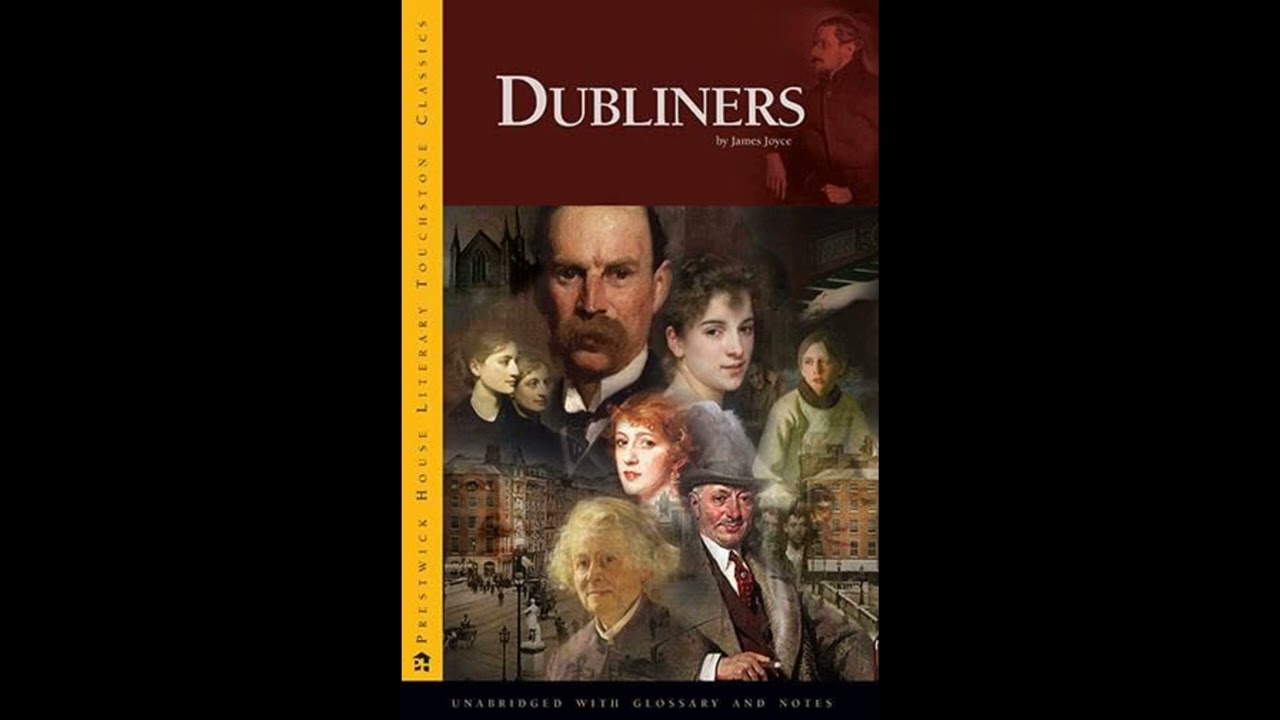
Dubliners
James Joyce's Dubliners is more than just a collection of short stories; it is a meticulously crafted, incisive portrait of a city and its people at a pivotal moment in history. Published in 1914, these fifteen tales peel back the layers of turn-of-the-century Dublin, revealing not only the mundane realities of everyday life but also the profound spiritual and psychological struggles of its inhabitants. For the listener today, this audiobook offers a compelling entry point into the world of one of the twentieth century's most significant writers. It presents a clear-eyed look at the human condition—the dreams, the disappointments, the yearning for something more—that resonates deeply, even over a century later. It asks us to consider the hidden lives within our own cities, and the quiet battles waged against inertia and unfulfillment. The stories collectively present a panorama of Dublin life, moving from the naive perceptions of childhood, through the stifled hopes of adolescence and early adulthood, to the weariness and quiet desperation of mature citizens and figures in public life. Each narrative, sharply observed and subtly drawn, focuses on an individual caught in the web of their circumstances. The settings are distinctly Dublin: the bustling streets, the gaslit parlors, the shadowed churches, the echoing public houses—each locale contributing to the atmosphere of a city that feels both confining and mysteriously alluring. The characters, from the young boy in "Araby" who idealizes a distant bazaar, to the young woman in "Eveline" who faces a life-altering choice on a darkening quay, grapple with internal conflicts that are often left unspoken. The central tension throughout the collection arises from these characters' desires for escape or meaningful change, which frequently collide with their inability to act, their fears, or the suffocating social conventions around them. We witness moments of fleeting connection, professional ambition, and romantic aspiration, each colored by the pervasive sense of Dublin's moral and spiritual stagnation. While there isn't a single overarching plot, the stories are linked by their shared setting and their focus on individual moments of recognition—often small, often bitter—that expose the truth of a character's situation without necessarily offering a resolution. This sequence of lives, observed with a precise, almost clinical realism, builds into a cumulative statement about the city itself. James Joyce, born in Rathgar, Dublin, in 1882, would become a writer whose influence reshaped the course of modern literature. His early life was marked by a somewhat itinerant family existence and a Jesuit education, which provided a rigorous intellectual foundation while also instilling in him a critical perspective on Irish society and the Catholic Church. Though he briefly pursued medical studies at University College Dublin, his true calling lay in writing. In 1904, the same year many of the Dubliners stories are set, Joyce began his self-imposed exile from Ireland, a decision that would define much of his creative output. He lived in Trieste, Zurich, and Paris, often struggling with poverty and a debilitating eye condition that eventually led to near-blindness. Despite his physical departure from Ireland, his homeland remained the central focus of his literary world. Dublin itself became a character in his works, meticulously rendered and deeply internalized. Beyond Dubliners, his major achievements include the semi-autobiographical novel A Portrait of the Artist as a Young Man, which traces the development of the artist Stephen Dedalus, and the monumental Ulysses, a day-in-the-life account of Leopold Bloom in Dublin on June 16, 1904, a novel celebrated for its stream-of-consciousness technique and mythic parallels. His final, most experimental work was Finnegans Wake. Joyce is considered a towering figure of literary modernism, an innovator who pushed the boundaries of narrative, language, and psychological realism, securing his place as one of the twentieth century's most original and challenging writers. A pervasive theme throughout Dubliners is paralysis, a sense of spiritual and emotional stagnation that afflicts many of the characters. This isn't just a physical inability to move, but a deeper, psychological condition that prevents individuals from breaking free from their circumstances or their own limitations. For example, in "Eveline," the young woman stands on the docks, poised to leave Dublin with her lover for a new life, but ultimately finds herself unable to step onto the ship, rooted to the familiar but constricting life she has always known. Her inability to act, born of fear and an ingrained sense of duty, exemplifies this pervasive sense of stasis. Another key concept Joyce termed epiphany, a sudden spiritual manifestation or a moment of profound insight, often disillusioned. These are the small, often bitter realizations that frequently conclude the stories. The boy in "Araby" experiences such an epiphany when his romanticized quest to buy a gift for a girl at a bazaar ends in a dreary, mundane encounter, stripping away his youthful illusions. These moments of clarity, while often painful, reveal the underlying moral decay and spiritual emptiness that Joyce perceived within Dublin society. Characters frequently contend with hypocrisy, unfulfilled desires, and the weight of tradition. The yearning for escape or fulfillment, often frustrated, also runs through the collection. Characters dream of adventure, love, or a better life, but these aspirations are routinely thwarted by external forces or, more often, by their own internal weaknesses. The collection's literary significance lies in its unflinching realism, its psychological depth, and its subtle use of symbolism, all presented in a style that, while grounded in tradition, clearly foreshadows Joyce's later, more experimental works. It is a work that meticulously dissects the individual soul and the collective spirit of a city, establishing Joyce's voice as a powerful observer of human frailty. Dubliners was written during a period of significant cultural and political ferment in Ireland, though it faced considerable difficulties and delays, finally appearing in print in 1914, a decade after many of the stories were composed. Ireland at the turn of the twentieth century was still under British rule, but it was experiencing a vibrant period of Irish nationalism and cultural revival, including the Gaelic League and the Abbey Theatre, seeking to forge a distinct Irish identity. However, Joyce, ever the iconoclast, viewed this revival with skepticism, often perceiving it as provincial and burdened by its own forms of paralysis and sentimentality. He saw a Dublin held captive by its past, by the pervasive influence of the Catholic Church, and by a sort of cultural inertia that stifled individual potential. His portrayal of Dublin was considered controversial at the time due to its perceived vulgarity and its frank depiction of Irish life, which some found unflattering. He aimed to present a true, unvarnished mirror to the city. While the literary world was still largely dominated by Victorian conventions, modernist currents were beginning to gather force. Joyce, alongside contemporaries like Virginia Woolf and T.S. Eliot, was part of a generation seeking new ways to represent consciousness, time, and human experience in literature. Dubliners, with its focus on inner lives, its symbolic resonance, and its departure from conventional plot structures, stands as a crucial early work in this modernist shift, preparing the ground for the literary revolutions that would follow. Listening to Dubliners as an audiobook offers a unique and intimate way to experience these profound stories. The narrator's voice can bring to life the distinct Irish cadences, the subtle nuances of dialogue, and the unspoken emotions that underscore each character's predicament. You can hear the longing in a young boy's voice, the hesitation in a woman's decision, or the weary resignation in an older man's reflections. The several hours of runtime allow for a focused engagement, perfect for thoughtful contemplation during a commute, a quiet evening walk, or simply while relaxing at home. Pay attention to the pacing—how the narrative sometimes moves slowly, drawing out a moment of internal struggle, and other times quickens, reflecting a sudden burst of hope or despair. The atmospheric descriptions of Dublin's sounds and sights become particularly vivid through skilled vocal performance, drawing you into the heart of a city that feels both distant in time and strikingly familiar in its human concerns.
Enjoyed Dubliners? A few ways to support us
Audible & Amazon links are affiliate; we may earn a small commission at no extra cost.
About this production
Human narration by a volunteer reader from LibriVox.org, the public-domain audiobook project. LibriVox volunteers record literary works whose copyright has expired in the United States, releasing the resulting recordings into the public domain.
Dubliners by James Joyce. The underlying text is in the U.S. public domain. We do not republish any modern copyrighted edition, translation, or commentary.
The 4K cinematic visuals accompanying this audiobook are generated by an AI image model from prompts derived from the source text. No copyrighted photos, paintings, or stock footage are used. AI generation is disclosed on every video on our YouTube channel as required by YouTube's altered/synthetic content policy.
English subtitles are transcribed from the LibriVox recording with OpenAI Whisper. Translations into the 11 other supported languages are produced by Meta's NLLB-200 neural translation model. No human translator's copyrighted translation is used.
Questions about sourcing or rights? See our DMCA & Sourcing policy or contact us.
Enjoyed this audiobook?
If you'd like to own a copy of Dubliners or hear a professionally produced edition, the links below help support free audiobook production at no extra cost to you.
As an Amazon Associate we earn from qualifying purchases. Audible / print links are affiliate.