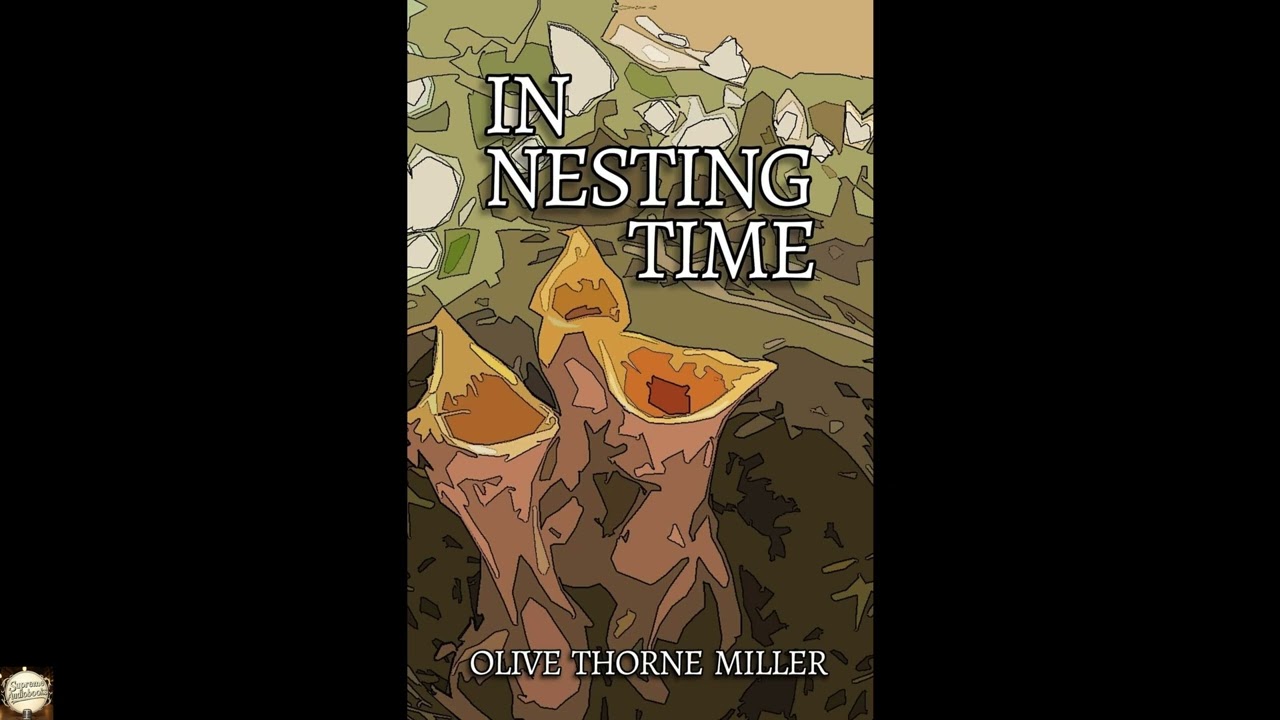
In Nesting Time
Imagine a world where the most profound dramas unfold not on grand stages, but in the quiet branches of a backyard tree. Olive Thorne Miller invites you into just such a world with her classic work, In Nesting Time, a deeply personal and meticulously observed account of bird life during its most crucial season. This isn't merely a collection of facts; it is an intimate invitation to slow down, to look closely, and to rediscover the profound wonder of the natural world that exists, often unseen, right outside our windows. For anyone seeking solace from the modern rush, or a gentle reacquaintance with the rhythms of life beyond the human sphere, Miller’s quiet intensity offers a perspective as refreshing today as it was over a century ago. The narrative of In Nesting Time unfolds largely within the confines of Miller's own garden and the immediate environs of her home, transforming this everyday space into a vibrant theater of avian activity. Her "characters" are the various bird species that choose her trees and shrubs for their domestic ventures: the robin, with its sturdy resolve; the delicate wren, bustling with nervous energy; the quarrelsome English sparrow; and other winged visitors who make brief, memorable appearances. The central "conflict," if one can call it that, is the constant struggle for survival and procreation, the daily challenges of building nests, incubating eggs, and raising vulnerable young amidst predators, weather, and inter-species squabbles. Miller approaches this unfolding drama not as an intruder, but as a silent, respectful observer, a witness to nature’s unscripted and often poignant tales. The arc of the story follows the progression of a single nesting season, beginning with the first stirrings of spring and the careful selection of sites, through the arduous period of egg-laying and incubation, and culminating in the clumsy, exhilarating fledging of the young birds. Miller’s keen eye misses little, documenting the precise architecture of a nest, the unique calls and songs associated with courtship and warning, and the myriad behaviors of parent birds diligently providing for their offspring. She becomes particularly attached to certain individual birds, giving them unique identifiers not out of sentimentality, but from the necessity of distinguishing one busy parent from another as she tracks their daily routines. Her prose allows the listener to feel the tension of a storm approaching a fragile nest, to hear the insistent chirps of hungry hatchlings, and to share in the quiet triumph of a brood successfully launched into the wider world, all without revealing the ultimate fate of any specific family. The author, Olive Thorne Miller, was born Harriet Mann Miller in Auburn, New York, in 1831. Initially focusing on her family life and raising four children, she only began her prolific writing career in her mid-forties, after moving to Brooklyn. Her early work consisted of articles for children, but her true passion lay in ornithology, the scientific study of birds, which she pursued with remarkable dedication from her home. Miller became a leading figure in popularizing bird study for a wide audience, especially women and children, at a time when nature observation was becoming increasingly accessible and appreciated. She rarely ventured far afield for her studies, preferring to observe birds in her garden or through her window, demonstrating that profound insights into nature could be gleaned from even the most ordinary surroundings. Over the course of her lifetime, which ended in 1918, Miller authored over twenty books, many of them highly influential in fostering a love for birds and contributing to the nascent conservation movement. Works like Bird-Ways, Little Brothers of the Air, and A Bird-Lover in the West established her as a preeminent voice. She was not a formally trained scientist in the academic sense, but her rigorous, detailed, and systematic observations earned her the respect of professional ornithologists. Her clear, engaging prose, combined with a profound empathy for her subjects, allowed her to bridge the gap between scientific rigor and popular appeal, making complex natural behaviors understandable and relatable to the lay reader. Her place in the literary canon rests not only on her beautiful descriptions but also on her pioneering role in advocating for an ethical and observational approach to nature. Several core themes resonate throughout In Nesting Time, making it a work of enduring relevance. One prominent theme is the power of patient observation. Miller repeatedly emphasizes the necessity of quiet stillness and sustained attention to truly understand the secret lives of birds. For instance, she describes spending hours perfectly still, barely breathing, just to witness a parent bird approaching its nest with food, demonstrating that deep understanding comes not from hurried glances but from respectful, unwavering presence. This meticulous attention to detail allows her to discern subtle behaviors and patterns that most would overlook, like the distinct personalities of different robins or the specific strategies a wren employs to deter a rival. Another significant theme is the unseen heroism of parenthood in the natural world. Miller devotes considerable attention to the tireless efforts of bird parents, illustrating their dedication through countless examples. Listeners hear of the female bird enduring the long hours of incubation, braving storms and hunger, or the male bird’s ceaseless foraging trips to feed a demanding brood. She might describe a mother bird feigning injury to draw a predator away from her chicks, or a father bird fiercely defending his nest against a larger foe, underscoring the universal, instinctual drive to protect offspring at all costs. This focus on parental devotion offers a moving parallel to human experience, fostering a sense of shared vulnerability and resilience across species boundaries. Listening to In Nesting Time as an audiobook offers a unique and deeply immersive experience. The quiet, contemplative pace of Miller’s writing translates beautifully to the spoken word, allowing the listener to truly absorb the meticulous details and gentle wisdom without the visual distractions of a printed page. The narration can highlight the soothing rhythms of her prose, emphasizing the moments of hushed observation and the lyrical descriptions of the natural world. With several hours of content, this audiobook provides ample opportunity for extended periods of calm reflection, whether during a quiet morning walk, while tending a garden, or simply seeking a peaceful escape from daily noise. The narrator’s voice becomes a conduit for Miller’s own gentle yet authoritative tone, guiding you through the subtle sounds of birdsong, the rustle of leaves, and the patient unfolding of life in a season of renewal, inviting a slower, more attentive engagement with the world around you. The era in which In Nesting Time was written, the late nineteenth century, was a period of significant change and growing awareness in America. Industrialization was accelerating, and cities were expanding, leading to a disconnect for many from the natural environment. Simultaneously, there was a blossoming interest in natural history, spurred by figures like John Burroughs and the burgeoning popular science movement. Photography was making nature more accessible, and early conservation efforts were beginning to take root, although widespread awareness of species loss was still emerging. Miller’s work emerged at this crucial juncture, serving as a bridge for urban dwellers and the general public to reconnect with nature, promoting a sense of personal responsibility and wonder for the creatures that shared their world. Her approachable style and focus on backyard observations made her a key figure in cultivating a generation of bird enthusiasts and, by extension, early environmental advocates.
Enjoyed In Nesting Time? A few ways to support us
Audible & Amazon links are affiliate; we may earn a small commission at no extra cost.
About this production
Human narration by a volunteer reader from LibriVox.org, the public-domain audiobook project. LibriVox volunteers record literary works whose copyright has expired in the United States, releasing the resulting recordings into the public domain.
In Nesting Time by Olive Thorne Miller. The underlying text is in the U.S. public domain. We do not republish any modern copyrighted edition, translation, or commentary.
The 4K cinematic visuals accompanying this audiobook are generated by an AI image model from prompts derived from the source text. No copyrighted photos, paintings, or stock footage are used. AI generation is disclosed on every video on our YouTube channel as required by YouTube's altered/synthetic content policy.
English subtitles are transcribed from the LibriVox recording with OpenAI Whisper. Translations into the 11 other supported languages are produced by Meta's NLLB-200 neural translation model. No human translator's copyrighted translation is used.
Questions about sourcing or rights? See our DMCA & Sourcing policy or contact us.
Enjoyed this audiobook?
If you'd like to own a copy of In Nesting Time or hear a professionally produced edition, the links below help support free audiobook production at no extra cost to you.
As an Amazon Associate we earn from qualifying purchases. Audible / print links are affiliate.