Old Caravan Days
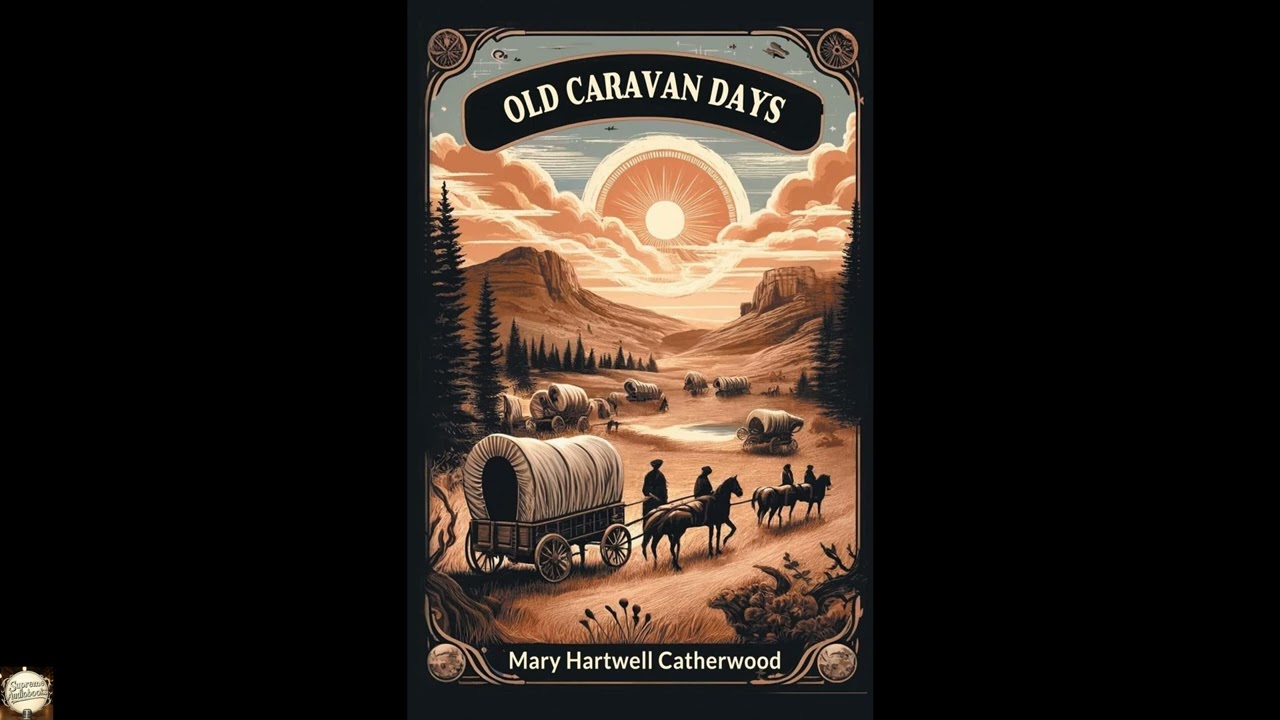
Imagine a world where home was not a fixed place but a movable dream, hitched to the backs of oxen and slowly, painstakingly pulled across an untamed continent. This is the vivid landscape of Mary Hartwell Catherwood's Old Caravan Days, a story that sweeps us back to a defining era in American history – the westward expansion – and reminds us that courage, community, and the human spirit’s capacity for endurance are constants, no matter the century. More than just an account of travel, this is an intimate portrait of lives shaped by hardship and hope, a resonant echo from a time when the horizon held both boundless promise and untold peril. For anyone who has ever dreamed of adventure, wondered at the resilience of their forebears, or simply sought a poignant narrative of self-discovery against a monumental backdrop, this book offers a window into the very soul of a burgeoning nation and the individuals who forged its path. Set in the early decades of the American Republic, when the vast stretches beyond the Alleghenies were considered the wild frontier, Old Caravan Days follows the fortunes of a small band of pioneers. Their destination is the verdant, but largely uncharted, Ohio Valley, a land rumored to be ripe for settlement yet fraught with dangers. At the heart of this unfolding drama is young Elara, a spirited girl on the cusp of womanhood, whose family has staked their future – and their dwindling possessions – on the promise of new beginnings. Alongside her stoic father, her practical mother, and a motley collection of fellow travelers – a grizzled scout with a checkered past, a hopeful young artisan, and a family seeking religious freedom – Elara must learn to navigate not just the treacherous terrain but also the complex human dynamics that arise when strangers are bound together by shared vulnerability. The central conflict of the story lies in the relentless struggle against the wilderness itself: swollen rivers must be forded, dense forests penetrated, and dwindling supplies carefully rationed. Beyond the natural obstacles, the caravan faces the ever-present threat of disease, accident, and encounters with both wary indigenous tribes and unscrupulous frontiersmen. As the journey lengthens, the initial optimism of the group begins to wane, giving way to weariness, suspicion, and moments of despair. Elara, forced to shed her childish illusions, witnesses both the best and worst of human nature, discovering within herself a strength and resourcefulness she never knew she possessed. Her coming-of-age is inextricably tied to the caravan’s slow, arduous progress, as she learns to interpret the signs of the forest, understand the nuances of human character, and contribute to the survival of the group, all while grappling with the burgeoning emotions of youth in an unforgiving landscape. Mary Hartwell Catherwood, born in Ohio in 1847, was a prolific American author celebrated for her historical romances and regional fiction, particularly those set in the early days of the Midwest. Growing up in a region still keenly aware of its frontier past, Catherwood developed a deep appreciation for the stories and legends that shaped the American character. She spent much of her life in the Ohio Valley and Indiana, drawing inspiration from the landscapes and the historical accounts of the French and American pioneers who first settled the territory. Her education at the Granville Female College provided her with a strong literary foundation, and she began her writing career in earnest after her marriage to James S. Catherwood, publishing short stories and poems in prominent magazines of the era. Catherwood quickly gained recognition for her meticulous research and her ability to weave compelling narratives around historical events and figures. Her notable works, such as The Romance of Dollard (1889), The Story of Tonty (1890), and Lazarre (1901), often focused on dramatic episodes from American history, frequently incorporating French colonial influences in the Great Lakes region. She possessed a particular skill for depicting strong, often unconventional female characters and for capturing the spirit of different historical periods. Catherwood occupied an important place among the late nineteenth-century American authors who sought to define a distinct national literary voice by looking to the nation's past, contributing significantly to the genre of historical fiction and the regionalist movement before her passing in 1902. At its core, Old Caravan Days enacts the theme of human resilience in the face of immense adversity. Time and again, the caravan is confronted with obstacles that threaten to break its spirit – a broken axle in the middle of a bog, a sudden illness that fells a key member, or the despair that settles in during prolonged periods of hunger. Yet, the narrative consistently demonstrates the characters' capacity to overcome, to mend, and to push forward, whether through sheer willpower, collective effort, or unexpected acts of kindness. For instance, a scene where the group must collectively haul their wagons through a treacherous pass, each person straining alongside the beasts of burden, vividly illustrates this indomitable spirit. Another prominent theme is the forging of community amidst individualism. While each family or individual in the caravan might begin with their own distinct motivations and guarded independence, the exigencies of frontier travel demand cooperation and mutual reliance. The forced intimacy of the journey strips away pretenses, exposing both flaws and virtues, eventually knitting the disparate members into a cohesive, albeit sometimes fractious, unit. The sharing of a meager meal around a flickering campfire, where stories and fears are exchanged, serves as a powerful symbol of how shared experience and vulnerability can transform strangers into a temporary, but essential, family. Mary Hartwell Catherwood wrote Old Caravan Days during a period of profound transition in American history, roughly from the 1870s to the turn of the 20th century. This was the Gilded Age, an era characterized by rapid industrialization, urbanization, and the closing of the literal American frontier. As cities swelled and technological advancements reshaped daily life, there was a burgeoning sense of nostalgia for a simpler, earlier America – a time of perceived heroism, self-reliance, and direct engagement with the land. Literary tastes reflected this shift, with a growing demand for historical romances and regional literature that offered a sentimental, yet often dramatic, look back at the nation's formative years. Catherwood's work emerged from this cultural milieu, providing readers with stories that connected the rapidly changing present to a heroic and foundational past. She, like many of her contemporaries, aimed to preserve and romanticize the stories of pioneering spirit and the unique American character before these memories faded entirely. Listening to Old Caravan Days as an audiobook offers an exceptionally immersive experience, allowing the listener to truly inhabit the world Catherwood so carefully constructed. The run length of several hours is ideal for extended listening sessions, whether during a long commute, while engaging in household tasks, or during quiet moments of reflection. A skilled narrator can bring the varied voices of the caravan members to life, distinguishing between the gruff tones of the frontiersman, the hopeful lilt of the young, and the measured cadence of the more experienced pioneers. Pay attention to how the narration conveys the atmosphere of the wild: the creak of wagon wheels, the rush of a river, the hushed intensity of a nighttime vigil, all painted with vocal nuances and pacing. The unfolding dialogue, delivered with period sensibility, will draw you deeper into the characters' hopes, fears, and developing relationships, allowing the subtle rhythms of their existence on the moving frontier to envelop your imagination completely.
Enjoyed Old Caravan Days? A few ways to support us
Audible & Amazon links are affiliate; we may earn a small commission at no extra cost.
About this production
Human narration by a volunteer reader from LibriVox.org, the public-domain audiobook project. LibriVox volunteers record literary works whose copyright has expired in the United States, releasing the resulting recordings into the public domain.
Old Caravan Days by Mary Hartwell Catherwood. The underlying text is in the U.S. public domain. We do not republish any modern copyrighted edition, translation, or commentary.
The 4K cinematic visuals accompanying this audiobook are generated by an AI image model from prompts derived from the source text. No copyrighted photos, paintings, or stock footage are used. AI generation is disclosed on every video on our YouTube channel as required by YouTube's altered/synthetic content policy.
English subtitles are transcribed from the LibriVox recording with OpenAI Whisper. Translations into the 11 other supported languages are produced by Meta's NLLB-200 neural translation model. No human translator's copyrighted translation is used.
Questions about sourcing or rights? See our DMCA & Sourcing policy or contact us.
Enjoyed this audiobook?
If you'd like to own a copy of Old Caravan Days or hear a professionally produced edition, the links below help support free audiobook production at no extra cost to you.
As an Amazon Associate we earn from qualifying purchases. Audible / print links are affiliate.