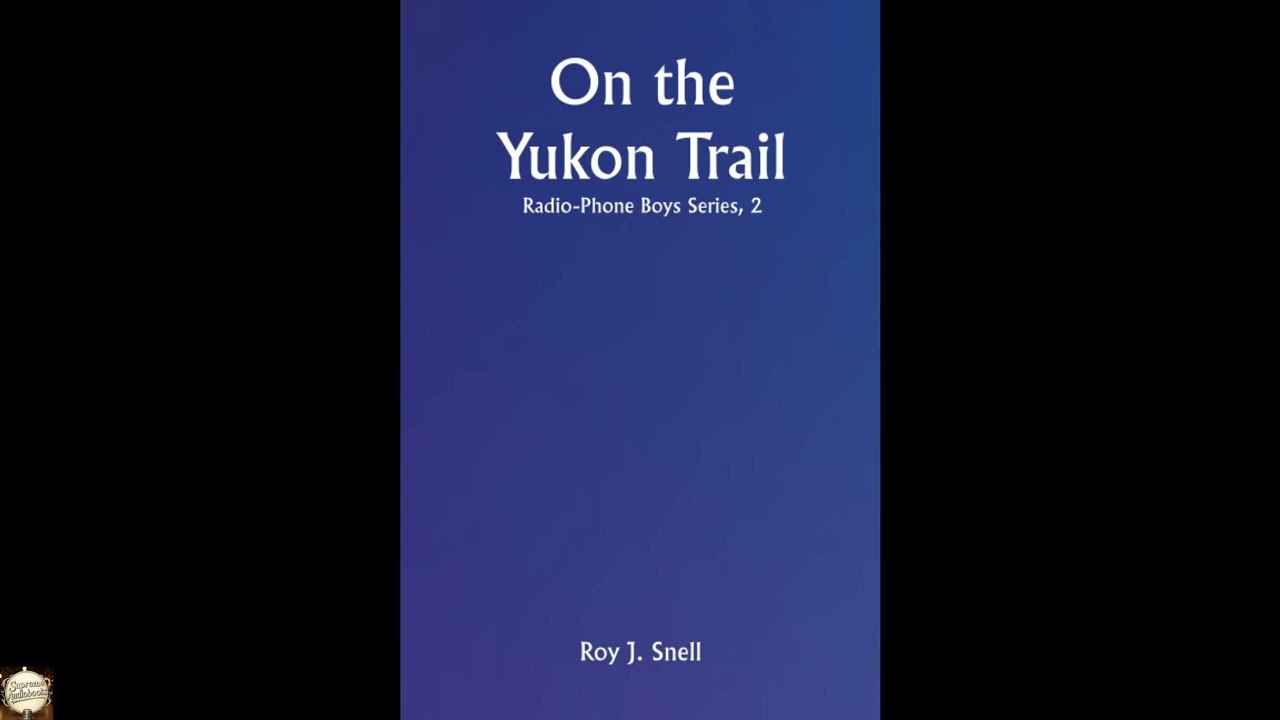
On the Yukon Trail; Radio-Phone Boys Series, 2
Step into a world where vast, untamed wilderness meets the cutting edge of early twentieth-century ingenuity. On the Yukon Trail, the second installment in the beloved Radio-Phone Boys Series by Roy J. Snell, transports listeners to a breathtakingly harsh frontier, where courage, quick thinking, and the marvels of nascent wireless technology are the keys to survival. This is more than just a boys' adventure story; it’s a vivid snapshot of an era when communication was a hard-won triumph, and the spirit of exploration still burned fiercely. For anyone who yearns for tales of genuine grit against nature’s might, coupled with the charming optimism of early technological marvels, this audiobook offers a compelling invitation to a bygone age of heroism and discovery. Our story plunges listeners deep into the formidable expanse of the Yukon Territory, a land of frozen rivers, towering snow-capped peaks, and unforgiving cold. Here, amidst the stark beauty and immense dangers, we find our young protagonists, a resourceful group of boys whose intelligence and spirit are matched only by their adventurous resolve. Having already proven their mettle in previous escapades, they are now confronted with a new, daunting challenge in the heart of the Canadian North. The central conflict arises from a desperate plea for help – a message, perhaps from a lone prospector or a stranded trapper, picked up by their experimental radio-phone, beckoning them into the perilous interior. The boys, armed with their wits, their limited supplies, and their indispensable "radio-phone" – a device that represents both their connection to civilization and their most potent problem-solving tool – must navigate treacherous terrain, brave the elements, and outsmart both natural predators and perhaps more sinister human elements. From tracking elusive game to building makeshift shelters, every step is a test of their endurance and ingenuity. They face blizzards that threaten to engulf them, the constant specter of hunger, and the isolation that gnaws at the spirit. The story arc follows their determined pursuit of the source of the distress signal, encountering unexpected allies and formidable adversaries along the way, all while relying on their individual strengths and their collective bond to persevere. Roy J. Snell, born in 1878 in Minnesota, carved a distinct niche for himself in American literature as a prolific author of juvenile fiction, particularly during the early to mid-twentieth century. His life was marked by a keen interest in the natural world and a knack for crafting thrilling narratives that educated as much as they entertained. After completing his education at the University of Chicago, Snell began his writing career, eventually publishing over 70 books across various popular series. He was known for his meticulous research, often traveling to the settings of his stories – including the Arctic and Alaska – to ensure authenticity, thereby lending a tangible sense of realism to his adventure tales. Snell passed away in 1959, leaving behind a legacy of stories that continue to inspire young readers and evoke nostalgia for a simpler era of literature. Beyond the Radio-Phone Boys series, Snell penned numerous other popular collections, such as The Red Button Mystery Series, the Pete and Peter series, and the Radio-Phone Girls Series, demonstrating his versatility and consistent appeal to a youthful audience. His works consistently championed virtues like courage, self-reliance, and scientific curiosity, aligning him with other contemporary authors of "boy's books" who sought to instill moral character and practical knowledge in their readership. Snell's place in the literary canon is that of a skilled storyteller who effectively blended exciting plots with wholesome values, contributing significantly to the genre of early American children's adventure fiction. The narrative of On the Yukon Trail powerfully enacts several enduring themes, beginning with the potent idea of resourcefulness and self-reliance in the face of daunting adversity. When the boys find themselves stranded in a blizzard, low on food and fuel, their ability to fashion a rudimentary windbreak from fallen branches and their skill in tracking a rabbit for sustenance directly illustrate this theme. They don't wait for rescue; they actively work to solve their immediate problems using the knowledge and tools at hand. Another prominent theme is the transformative power of emerging technology. The "radio-phone" itself is central to the plot, not just as a narrative device but as a symbol of human ingenuity. A scene where they meticulously repair a damaged wire on their set, allowing them to send a crucial message or receive vital information, underscores how scientific understanding and practical application can literally be life-saving. Furthermore, the story celebrates the importance of friendship and teamwork. The boys are never truly alone, relying on each other's distinct skills and moral support during moments of despair. One moment might show a character, skilled in navigation, guiding the group through a perilous pass, while another, more physically robust, might be breaking trail through deep snow. Their shared camaraderie and mutual encouragement keep their spirits high even when circumstances seem dire, demonstrating that collective effort is often superior to individual striving, particularly against the vast and indifferent forces of nature. The stark man-versus-nature conflict is also omnipresent, with the Yukon wilderness itself acting as a primary antagonist – its vastness, its chilling temperatures, and its dangerous wildlife constantly testing the boys’ limits and forcing them to confront their own vulnerability. Roy J. Snell's works, including On the Yukon Trail, emerged during a fascinating period in American history – the early decades of the twentieth century. This was an age characterized by a profound fascination with technological progress, a romantic view of exploration, and a burgeoning market for literature specifically aimed at young people. Following the Klondike Gold Rush of the late nineteenth century, the Canadian North held a mythical status in the public imagination, representing both peril and the promise of discovery. Books like Snell's capitalized on this national interest, offering readers vicarious adventures in exotic, often dangerous locales. Culturally, this was also a time when "boys' books" were seen as crucial for character building, instilling virtues like perseverance, courage, and ingenuity. The "radio-phone" element in Snell's series is particularly telling, reflecting the widespread excitement around new communication technologies like radio, which transitioned from a scientific curiosity to a household fixture during the interwar years. These stories served to demystify new inventions, showcasing their practical applications and encouraging young readers to embrace scientific advancement and its potential for solving real-world problems. They were, in essence, a literary bridge between the rugged individualism of the frontier and the dawning age of technological interconnectedness. Listening to On the Yukon Trail as an audiobook offers a singular opportunity to fully immerse oneself in its unique atmosphere. The narrator's voice, carefully chosen for this classic adventure, evokes the stark grandeur of the Yukon, allowing the listener to visualize the sweeping, frozen landscapes and feel the biting cold. Pay attention to the pacing – how it can shift from the slow, deliberate crunch of snow underfoot during a solitary trek to the quick, breathless urgency of an unexpected confrontation with a wild animal or a sudden, dramatic radio message. The distinct character voices bring the youthful protagonists to life, allowing their camaraderie, their anxieties, and their triumphs to resonate more deeply. The soundscape, with potential subtle effects hinting at the howling wind or the crackle of the early radio, builds a sense of presence, placing you right alongside the Radio-Phone Boys as they navigate one of the world's most challenging environments. The several-hour run length provides ample time to lose yourself in the unfolding drama, making it perfect for long drives or cozy evenings by the fire.
Enjoyed On the Yukon Trail; Radio-Phone Boys Series, 2? A few ways to support us
Audible & Amazon links are affiliate; we may earn a small commission at no extra cost.
About this production
Human narration by a volunteer reader from LibriVox.org, the public-domain audiobook project. LibriVox volunteers record literary works whose copyright has expired in the United States, releasing the resulting recordings into the public domain.
On the Yukon Trail; Radio-Phone Boys Series, 2 by Roy J. Snell. The underlying text is in the U.S. public domain. We do not republish any modern copyrighted edition, translation, or commentary.
The 4K cinematic visuals accompanying this audiobook are generated by an AI image model from prompts derived from the source text. No copyrighted photos, paintings, or stock footage are used. AI generation is disclosed on every video on our YouTube channel as required by YouTube's altered/synthetic content policy.
English subtitles are transcribed from the LibriVox recording with OpenAI Whisper. Translations into the 11 other supported languages are produced by Meta's NLLB-200 neural translation model. No human translator's copyrighted translation is used.
Questions about sourcing or rights? See our DMCA & Sourcing policy or contact us.
Enjoyed this audiobook?
If you'd like to own a copy of On the Yukon Trail; Radio-Phone Boys Series, 2 or hear a professionally produced edition, the links below help support free audiobook production at no extra cost to you.
As an Amazon Associate we earn from qualifying purchases. Audible / print links are affiliate.