About Roy J. Snell
In the early decades of the twentieth century, as technology advanced and the world shrank, authors emerged to tell stories reflecting this new era for young readers. Among the most prolific of these was Roy Judson Snell, born in Lena, Illinois, in 1878, and later a long-time resident of St. Petersburg, Florida, where he passed away in 1959. His early life saw him attend Valparaiso University and the University of Chicago, after which he spent several years as a teacher, experiences that no doubt informed his later career crafting tales for an impressionable audience.
Snell’s transition from the classroom to the typewriter marked his true calling. He entered a flourishing publishing world hungry for wholesome, thrilling adventure stories aimed at boys and girls. This period saw the rise of serialized fiction in magazines, often followed by book publication, a path Snell frequently followed. His early works often introduced readers to remote and challenging environments, exemplified by his significant early effort, *An Eskimo Robinson Crusoe*, published in 1917, which brought the stark beauty and perils of the Arctic to life for his young audience through a tale of survival and ingenuity.
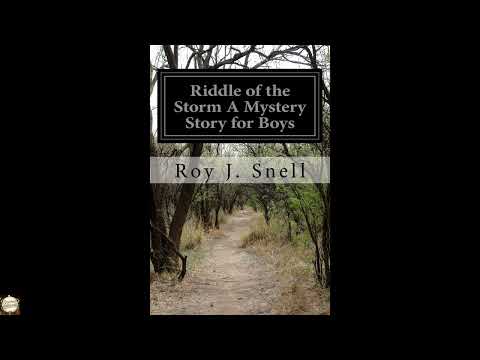
Throughout his career, Snell produced a steady stream of novels that became staples for young readers. His *Riddle of the Storm: A Mystery Story for Boys* presents a secret to be unraveled by determined youngsters during a fierce blizzard. *Red Dynamite: A Mystery Story for Boys* plunges its protagonists into a dangerous plot, often involving scientific elements and espionage. He took readers to untamed frontiers in *On the Yukon Trail*, an adventure unfolding in the rugged Canadian wilderness. The thrill of flight captivated many young minds, and Snell’s *Lost in the Air* recounts daring aviation escapades and the risks of early air travel. He also captured the spirit of ingenuity and discovery with his *Radio-Phone Boys Series*, which documents the adventures of boys utilizing nascent radio technology. Furthermore, *Johnny Longbow* offers a glimpse into Native American life and the challenges of wilderness living.
Snell’s writing style was direct and action-oriented, prioritizing plot and swift progression. He typically crafted clear, accessible prose designed to engage young readers with immediate excitement. Recurring themes across his body of work include resourcefulness, courage in the face of danger, and the spirit of discovery. His protagonists often display remarkable ingenuity, whether solving mysteries or surviving in harsh environments. For example, in *Riddle of the Storm*, the young heroes must rely on their sharp wits and bravery, rather than adult intervention, to piece together clues and overcome obstacles posed by both nature and human mischief, embodying the self-reliance Snell consistently celebrated. His narratives also frequently highlighted the marvels of technology and science, making them feel contemporary and educational.
Roy J. Snell holds a firm place in the annals of early 20th-century juvenile literature as a dedicated craftsman of adventure and mystery. He was part of a cohort of authors who shaped the tastes of a generation, providing exciting yet morally upright stories that instilled values of perseverance and curiosity. His prolific output and ability to weave engaging plots set in diverse, often exotic, locations made his books popular for decades. His influence can be seen in the continued appeal of structured adventure series and wholesome mysteries for children, setting a precedent for countless similar narratives that followed. Listening to his tales today offers a direct connection to a past era of storytelling, where courage, wit, and exploration powered every turn of the page.
More on Wikipedia →