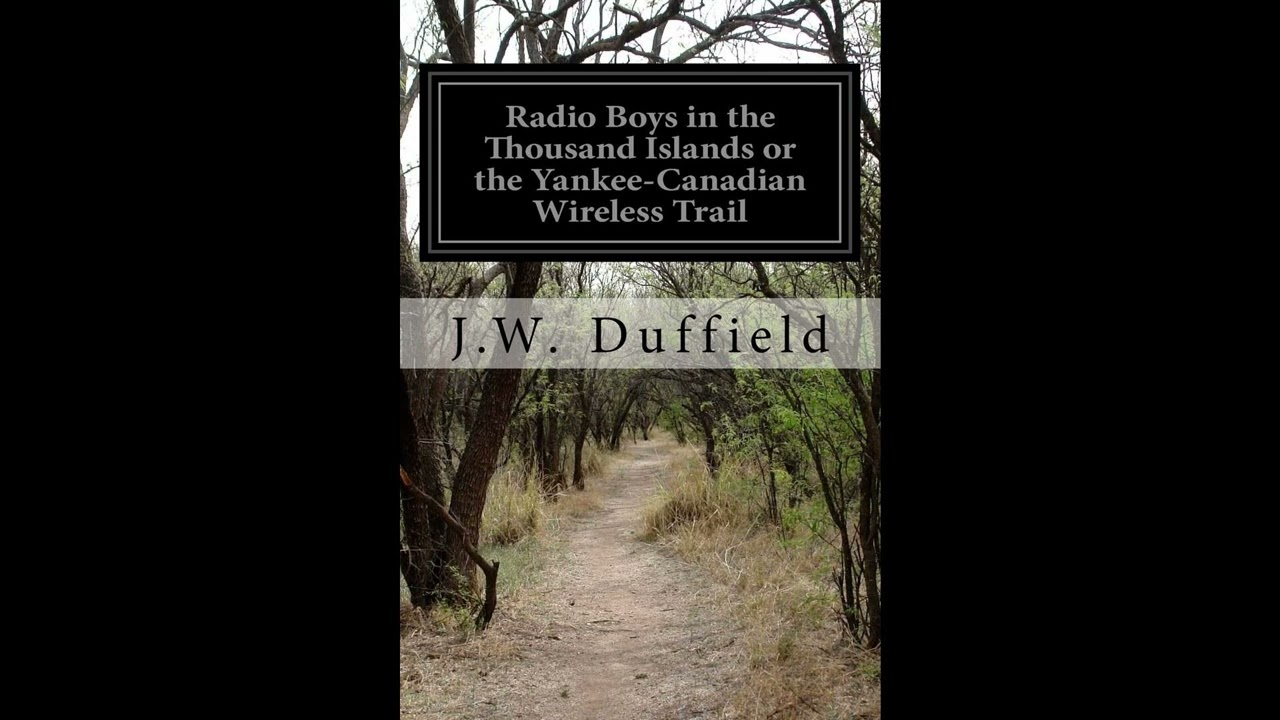
Radio Boys in the Thousand Islands or the Yankee-Canadian Wireless Trail
Step into a world where the air crackled not just with static but with the promise of a new age, where young ingenuity met the wild beauty of North America’s borderlands. "Radio Boys in the Thousand Islands or the Yankee-Canadian Wireless Trail" by J.W. Du offers a spirited look back at a time when wireless technology felt like magic, opening up possibilities for adventure and communication previously unimagined. This isn't just a story about boys and their gadgets; it’s a snapshot of a cultural moment, a testament to youthful resourcefulness, and a heartwarming depiction of cross-border camaraderie that still resonates today. For anyone seeking a dose of wholesome excitement, a glimpse into early technological wonder, or simply a well-told tale of friendship and daring, this classic from a bygone era offers hours of engaging listening. The story transports us to the picturesque Thousand Islands region, a labyrinthine expanse of islands, channels, and bays straddling the border between New York State and Ontario, Canada. Here, amid the tranquil waters and granite outcrops, we meet Frank and Billy, two eager American lads known affectionately as the "Radio Boys." Their fascination with the burgeoning world of wireless telegraphy leads them to construct their own receiver and transmitter, a remarkable feat of engineering for their time. Their initial experiments, often conducted from remote island outposts, quickly evolve beyond simple signal sending. The tranquility of their summer quickly gives way to intrigue when they stumble upon a series of puzzling events—unexplained lights on deserted islands, strange coded messages heard over their homemade sets, and a general air of mystery that hangs over the border waters. Their quest to unravel these conundrums soon brings them into contact with Canadian counterparts—another pair of technically inclined youths from across the St. Lawrence River. What begins as a friendly rivalry in signal strength and design soon blossoms into a vital alliance. They join forces, pooling their knowledge and their wireless equipment to piece together the clues, using their radio sets to intercept messages and coordinate their efforts across the watery frontier. As the boys navigate the winding channels and hidden coves, their growing friendship forms the backbone of the "Yankee-Canadian Wireless Trail," a network of amateur radio operators dedicated to truth and discovery. The plot steadily builds tension as they edge closer to uncovering the secret behind the unusual activities, leading them into encounters that test their courage, their wit, and their budding expertise with wireless communication. Little is known about the personal life of J.W. Du, the credited author of this spirited adventure. It is highly probable that Du was a pseudonym, a common practice in the early decades of the twentieth century for authors producing popular juvenile series fiction. Many such writers were prolific, contributing to multiple series under various names, often working for publishing houses that capitalized on the public's thirst for wholesome, educational entertainment for young readers. These authors, whether individuals or teams, typically focused on themes of ingenuity, moral uprightness, and the wonder of new technologies, aiming to inspire curiosity and good character in their audiences. While specific biographical details about J.W. Du remain elusive, their contribution to the canon of early twentieth-century juvenile literature is clear. This author's output, like that of many peers, helped shape a generation’s view of science, adventure, and the expanding world. The focus on new inventions and the optimistic spirit evident in "Radio Boys" stories reflects the broader cultural enthusiasm for progress and innovation characteristic of the era. The Du name, even if a pen name, represents a significant segment of popular authorship that fueled the imaginations of countless young readers, establishing narratives that blended education with excitement in accessible prose. "Radio Boys in the Thousand Islands" enacts several enduring themes, most notably the power of ingenuity and scientific curiosity. The boys' dedication to building and operating their own wireless sets illustrates a hands-on approach to learning and problem-solving, celebrating the spirit of invention. For instance, a scene where Frank and Billy spend hours troubleshooting their aerial antenna, experimenting with different wires and heights to achieve better reception, underscores the practical application of scientific principles. Another central theme is cross-cultural cooperation and friendship. The way the American and Canadian boys overcome initial hesitation to collaborate on a shared mystery exemplifies how shared interests can bridge national divides. Their radio conversations, initially just tests, become vital communication channels for coordinating surveillance and sharing crucial information, solidifying their bond through a common purpose. The book also demonstrates the excitement of exploration and the thrill of the unknown. The Thousand Islands themselves, with their intricate geography, serve as a character, fostering an atmosphere of discovery and hidden secrets. The boys' nighttime excursions across the dark waters, guided only by the distant hum of their radio or the faint glow of a lantern, highlight the allure of venturing into uncharted territory, both literally and figuratively. Furthermore, the narrative subtly presents the idea of responsibility that comes with technological power; the boys learn that their radio, while a tool for fun, can also be a vital instrument for community safety and justice. Historically, "Radio Boys in the Thousand Islands" emerged during a pivotal moment in both technological and cultural history. The early twentieth century saw the rapid popularization of wireless telegraphy, moving from specialized military and commercial use to a growing amateur hobby. Radio was still largely a novelty, captivating the public with its ability to transmit voices and signals across vast distances without wires, fundamentally reshaping how people imagined communication. This period also witnessed a surge in juvenile fiction series, often centered around new technologies (like the Tom Swift books) or mystery-solving (like the Hardy Boys or Nancy Drew, which would come slightly later). These books catered to a burgeoning youth readership, offering aspirational heroes who were intelligent, brave, and often technologically adept. The setting along the US-Canada border also reflects the diplomatic and cultural landscape of the time. While distinct nations, the two countries shared a long, often friendly, border, and the idea of cross-border exchange was familiar. The "Yankee-Canadian Wireless Trail" title itself speaks to this intertwined identity and the potential for cooperation across the Great Lakes region. The book's popularity likely stemmed from its ability to tap into this cultural enthusiasm for progress, adventure, and the idea of young people shaping the future with their wits and newly acquired skills. Listening to "Radio Boys in the Thousand Islands" as an audiobook brings this spirited narrative to life, allowing the listener to fully immerse themselves in the era and the setting. A skillful narrator can expertly convey the youthful exuberance and earnestness of Frank and Billy, along with the other characters' distinct personalities, making the dialogue crackle with authentic energy. The pacing of the narration will mirror the ebb and flow of the adventure, building suspense during the mystery's unfolding and quickening during moments of chase or discovery. Imagine the narrator's voice capturing the mechanical sounds of early radio—the static, the faint signals, the frantic tapping of Morse code—transporting you directly into the boys' makeshift wireless shacks. The descriptions of the Thousand Islands themselves, from the lapping waves to the rustling leaves on secluded islets, gain an added layer of atmosphere through thoughtful vocal delivery, enhancing the sense of place and adventure that defines this classic tale.
Enjoyed Radio Boys in the Thousand Islands or the Yankee-Canadian Wireless Trail? A few ways to support us
Audible & Amazon links are affiliate; we may earn a small commission at no extra cost.
About this production
Human narration by a volunteer reader from LibriVox.org, the public-domain audiobook project. LibriVox volunteers record literary works whose copyright has expired in the United States, releasing the resulting recordings into the public domain.
Radio Boys in the Thousand Islands or the Yankee-Canadian Wireless Trail by J. W. Duffield. The underlying text is in the U.S. public domain. We do not republish any modern copyrighted edition, translation, or commentary.
The 4K cinematic visuals accompanying this audiobook are generated by an AI image model from prompts derived from the source text. No copyrighted photos, paintings, or stock footage are used. AI generation is disclosed on every video on our YouTube channel as required by YouTube's altered/synthetic content policy.
English subtitles are transcribed from the LibriVox recording with OpenAI Whisper. Translations into the 11 other supported languages are produced by Meta's NLLB-200 neural translation model. No human translator's copyrighted translation is used.
Questions about sourcing or rights? See our DMCA & Sourcing policy or contact us.
Enjoyed this audiobook?
If you'd like to own a copy of Radio Boys in the Thousand Islands or the Yankee-Canadian Wireless Trail or hear a professionally produced edition, the links below help support free audiobook production at no extra cost to you.
As an Amazon Associate we earn from qualifying purchases. Audible / print links are affiliate.