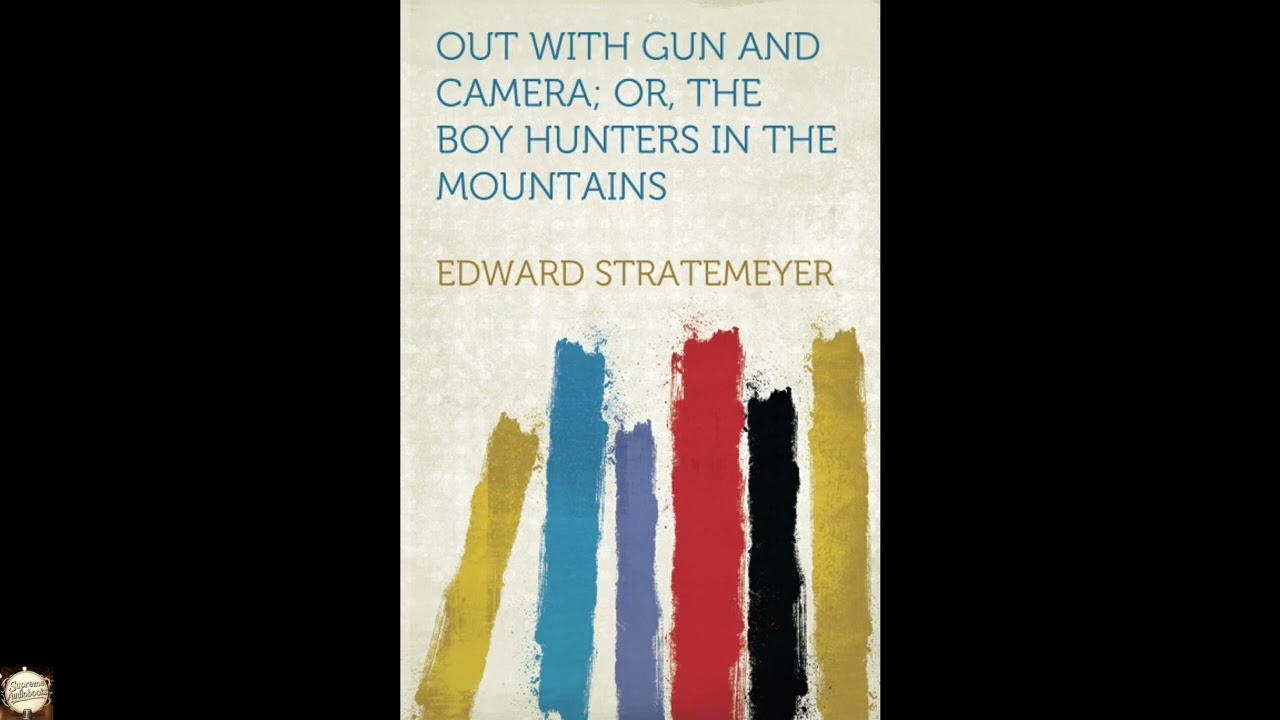
Out With Gun and Camera; Or, The Boy Hunters in the Mountains
Step back in time to an era when the American wilderness still beckoned with untold secrets, when the call of adventure echoed loudest in the hearts of youth. Out With Gun and Camera; Or, The Boy Hunters in the Mountains by Edward Stratemeyer transports listeners to a world of rugged landscapes and burgeoning self-reliance. This classic tale, originally published in 1898, remains a spirited example of juvenile adventure fiction, a vivid snapshot of late-nineteenth-century boyhood that champions ingenuity, courage, and a nascent appreciation for nature. For those who appreciate historical insights into American youth culture, or simply a well-told story of outdoor daring, this audiobook offers a compelling window into a formative period, presenting timeless lessons wrapped in an exciting narrative. The story plunges us into the untamed grandeur of the Adirondack Mountains, a vast expanse of forests, lakes, and challenging terrain. Here, two spirited young cousins, Dick and Nan, set out for a summer of camping and outdoor pursuits. Dick, the more experienced and pragmatic of the two, is keen on traditional hunting, viewing the wilderness as a proving ground for his skills with a rifle. Nan, on the other hand, represents a newer sensibility, armed with a camera and a growing desire to capture the wild’s beauty rather than simply conquer it. Their contrasting approaches set a subtle philosophical tension at the heart of their adventure, as they navigate the practicalities of survival alongside their differing ideals. Their expedition quickly becomes more than a mere summer lark. They face the immediate challenges of establishing a camp, tracking game, and navigating the vast, often unforgiving landscape. Along the way, they meet a colorful cast of characters—a seasoned guide, a reclusive trapper, and even a rival group of boys whose intentions are not always clear. These encounters test the boys’ resourcefulness, their moral compass, and their bond. From unexpected animal encounters to sudden changes in weather, and even the threat of being lost in the dense woods, Dick and Nan must continually adapt and learn, slowly understanding that true strength lies not just in physical prowess, but also in observation, caution, and a respect for the natural world around them. The arc of their tale follows their gradual awakening to the complexities of the wild and the nuances of their own characters, all while maintaining a brisk pace that keeps the reader eager for the next turn of events. Edward Stratemeyer, born in 1862 in Elizabeth, New Jersey, revolutionized juvenile literature. A phenomenally prolific writer and an astute businessman, Stratemeyer established the Stratemeyer Syndicate, a factory-like organization that conceived and published hundreds of popular book series for children and young adults under various pseudonyms. Though his name might not be as immediately recognizable to a modern audience as some of his characters, he was the creative force behind some of the most enduring figures in American children's fiction, including Tom Swift, the Hardy Boys, and Nancy Drew. He wrote early entries in these series himself, developing the formulaic structures and character types that allowed other writers to continue the stories under house names like Franklin W. Dixon and Carolyn Keene. Stratemeyer began his writing career penning dime novels and short stories before finding immense success with his own adventure series, such as the Rover Boys and the Bomba the Jungle Boy series. He possessed an uncanny ability to tap into the interests and aspirations of young readers, creating tales of adventure, ingenuity, and moral uprightness that captivated generations. His impact on the literary landscape was profound, pioneering a mass-production model for popular fiction and solidifying the template for serialized children’s books, ensuring a steady stream of wholesome, exciting content for his eager audience until his passing in 1930. He is a cornerstone figure in the history of American children's publishing, a true architect of the modern concept of the book series. At its core, Out With Gun and Camera grapples with the coming-of-age theme, as Dick and Nan learn invaluable lessons far beyond the pages of a schoolbook. For example, an early scene where Dick dismisses Nan's desire to photograph a deer, insisting on shooting it instead, sets up a gradual shift in his perspective. As the challenges mount, and they witness the natural world's delicate balance, Dick begins to understand that a different kind of respect—one not centered on conquest—might be equally valid. This evolving viewpoint subtly introduces the theme of humanity's changing relationship with nature, moving from pure resource extraction to a more nuanced appreciation and conservationist ethic. The inherent conflict between technology and tradition also stands out. The "gun" represents an older, more direct interaction with nature, focused on providing food or proving skill, while the "camera" symbolizes a newer, observational, and preservation-minded approach. The narrative does not explicitly preach, but rather uses the boys’ differing tools and attitudes to illustrate these competing philosophies. A concrete instance occurs when they must decide whether to hunt a rare animal for food or to preserve it, a choice that forces them to weigh immediate need against a nascent sense of environmental stewardship. The story also champions the virtue of self-reliance and the spirit of adventure, as the boys must constantly innovate to overcome obstacles, demonstrating their growing competence and courage through practical application in the wild. This book emerged during a fascinating period in American history, the late nineteenth century, a time of rapid industrialization and urbanization, but also a growing yearning for the perceived purity of the wilderness. The frontier, while no longer literally "open," still held a powerful sway in the national imagination, and figures like Theodore Roosevelt popularized ideals of strenuous outdoor living and conservation. Photography itself was becoming more accessible to the public, offering a new way to interact with and document the world. Against this backdrop, there was a significant demand for "wholesome" juvenile fiction, stories that would entertain while instilling moral values, self-reliance, and a sense of patriotism. Stratemeyer’s work perfectly tapped into this cultural moment, providing narratives that allowed young readers to experience the thrill of the wild from the comfort of their homes, while subtly guiding them toward respectable conduct and an understanding of the natural world. Listening to Out With Gun and Camera as an audiobook brings the rustling leaves, distant animal calls, and the crackle of a campfire right into your personal space. The several hours of listening provide an ideal companion for outdoor activities—a long walk, a car trip, or even just relaxing at home. A skilled narrator helps listeners immerse themselves in the atmospheric descriptions of the Adirondacks, giving distinct voices to the determined Dick, the observant Nan, and the various characters they encounter. Pay attention to how the pacing of the narration builds suspense during tense moments in the wilderness and how the dialogue breathes life into the boys’ evolving friendship and their differing perspectives, making this a truly resonant and enjoyable listening experience.
Enjoyed Out With Gun and Camera; Or, The Boy Hunters in the Mountains? A few ways to support us
Audible & Amazon links are affiliate; we may earn a small commission at no extra cost.
About this production
Human narration by a volunteer reader from LibriVox.org, the public-domain audiobook project. LibriVox volunteers record literary works whose copyright has expired in the United States, releasing the resulting recordings into the public domain.
Out With Gun and Camera; Or, The Boy Hunters in the Mountains by Edward Stratemeyer. The underlying text is in the U.S. public domain. We do not republish any modern copyrighted edition, translation, or commentary.
The 4K cinematic visuals accompanying this audiobook are generated by an AI image model from prompts derived from the source text. No copyrighted photos, paintings, or stock footage are used. AI generation is disclosed on every video on our YouTube channel as required by YouTube's altered/synthetic content policy.
English subtitles are transcribed from the LibriVox recording with OpenAI Whisper. Translations into the 11 other supported languages are produced by Meta's NLLB-200 neural translation model. No human translator's copyrighted translation is used.
Questions about sourcing or rights? See our DMCA & Sourcing policy or contact us.
Enjoyed this audiobook?
If you'd like to own a copy of Out With Gun and Camera; Or, The Boy Hunters in the Mountains or hear a professionally produced edition, the links below help support free audiobook production at no extra cost to you.
As an Amazon Associate we earn from qualifying purchases. Audible / print links are affiliate.
More by Edward Stratemeyer


More Audiobooks

Guns and Snowshoes; Or, the Winter Outing of the Young Hunters
Phil Bradley's Mountain Boys, or, The Birch Bark Lodge
The Rover Boys On the Plains, or, The Mystery of Red Rock Ranch
In School And Out: Or The Conquest Of Richard Grant, A Story For Young People