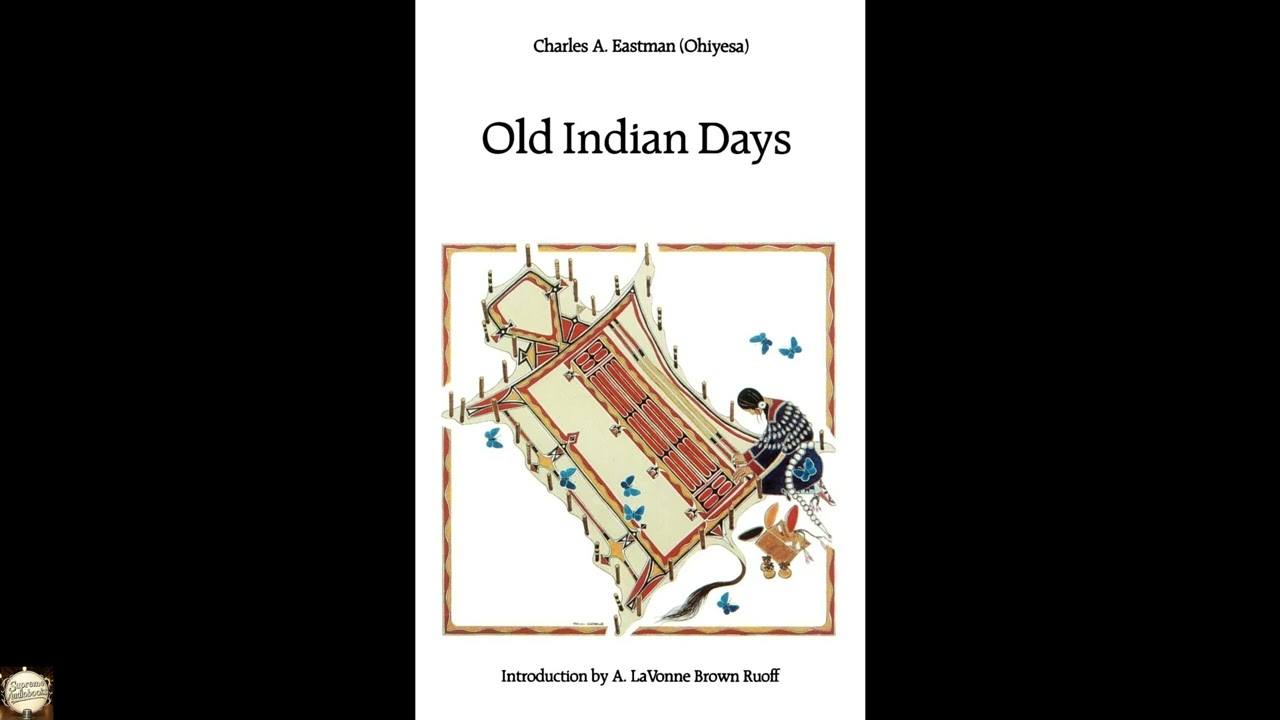
Old Indian Days
Step into a world rarely seen through such an authentic lens: the traditional lifeways, wisdom, and spirit of the Lakota and Dakota Sioux before the wholesale transformation of their ancestral lands. Charles A. Eastman’s Old Indian Days offers not just a collection of tales, but a living portal to a profound culture, inviting listeners to understand a people often mischaracterized or relegated to history books written by outsiders. It is a testament to the enduring power of oral tradition, a vital historical record, and a compelling collection of stories that resonate with universal themes of courage, community, and humanity's relationship with the natural world – lessons that remain acutely relevant in our modern era, prompting reflection on our own values and connection to the earth. This remarkable collection transports listeners to the sprawling prairies and deep forests of the Great Plains, a landscape teeming with life and imbued with spiritual significance for the Sioux people. The narratives unfold in a time when bison herds still darkened the plains and the rhythm of life was dictated by the seasons, the hunt, and the ceremonies that bound the community together. There isn't a single overarching plot in the traditional sense, but rather a constellation of stories, each shedding light on a different facet of Sioux existence. Listeners will encounter individuals from all walks of traditional life: the fearless young warrior proving his mettle against a rival tribe or a formidable beast, the cunning hunter outwitting his prey, the wise elder imparting ancient knowledge around a crackling fire, and the resourceful woman sustaining her family through harsh winters. The central “conflict” across these pages is often an internal or communal one: the striving for honor, the pursuit of wisdom, the maintenance of harmony within the tribe and with the natural world, and the navigation of the challenges inherent in a life lived close to the land. Each story stands alone as a complete narrative, yet together they weave a comprehensive picture of a culture rich in spiritual belief, social structure, and personal ethics. From tales of daring feats of bravery to legends explaining the origins of natural phenomena, the stories collectively present an arc of experience—from the innocence of childhood learning important lessons, through the trials of young adulthood, to the respected wisdom of old age. While there is no grand final twist, the cumulative effect is a deeper comprehension of a unique worldview and a lasting appreciation for the principles that guided the Sioux people. The voice behind Old Indian Days belongs to Charles A. Eastman, known in his native tongue as Ohiyesa, meaning "The Winner." Born in 1858 near Redwood Falls, Minnesota Territory, Eastman's early life was steeped in traditional Sioux culture, raised by his grandmother and uncle after his mother’s death and father’s capture during the U.S.-Dakota War of 1862. It wasn't until the age of fifteen that he was introduced to the world of European American education, an experience initiated by his father who had converted to Christianity during his imprisonment. This dramatic shift set Eastman on an extraordinary path, transforming him into a bridge between two vastly different cultures. Eastman pursued a rigorous education, attending Dartmouth College and later Boston University School of Medicine, from which he graduated in 1890. He became a physician, serving as a government physician at the Pine Ridge Agency during the period leading up to and immediately following the Wounded Knee Massacre, an event he witnessed firsthand and later recounted with profound sadness. Beyond his medical practice, Eastman dedicated his life to advocating for Native American rights, lecturing widely, and—critically—writing extensively. His other notable works, such as Indian Boyhood, From the Deep Woods to Civilization, The Soul of the Indian, and Wigwam Evenings, further solidified his place as one of the earliest and most eloquent Native American authors, providing invaluable first-person accounts and interpretations of Indigenous life and thought. He passed away in 1939, leaving behind a monumental literary legacy. The collection enacts several fundamental themes central to Sioux culture, offering listeners a nuanced understanding of their values. One prominent theme is the profound connection to nature, depicting humans not as separate from, but as an integral part of, the natural world. Stories frequently illustrate this through characters who communicate with animals, interpret the wisdom of the wind and trees, or demonstrate a deep respect for the land and its resources, understanding their role within a delicate ecosystem. A young hunter, for example, might be shown offering a prayer of thanks to the spirit of the buffalo after a successful chase, acknowledging the animal's sacrifice and the sacred balance of life. Another recurring theme is honor and bravery, not only in the context of warfare or daring exploits, but also in the everyday resilience of individuals facing hardship. Tales of young men undergoing vision quests, or of families enduring a harsh winter with dignity and resourcefulness, underscore the importance of inner strength, ethical conduct, and the courage to face life's challenges. Another significant theme is the power of oral tradition and communal memory, with Eastman's very act of writing serving to preserve these narratives for future generations. The tales themselves are often didactic, imparting moral lessons, historical knowledge, or practical skills through engaging narrative. They underscore how stories serve as the bedrock of cultural identity and education. Finally, the collection highlights the theme of cultural preservation and resilience. Eastman wrote these stories at a time when his people's way of life was under immense pressure, and by recording these ancient tales, he was actively working to safeguard their spiritual and intellectual heritage against assimilation. These themes collectively elevate Old Indian Days from mere entertainment to a work of significant cultural and historical importance. Old Indian Days emerged at a crucial juncture in American history, published in 1907. The late nineteenth and early twentieth centuries were characterized by the aggressive implementation of federal assimilation policies designed to erase Native American cultures, including the forced removal of children to boarding schools and the allotment of tribal lands under the Dawes Act. Following the trauma of events like the Wounded Knee Massacre, Indigenous communities faced immense pressure to abandon their traditional customs, languages, and spiritual practices. During this era, mainstream American literature often depicted Native Americans in stereotypical ways—either as "noble savages" fading into the past or as obstacles to progress. Eastman, however, stood as a unique figure, a highly educated Sioux man who possessed the rare ability to articulate the richness of his native culture to a broad non-Native audience. His work offered a counter-narrative, presenting an authentic, insider's perspective at a time when such voices were desperately needed yet rarely heard. He understood the urgency of documenting these stories before they were irrevocably lost, not only to preserve them for his own people but also to educate and foster understanding among the dominant culture. His writings were a pioneering effort in Native American literature, providing a vital bridge between worlds and shaping perceptions for generations to come. Listening to Old Indian Days as an audiobook brings these narratives back to their most authentic form: the spoken word. These are stories inherently meant to be heard, passed down from one generation to the next around campfires and in lodges. A skilled narrator breathes life into the characters, the landscapes, and the wisdom embedded in each tale, allowing the listener to experience the rhythm and cadence of traditional storytelling. The “several hours” runtime makes it an ideal companion for long drives, focused listening sessions, or as a thoughtful backdrop to daily tasks, offering an immersive experience without demanding a single, uninterrupted sitting. Listen for the subtle shifts in voice that distinguish different characters, the deliberate pacing that allows moments of reflection, and the evocative atmosphere created by a performance that honors the spiritual depth and cultural significance of Eastman's words. It is an opportunity to hear history and culture recounted with respect and resonance.
Enjoyed Old Indian Days? A few ways to support us
Audible & Amazon links are affiliate; we may earn a small commission at no extra cost.
About this production
Human narration by a volunteer reader from LibriVox.org, the public-domain audiobook project. LibriVox volunteers record literary works whose copyright has expired in the United States, releasing the resulting recordings into the public domain.
Old Indian Days by Charles A. Eastman. The underlying text is in the U.S. public domain. We do not republish any modern copyrighted edition, translation, or commentary.
The 4K cinematic visuals accompanying this audiobook are generated by an AI image model from prompts derived from the source text. No copyrighted photos, paintings, or stock footage are used. AI generation is disclosed on every video on our YouTube channel as required by YouTube's altered/synthetic content policy.
English subtitles are transcribed from the LibriVox recording with OpenAI Whisper. Translations into the 11 other supported languages are produced by Meta's NLLB-200 neural translation model. No human translator's copyrighted translation is used.
Questions about sourcing or rights? See our DMCA & Sourcing policy or contact us.
Enjoyed this audiobook?
If you'd like to own a copy of Old Indian Days or hear a professionally produced edition, the links below help support free audiobook production at no extra cost to you.
As an Amazon Associate we earn from qualifying purchases. Audible / print links are affiliate.