Indian Boyhood (Native American)
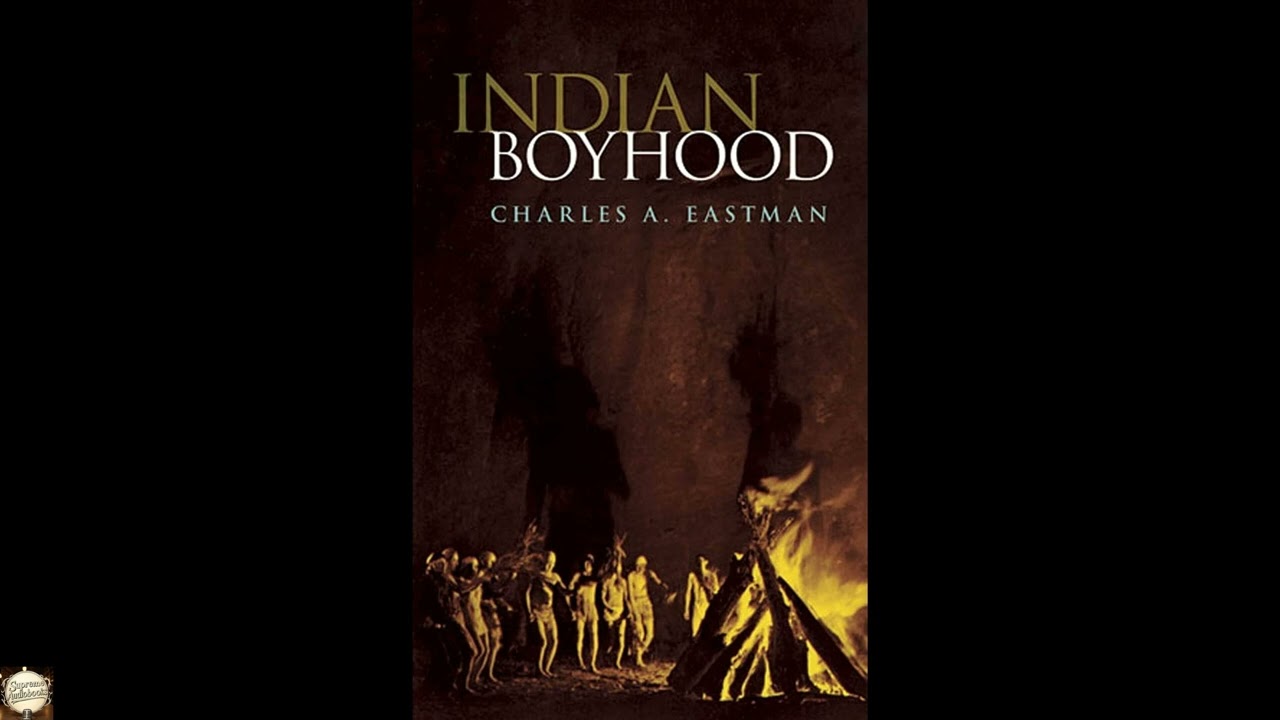
What does it mean to grow up in a world entirely different from our own, a world rooted in ancient traditions and a profound connection to the earth, yet poised on the brink of dramatic change? Charles A. Eastman's Indian Boyhood offers an unparalleled answer, opening a rare window into the formative years of a young Dakota Sioux at the very end of his people's free, nomadic existence on the plains. This is a book not just of memoir, but of cultural witness, a vivid recounting of a childhood spent learning the wisdom of generations before it was swept away by the forces of westward expansion. It is a testament to resilience, identity, and the enduring power of heritage, making it an essential listen for anyone seeking to understand American history from a truly unique perspective. The story opens in the vast, open lands of the American plains in the latter half of the nineteenth century, a setting both majestic and formidable. We meet Ohiyesa, Eastman's boyhood name, from his earliest memories. Orphaned early in life, he is raised primarily by his paternal grandmother and his uncle, who serve as his primary educators in the ways of the Santee Sioux. His world is one of constant learning and observation, where every plant, animal, and natural phenomenon holds a lesson. He learns to track game, to hunt with bow and arrow, to fish, and to understand the subtle shifts in weather and seasons. His days are filled with games of skill and endurance, listening to the elders' stories around the campfire, and participating in the ceremonial life of his village. Ohiyesa's adolescence unfolds against this backdrop of traditional living. He gains proficiency as a hunter, mastering the skills necessary for survival and contributing to his community. He learns the spiritual significance of the buffalo hunt, the respect due to all living creatures, and the stoicism expected of a young warrior. His grandmother instills in him a deep reverence for nature and the Great Mystery, while his uncle trains him in physical prowess and the martial arts of his people. These years are portrayed as idyllic, a period of deep contentment and belonging, where Ohiyesa’s identity is firmly forged within the customs and values of the Santee Sioux. The narrative paints a detailed picture of daily life, from the construction of tipis to the preparation of food, all seen through the eyes of an intelligent, curious boy who loves his family and his way of life implicitly. The author, Charles A. Eastman, was born Ohiyesa in 1858 near Redwood Falls, Minnesota, a Santee Dakota. His early life unfolded entirely within the traditional Sioux culture, much as he depicts it in Indian Boyhood. Following the Dakota War of 1862, his family was displaced, and his father, believed dead, later returned as a convert to Christianity, determined to educate his son in the ways of white society. This marked a profound turning point in Ohiyesa's life. He adopted the name Charles Eastman and began an extraordinary academic career that led him to Dartmouth College and then to Boston University School of Medicine, where he became one of the first Native Americans to graduate as a physician in 1890. His medical career saw him serving as a government physician at the Pine Ridge Agency in South Dakota during the tragic Wounded Knee Massacre. This experience, deeply traumatic, spurred him to dedicate much of his later life to advocating for Native American rights and fostering understanding between cultures. He worked with the Bureau of Indian Affairs, helped found the Boy Scouts of America, and became a prominent lecturer and author. Beyond Indian Boyhood, his notable works include From the Deep Woods to Civilization, which continues his autobiography, Old Indian Days, a collection of traditional stories, and The Soul of the Indian, an exposition of Native American spirituality. Eastman’s writing stands as a pivotal early voice in Native American literature, providing an insider’s perspective on a culture often misunderstood or misrepresented by outsiders, firmly establishing his place as a significant literary figure. Several powerful themes resonate through the pages of Indian Boyhood. One prominent idea is the profound importance of cultural preservation and memory. Eastman, writing decades after his childhood, meticulously details the games, ceremonies, hunting practices, and daily rhythms of Sioux life. For instance, he describes the exact rules and emotional intensity of traditional games like shinny or spear throwing, showing how these activities were not just entertainment but crucial training for future warriors and providers. His careful documentation serves as an archive, ensuring that the nuances of his people's traditions are not lost, offering a genuine account that stands in stark contrast to prevailing stereotypes of the era. Another central theme is education and mentorship, which formed the bedrock of Ohiyesa's upbringing. His grandmother’s patient stories and moral lessons, such as explaining the importance of observation in nature, and his uncle’s rigorous physical and spiritual training—like teaching him how to remain still and unnoticed in the forest for hours—demonstrate a holistic approach to learning. This education focused on developing character, practical skills, and a deep spiritual connection to the world, rather than rote memorization. It shaped Ohiyesa’s identity not through formal schooling, but through immersive experience and the wisdom passed directly from elder to child. When Indian Boyhood was published in 1902, the United States was in a period of intense cultural transition and, for Native Americans, immense pressure. The era following the Civil War saw the end of the major Indian Wars, the establishment of the reservation system, and aggressive government policies aimed at assimilation, such as the Dawes Act. This legislation sought to break up tribal lands and dismantle communal living, forcing Native Americans into the individualistic farming model of white society. Public perception of Native Americans was often shaped by sensationalized dime novels, biased government reports, or limited, often hostile, encounters. Eastman’s book emerged at a crucial time, offering a humanizing, authentic counter-narrative. He sought to educate a predominantly white audience about the richness and integrity of a culture that was under relentless assault, challenging prevailing notions of "savagery" and demonstrating the dignity and beauty of the traditional Native American way of life. His work was part of a larger, burgeoning movement by Native American intellectuals and artists who, having bridged two worlds, began to speak for themselves and their people in the dominant literary landscape. Listening to Indian Boyhood as an audiobook offers a unique and immersive experience that truly brings Ohiyesa’s narrative to life. The very act of having these stories read aloud echoes the oral traditions central to Sioux culture, where tales were passed down through generations around campfires and in lodges. The narration allows the listener to fully absorb the calm, reflective pacing of a childhood remembered, letting the vivid descriptions of the Dakota landscape and its inhabitants unfurl like a spoken painting. With several hours of content, there is ample opportunity to settle into the rhythm of Eastman’s prose, appreciating the careful detail in his accounts of hunting, games, and spiritual lessons. Listen for the narrator’s ability to convey the quiet wonder of young Ohiyesa, the gentle wisdom of his grandmother, and the firm guidance of his uncle, making the customs and characters of a vanishing world immediate and resonant.
Enjoyed Indian Boyhood (Native American)? A few ways to support us
Audible & Amazon links are affiliate; we may earn a small commission at no extra cost.
About this production
Human narration by a volunteer reader from LibriVox.org, the public-domain audiobook project. LibriVox volunteers record literary works whose copyright has expired in the United States, releasing the resulting recordings into the public domain.
Indian Boyhood (Native American) by Charles A. Eastman. The underlying text is in the U.S. public domain. We do not republish any modern copyrighted edition, translation, or commentary.
The 4K cinematic visuals accompanying this audiobook are generated by an AI image model from prompts derived from the source text. No copyrighted photos, paintings, or stock footage are used. AI generation is disclosed on every video on our YouTube channel as required by YouTube's altered/synthetic content policy.
English subtitles are transcribed from the LibriVox recording with OpenAI Whisper. Translations into the 11 other supported languages are produced by Meta's NLLB-200 neural translation model. No human translator's copyrighted translation is used.
Questions about sourcing or rights? See our DMCA & Sourcing policy or contact us.
Enjoyed this audiobook?
If you'd like to own a copy of Indian Boyhood (Native American) or hear a professionally produced edition, the links below help support free audiobook production at no extra cost to you.
As an Amazon Associate we earn from qualifying purchases. Audible / print links are affiliate.